business · career · fitness · goals · health · international · life curation · luxury · reading list · travel · writing

July Goal Updates

It’s that time of the month again: time to review my annual goals and give you all some updates on what’s been happening on my end!
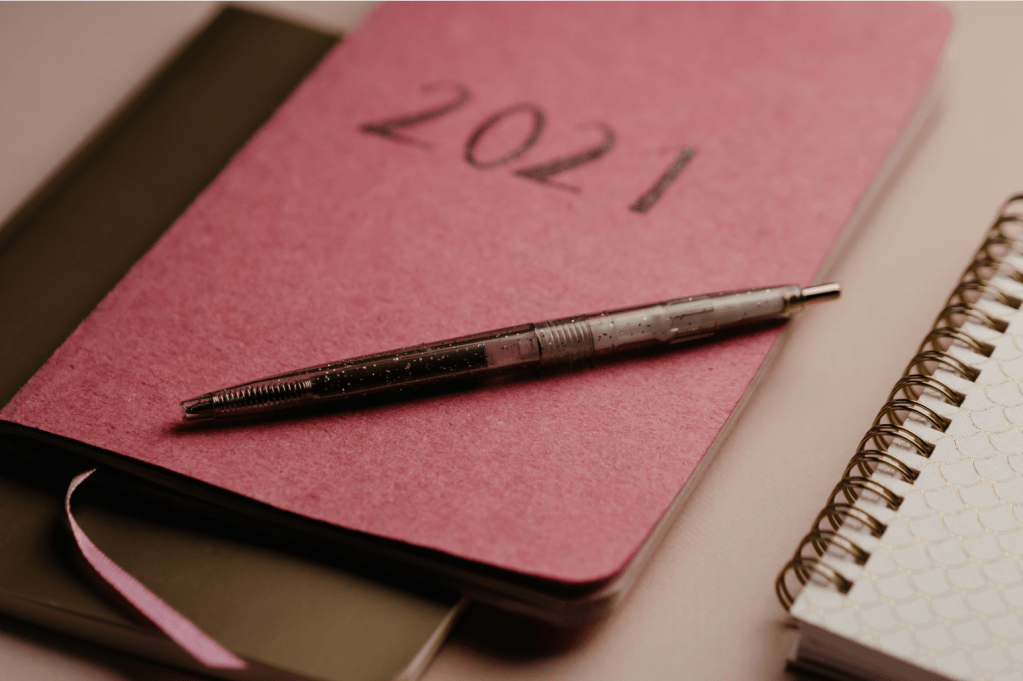
As a quick refresher, here is the 2021 goal list that I set out at the beginning of the year:

  • Publish 5 books
  • Lose 15 lbs
  • Manifest 3 international trips
  • Earn 6 figures in my businesses
  • Read 100+ books
  • Luxury purchases – Hermes, Christian Louboutin, Sophia Webster, Ralph & Russo
  • Cure my fibromyalgia

Next week, on Writer’s Wednesdays, I’ll be providing a publishing update, so I won’t be discussing that in depth today. However, I can say comfortably that I’ll have reached my publishing goal by August 1st, though, at this point, I plan to go far beyond my initial goal and aim for 10 books published by the end of the year.

As far as my weight loss goal, I’ve never progressed nor regressed. However, August 15th will be kicking off a dietary overall for me, which is connected to my last goal (curing my fibro). My next few Fibro Friday posts will cover this in more detail, as well as provide some background for context.

My international travel goal is not inspiring me nearly as much as it did when I first envisioned it. Make no mistake: I will be doing some travel this year. But with the Delta variant of COVID-19 on the rise, even my best plans may be thwarted by a new set of travel restrictions. For this reason, I’m focusing more on local travel this year. If an international trip is still possible in December, then yes, I will do that. But I’m not putting a ton of pressure on myself to “manifest” 3 international trips in 2021. Domestic travel can be just as satisfying, and it will allow me to reconnect with loved ones stateside.

My reading goals are coming along nicely. I’ll have my latest Books Read post coming out next week. At the rate that I’m going, I should be at 100 books by late October (fingers crossed). Audiobooks have really been saving me so much time! However, I’ll also be getting back to my ebooks and paperbacks soon: I miss looking at words in print.

My business goals are … meh. Monday’s post covered this topic already, but I’ll be doing some more strategizing in the upcoming weeks to see how close I can get to reaching the $100K+ mark in my businesses. It’s quite a stretch, but I can see where, with some adjustments, it’s doable.

And finally, about those luxury purchases . . . I’m adjusting this as well, and for good reason. I had a revelation that is far more aligned with the kind of consumer I intend to be (going forward). When you have those sorts of “aha!” moments, doing some course correction is the natural next step. The post all about this revelation will be coming out within a week or two, so look out for it soon.

That’s it for my goal updates! Progress in some areas, stagnation in others, and completely rewriting one or two. I’m pleased overall, and I’m looking forward to seeing how things come together over the next few months.

I hope you all are having a great day, and I’ll talk to you all tomorrow!

business · writing

Writers Wednesdays – 5 Exercises to Beat Writer’s Block

Happy Writers Wednesdays! I took off four days from my bookwriting practice because I’ve been entertaining visiting relatives (yay for finally returning to a semi-normal life!). On top of that, I had a few other things to work on in my ever-fleeting downtime (such as writing on this blog and putting more time into my tutoring business).

However, when I resume my writing practice, I want to ensure that I am able to hit the ground running. So I took a little time to think of some additional ways to beat writer’s block. I’ve discussed some strategies before that I find to be effective, but I’ve never done a consolidated post – until now. If nothing else, I hope these tips can help those authors-in-the-making who want to bust through those uninspired moments so that they can finish writing the book of their dreams. Here are my five favorite techniques for beating writer’s block.

  1. Try haiku or a limerick. I have found it really helpful to switch up my writing whenever I’m feeling stuck. Since I usually write fiction or how-to manuals, I try a few short poetry styles (like haiku or limericks) to get the creative juices flowing. Something about breaking up my routine really works well for helping me to get over creative challenges. I chose haiku and limericks because they are are so drastically different from the type of writing I enjoy most and they engage a different part of my brain. Of course, you can use any type of writing that differs from what you usually do. The key to this is to keep the exercise brief so that you aren’t overwhelmed by the process.
  2. Do 7 days of stream of consciousness writing. Anyone can do this, but it is especially good for anyone that is working on an autobiography or some work that involves self-reflection. As soon as you wake up, you write for 10-15 minutes about whatever comes to mind. You don’t reread or judge what you’ve written until you’ve finished doing it for 7 consecutive days. After that time, you can look over what you’ve written and figure out if there are any patterns or latent messages that are being revealed. If nothing else, you may find that your mind is under- or over-stimulated, and you can adjust your routine accordingly.
  3. Go somewhere or do something you’ve never done before. Speaking of under- and over-stimulation . . . Sometimes, the blockage comes from boredom. We know that boredom is a problem that everyone experiences at some point in time. But, we are so conditioned to view time on the internet as “doing something” that we feel guilty about claiming to be bored. It’s very possible to scroll endlessly on social media, news websites, personal blogs, or video platforms, yet still feel bored. So break up the monotony and try something new: do something you’ve always wanted to do, and see how that improves your creative blocks. Alternatively, the block may be happening because you’re overwhelmed. In that case, disconnecting from your daily activities and severely reducing your “to-do” list may be just what you need to get inspired again. Try a no- or low-stimuli routine for a defined period of time, and see how that improves your creativity.
  4. Have someone to tell you a story. This works particularly well for me, because it passively engages my storytelling “brain”. As I listen to the story, I try to anticipate what will come next, and I’m always delighted when the story takes an unexpected turn. There are some times where an author needs to transition from the role of storyteller to the role of captive audience member. Listening to someone else tell you a story gives your brain a pleasant rest from trying to figure out what’s next with your own writing projects.
  5. Do a scent (or flavor, or sound) summary. This is a really good practice for writers that struggle with creating sufficiently descriptive passages. Instead of focusing on your latest work-in-progress, try flexing your adjective and adverb muscles, and attempt to accurately describe your favorite food dishes flavors, your favorite musical genre (focusing on the instruments used and how the sounds make you feel), or your favorite cologne or perfume. Go beyond that, and perhaps try your hand at describing the smells, flavors, or sounds that make you feel excited, sad, angry, or fearful. This exercise takes you outside of your normal writing practice, but it still engages the creative part of your mind.

Those are my five favorite hacks for busting through writer’s block. What are some things you’ve done to help with those creative blockages? I’d love to hear aobut them in the comments below!

writing

Writers Wednesdays: Creating Realistic Schedules

It’s that magical time of week: yes, it’s another Writers Wednesday! I’ve been slacking a bit with my book writing, but that’s because I’ve been POURING so much into this blog. I love blogging, so I have no regrets. But, I still have book writing goals that I need to accomplish this year, so I had to buckle down over the past few days and get my book writing schedule back on track.

A few weeks ago, I mentioned that I was redoing my daily schedule. This post is a continuation on this thought. The original goal was to devote some of my weekend hours to my writing. I’ve actually done that a bit, but there’s a caveat. Like I’ve already mentioned, my writing time has been directed toward blogging, so I actually haven’t worked much on my books. Further, the time I can devote to book writing on the weekends is minimal: as it turns out, I really do need more rest, and the weekend is the perfect time to do that.

So I’ve had to revisit my ideas for creating a good writing schedule. For the past couple of days, I’ve tried something that I think will be sustainable for a long time. What I’ve found really helpful with creating a realistic schedule is, instead of doing my book writing on the weekend, schedule between 15 and 30 minutes to work on my books each day. I took some of the pressure off of myself by not requiring a huge block of time, but I appreciate that even someone as busy as I am can do 15 minutes of book work.

To clarify, “book work” isn’t just writing for me, but it encompasses all of the work that I put toward book creation. That could mean selecting images for a specific book that I’m writing, or compiling sources that I will reference in one of my books, or (as with the case of the children’s book series that I’m writing) perfecting templates that I can reuse for future books. And yes, it could mean writing as well. But so long as I do something book-related, I count it as a win.

To help me stick to my schedule, I’m using a daily timer. The timer rings at the same time daily, so I’m making this part of regular routine. I feel so accomplished each time that I spend a little time on my books: it feels great!

Do you all have any schedule hacks that you’ve used to stay on track with your writing? I’d love to hear about it in the comments below!

life curation · writing

Writers Wednesdays – When The Last Chapter Is Elusive . . .

I don’t know if this has happened to any of my fellow authors out there, but I seem to have a dilemma every time I write. It doesn’t matter whether I’m writing fiction or nonfiction, short story or novel, lengthy instructions or a brief booklet.

The problem is this: I usually don’t know how to end things.

Yes, I’ll write, and write, and write, and write, happily breezing through the middle portion of a work-in-progress. I may have a little challenge with the opening chapters, but at some point, a brilliant (or so I think) way of introducing my book comes to me. Sometimes, I’ll even write something “out of order”, just so that I can capture the ideas that are already in my mind, bypassing all of the stuff that needs more time. It all sounds great when I’m in the “flow”. But then, I get to the end of the book, and I have a hard time wrapping things up.

You can probably even see my difficulty with “ending things” here on the blog. I enjoy sharing my world and telling you all about what I’m loving at the moment. So when I get to the end of the post, I often don’t know what to say. How do you bring proper “closure” to anything when you aren’t really ready to say goodbye? (On a side note, this is a recurring theme in my life, so the deep dive into this is necessary on multiple levels. Back to the conversation at hand . . . )

I think my reluctance to write the last chapter of any of my works in progress comes down to the inability to say goodbye easily. I never want the fun to end, or to part ways with something that I enjoy. So, ending a book – especially books where I absolutely adore the main and supporting characters – is like losing a good friend. Yes, I can always allow the characters to have more adventures by writing secondary books, but something about that first work with a set of characters is just . . . special. It’s as beautiful as a first kiss, or seeing the sunrise for the first time. Nothing compares to it.

I long to freeze those beautiful moments and never let them go. But alas, the only constant in life is change, and even the best works-in-progress do me no good if I don’t eventually write a suitable end for them, so that those books can eventually be read and loved by others. So, my challenge is to learn to let go and to give my books the beautiful endings that they deserve.

I have my work cut out for me in the next few weeks. For the works-in-progress that I have now, I’m concentrating on just writing the endings, even if I hate what I’ve written. The goal isn’t to make the ending perfect, but to just GET IT DONE, so that I can edit it later and make it better. The children’s books are easy: they’re formulaic, so the same ending is used repeatedly but just tweaked a bit here and there. But the novels and self-help/personal development books I’m working on definitely need an ending that is befitting. However, I won’t get to those perfect endings until I write imperfect endings first.

For future works, maybe I should try writing the endings first. I recall that there was a story (told second- or third-hand) about a person visiting actor Will Smith, who had the plot for a movie written out onto a bunch of index cards that he arranged on a storyboard. According to the person telling the story, Smith said that the easiest part of the story was the end, because he always started there, and basically reverse-engineered the story until he had the middle and beginning parts.

I think that writing the ending of a book before writing anything else would be a good exercise for me, even though I’ve traditionally disliked writing this part. Perhaps my comfort with endings will grow if I focus on making those as special and beautiful as the rest of the story will be . . . Hmm, it’s a thought.

Have you ever had a difficult time coming up with the ending of a book you’ve written, or in any other written work? I’d love to hear how you grew past that challenge in the comments below!

writing

Writers Wednesdays – Three Books Published!

Happy Writers Wednesday! I’m really excited to share this post, as a follow up to Monday’s goal update post.

As the title says, I published three books this year so far. I mentioned briefly in this post that I had churned out two children’s books, and now I have added a new book to the collection. The newest book, Let’s Go to Japan, is my way of introducing children to the incredible world of Japanese culture, history and nature. I’m as proud of this book as I am of Let’s Go to China and Let’s Go to Vietnam.

Initially, I was on the fence about including these children’s books in my publishing goal. I think it’s because I don’t feel that these books are “serious enough” or have enough words to count as a publishing accomplishment. But, as usual, this is criticism that I have launched against myself (better known as self sabotage) and it has served me well to reconsider whether this perspective serves me.

I decided that these books, which take time for research, selecting appropriate pictures, and keeping the language simple enough for children, are just as valid as my novels or self-help works-in-progress. So I decided to count these books as part of my 5 published books goal. As a result, I am now more than halfway to reaching my book publishing goal for the year.

That being said, I still want to publish some of the other works in progress that I’ve had on my desk for a while (in the case of one of my books, more than 7 years!) and that are yearning to be in the hands of readers that will appreciate them. In that respect, my writing work truly doesn’t stop, even after I publish 5 books. I won’t feel truly “caught up” until all of my current works in progress are published. I actually haven’t done a count of how many WIPs I currently have, but I know that there are more than 5. In short, I have my work cut out for me.

I hope you all are having a terrific Wednesday! If you have any works in progress that you’re concentrating your energies onto right now, I’d love to hear all about it in the comments below!

writing

Writers Wednesdays – Redoing My Daily Schedule

It’s my first Writers’ Wednesday since my mini-hiatus, and the first order of business is getting back to the original summer writing plan. It’s been a lovely-ish break, now it’s time for me to get back to my goals.

As you may recall from my “New Cycle” post, I had four different challenges to address, as related to my writing:

Now that I’ve finally finished my Cornell classes, I can better assess how much free time I have in my daily schedule. And, as it turns out, I don’t have much free time at all! After finishing my classes, I suddenly got a surge in tutoring students (I also teach English as a second language) and I took on roughly 5 more teaching hours per week. This may not sound like a lot of additional work, but for someone that already had a minimal amount of free time, five hours is the difference between finishing a book in a few weeks or a few months.

So I had to take a closer look at my weekend free time. Now, I usually sleep in late on Saturdays and Sundays, but if I want to finish writing at least one more book before the end of summer, I’ll have to sacrifice a little bit of snooze time to reach my goal. This wouldn’t ordinarily be a huge issue, but as someone with fibromyalgia (and a persistent case of chronic fatigue), it’s hard to sleep less on the weekend and still feel functional. I’m going to try sacrificing 30 minutes on both Saturday and Sunday, at least for the next few weeks, just to see how it goes. If I find that I still need the rest, then I’ll figure out something else. In the meantime, I can’t worry too much about it: I just have to experiment with different routines until I find something that works.

In the weeks to come, I’ll experiment with my 30 minute blocks of time, and tell you all how that works for me. Wish me luck!

This weekend, I’ll try

writing

Writers Wednesdays: Finding The Best Beta Readers

Happy Writers Wednesday! Today’s post will be short, because there isn’t a lot to say about this topic.

Good beta readers (who are willing to read your book before you publish it) are invaluable, but also hard to find. Everyone will accept a free book, but few are willing to give substantive feedback on what they read. So, for that reason, it’s challenging to have a good, reliable group of beta readers.

However, finding willing readers is the first step to getting a group of good beta readers. And that part is pretty easy. I always start with family and friends. Then, I start scouring my social media. I look for people that follow certain hashtags, and see if I can connect with them. After engaging in a few conversations, I can offer them my unpublished work, and see if they’re willing to read it.

As I get a group of devoted beta readers, I’ll keep you all posted on how things are going. I look forward to telling you all more about in the future!

writing

Writers Wednesdays: The “New Idea” Trap

Welcome back for this week’s installment of Writers Wednesday! In my last Writers Wednesday post, I mentioned that there were a few things that I knew would be challenging going forward into this new cycle. I want to identify the challenges ahead of time, so that I can prepare myself. To leap into a new cycle without figuring out the potential traps would be quite possibly the worst way to start things this go around.

The first challenge I identified was the trap of chasing new writing ideas. This is, no doubt, the BIGGEST trap for me. Whenever I have to start the editing and publishing processes, I can think of a dozen other book ideas, and, in my eagerness, I’ll start writing something new. Unfortunately, when I start writing a new work, I almost never get back to the tasks that need my attention: y’know, the ones that result in published books.

The end result? A lot of half-finished books, and very little to show for my efforts. The thing is, all that really counts when you’re a writer is when your finished work is in your readers’ hands. A bunch of partially-written manuscripts can’t instruct, inspire and influence the people that you want to impact. So, getting constantly lured in by “new” book ideas is almost always a convenient distraction from the hard work of editing and publishing.

For this next writing cycle, I will not be writing any new works. However, I hate the thought of getting a great idea and possibly “losing” the idea. For this reason, I will be implementing an “index card” system. I recall reading about this first in Write It Down, Make It Happen by Dr. Henriette Anne Klauser (I discussed the book a little in this post). Instead of spending a lot of time writing all of the ideas that flood to my mind, I’ll just jot down the idea on an index card, then put the card aside until I’m free to flesh out the idea more. This allows me to catch the idea while it’s fresh, but it eliminates the temptation that comes from typing the idea into a document file (which usually lures me into writing a chapter or two, instead of just typing my ideas briefly, and moving along).

Do you have any ideas for avoiding the “new idea” trap? I’d love to hear about it in the comments!

*This post contains affiliate links.

writing

Writers Wednesdays – A New Cycle

Happy Writers Wednesday! I hope you all are having a great day or evening. I mentioned my writing, editing and publishing lessons learned in last week’s Writers Wednesday post. Now that I’ve churned out a few children’s books (like this one that teaches children about China, and this one that teaches kids about Vietnam), I’m getting back onto schedule.

The book I was working on (prior to working on the children’s books) is basically complete, so it’s time to move on. Starting next week, I’m entering a new writing cycle. However, instead of starting a new project from scratch, this cycle will focus on finishing some of my older, neglected manuscripts. I have quite a few unfinished books that I’ve wanted to complete for the past few years, and these next few weeks feel like a good time to do so.

The way I’m planning it in my mind will mean that I won’t stick to one manuscript, complete it, then move to the next. I’ll likely bounce between three or four works, doing writing and editing tasks until they’re all finished. For me, the challenges lie in four different things:

  • Refusing to start a brand new book (given my short attention span, this will be my biggest challenge)
  • Creating a practical daily schedule (as my schedule has been busier recently, this may be a bit harder to do)
  • Finding enough willing beta readers for my books (not a major challenge, but something to keep in mind as I get closer to completing my edits)
  • Setting a reasonable end date for these writing and editing tasks (my second biggest challenge, since I tend to underestimate the time needed for tasks)

As I look forward, I can see where my weaknesses are, and, by seeing them, I can prepare. In the next few days, I’ll be concentrating on how to avoid or mitigate each of the challenges I listed above. And, more than likely, I’ll share about my strategies, tactics and more lessons learned during the next few Writers Wednesdays posts.

That’s my writing update for this week. Have a great day!

*This post contains affiliate links

writing

Writers Wednesdays – Things I’ve Learned About Writing, Editing and Publishing

I’m finally back with a Writers Wednesday post! It’s been a while, mainly because there were other things that were more important for me (namely, getting into a new routine that accommodates my increased offline activity). But, seeing as how I quickly churned out two books (I mention them in my goal update post for March), it’s safe to say that I have some insights on what I’ve learned through the writing, editing, and publishing experience.

About writing . . .

When it comes to writing, it’s far easier to get into my “zone” than it used to be. The more I write, the easier it is for me to write. And since I’m not as critical about my rough drafts as I used to be, I am able to actually complete a book (instead of wasting time agonizing about the right things to say). Also, setting a fixed time to complete a certain number of words daily is pretty useless for me. I know that having a routine is important, but micromanaging every detail of my daily writing routine (such as the number of words to type) is too stressful for me. I give myself a lot of flexibility, and I don’t criticize myself for writing outside of my scheduled time. I do my best writing at 2-3 AM, and I’m okay with that.

About editing . . .

For me, editing is best done in small chunks. I focus on a few pages at a time, and read it aloud, making the changes as I go. And I get through the entire manuscript, then I start all over again. And then I share with friends, to see if it makes sense. Most of my friends are too busy to read my books nowadays, but if they spend a few minutes looking through my work, I’m appreciative. I stop worrying about editing after 2-3 rounds of edits. Anything more than that is obsessive, and it prevents me from publishing my book in a timely fashion.

About publishing . . .

Amazon used to quickly approve manuscripts, then, at some point, they got overwhelmed and the publishing queue became far too long. Now, they are back to quickly approving books again, and I’m thankful. For me, publishing is the easiest part of the process: I’ve done this enough to get through the process easily. Also, it’s a good idea for me to pre-write my book description before I start going through the publishing process.

**********

Those are just a few of my observations from working on my latest books. If you’ve published a book before, what are some crucial things that you’ve learned? I’d love to hear all about it!