health

Fibro Fridays – All About Fatigue

It’s Fibro Friday, kids! I hope that you’ve had a great week, and a wonderful weekend ahead of you.

Today, I’m going to be discussing the one symptom that is my absolute favorite. And, by absolute favorite, I actually mean my most despised symptom. Fatigue has been the most bothersome symptom of them all during my fibro journey. Well, to be fair, pain is pretty high on my list, too. But overall, even when my pain is minimal, fatigue has been a constant companion.

This symptom has been one of the hardest to manage since being exhausted makes it difficult to do many of the things I enjoy. Before fibro became a part of my life, I regularly took long walks around my favorite city in the world – Washington DC – and I could easily work out in the gym and feel invigorated once I was finished. But in the months leading up to my diagnosis, I found it harder to do all of the things that I enjoyed without feeling completely drained.

The biggest clue that my fatigue was something beyond normal exhaustion was when I went on a cruise in 2018. I slept 10-12 hours every night, and I would sleep longer if my family didn’t wake me up. I literally spent more time in the bed than I did exploring the ship (this is completely unlike me: I usually love exploring!) It didn’t matter if I drank 3-4 cups of coffee each day while onboard: I’d still be exhausted at the end of the day, even if it was a day when I didn’t do much.

I’ve been experimenting with a few things and, even though I still can’t get a good handle on my fatigue, I’ve noticed a few things that really work for me.

For starters, taking ashwaganda and melatonin supplements help me get a deeper sleep, which makes me feel more refreshed the following day. It won’t eliminate the fatigue, but it will certainly help me with getting through the first half of the day without needing a nap. And that’s the other thing: I nap, almost religiously. If my body needs it, I carve out a little time to get a quick snooze. Unfortunately, I will occasionally oversleep. But it’s better than trying to push through the fatigue, since being so tired can literally make me achy. Another thing I do is avoid heavy meals unless I know that I’ll be able to go to sleep not long after. I am pretty catatonic whenever I eat really rich or heavy foods for dinner, so I reserve those meals for days when I know I don’t have to be up late.

The true key to managing fatigue is having excellent sleep hygiene, which is wonderful in theory but not always easy to implement. However, I’ve been attempting to make small changes that I hope will lead to major changes in my energy levels. I’ve started by creating a bit of a nighttime routine and trying my best to avoid doing anything at night that will make it harder for me to go to sleep.

Do you have any tips for dealing with fatigue? I’d love to hear all about it in the comments!

business · career · life curation

Women and Money: Problems and Solutions

Some of you may not realize this, but April is National Financial Literacy Month. As a woman, I’m fascinated by how finances factor into the lives of women. I feel that most women “know” about money, but there’s a disconnect between knowledge and application. As a financial professional (enrolled agent), I understand many of the pitfalls that women experience as regards wealth-building and debt reduction. What I intend to do with this post is offer solutions and workarounds for the most common issues that exist when it comes to women and money.

  • In most fields, women tend to earn less that their male counterparts doing the same work.

Yes, the gender pay gap is real. It doesn’t apply 100% of the time (for example, women that work in food preparation services and fast food tend to earn more than males in the same job). For most women, changing their gender just to earn more money isn’t a reasonable solution. Most women aren’t clear about how they can minimize or eliminate the pay gap that they are experiencing.

Women would do well to try to eliminate the pay gap that they experience personally. This can be done by learning what the current wage expectations are in a particular field, then comparing this to the woman’s experience, education, and location. After that, it’s a good idea to research the ways to negotiate for a pay raise, and practice the negotiation conversation with a trusted friend, mentor or advisor. If the gap is too large to be successfully negotiated, then it’s worthwhile to research and apply to different employers. Additionally, gaining additional skills can give women an advantage, making it easier to command higher wages (this can be done easily through free online education providers like ALISON, Coursera, Saylor and CPA Academy)

  • Women save money more but invest less than men.

Saving money is great, but the interest rates for savings accounts (of all sorts) is too low to keep up with the rate of inflation. As long as the money sits in savings, it’s missing an opportunity to work harder and generate a higher return. To that point, women are also less inclined to invest than men. Many women have been conditioned to see investing as “too risky”, and thus they prefer safer ways to store money (such as savings accounts).

The solution for this is to focus on investments that feel safer, and building your confidence until you are comfortable enough to take bigger risks. A good way to start investing is to purchase just one inexpensive stock, and start regularly reading about that stock’s performance. Then, invest in more stocks, adding a little more money to invest at each time. Websites like Acorns, Earnin and even Cash App are making it easier than ever to invest small amounts and to observe how the investments are performing.

  • Women have more student loan debt overall.

Education is necessary to earn a solid living, but it’s hard to move forward in life post-college when you have significant student loan debt. Due to the pandemic, many loan companies have opted to provide forbearance to loan recipients, so these recipients don’t have to pay on the student loans while trying to adjust to possible income and lifestyle changes.

There are two approaches that I recommend for studnet debt. If possible, avoid student debt by taking equivalency tests so that certain credits can be awarded without having to pay costly tuition (I wrote a book all about this, titled Degree Hacking: How to Save Money and Get College Credits in Record Time). However, if the loan debt has already been incurred, then I recommend that women research whether their employers offer student loan repayment. If not, seek an employer that does offer this benefit. Also, if the student loan rates are higher than, say, the cost of a line of credit or a home equity loan, then opt for one of these, and use that money to pay off the student loan. Yes, that does mean trading in one debt for another, but at least utilize these other funding sources can save money in the long run.

  • Women are more likely to live in poverty during their old age.

This is heartbreaking but true. Living to advanced age should automatically mean comfortable golden years, but this is not always how it works out. The best defense against lives of poverty is cultivating authentic friendships and support groups before reaching advanced age. It’s invariably more difficult to create relations when these are “needed”, so it’s best to start creating these connections before health declined occur.

Once a person is retirement age, it can be very challenging to make new friends. But websites that encourage meeting up (like Meetup), neighborhood town hall meetings, special interest groups and charities are a great way to connect with like minds and meet new friends. After creating these connections, it offers a little bit of a buffer against hard time. People are more likely to support their friends during hard time, but the key is to create mutual benefit. No one wants to feel “used”, so it’s crucial to create a relationship where both parties feel appreciated and enjoy one another’s company.

  • On the whole, women are less financially literate than men.

I recommend that all women take time to read books on finance, as well as take advantage of free webinars and workshops offered by financial institutions (such as banks, credit unions, and government and other oversight agencies, such as FINRA). Below, I provide a few links to books and articles that I find to be wonderful for learning about money.

Important Facts About Women and Money

Women & Money: 10 Facts We Should All Know

Money and Women: Myths and Facts

60+ Stats About Women and Money

Commercial Bank Regulation

MyCreditUnion Financial Literacy Resources

National Credit Union Association Financial Literacy Resources

My finance and tax-related blog (new posts starting in May 2021)

Smart Women Finish Rich by David Bach

I hope you all find these tips helpful, and if you need clarity on anything else, let me know in the comments!


writing

Writers Wednesdays: The “New Idea” Trap

Welcome back for this week’s installment of Writers Wednesday! In my last Writers Wednesday post, I mentioned that there were a few things that I knew would be challenging going forward into this new cycle. I want to identify the challenges ahead of time, so that I can prepare myself. To leap into a new cycle without figuring out the potential traps would be quite possibly the worst way to start things this go around.

The first challenge I identified was the trap of chasing new writing ideas. This is, no doubt, the BIGGEST trap for me. Whenever I have to start the editing and publishing processes, I can think of a dozen other book ideas, and, in my eagerness, I’ll start writing something new. Unfortunately, when I start writing a new work, I almost never get back to the tasks that need my attention: y’know, the ones that result in published books.

The end result? A lot of half-finished books, and very little to show for my efforts. The thing is, all that really counts when you’re a writer is when your finished work is in your readers’ hands. A bunch of partially-written manuscripts can’t instruct, inspire and influence the people that you want to impact. So, getting constantly lured in by “new” book ideas is almost always a convenient distraction from the hard work of editing and publishing.

For this next writing cycle, I will not be writing any new works. However, I hate the thought of getting a great idea and possibly “losing” the idea. For this reason, I will be implementing an “index card” system. I recall reading about this first in Write It Down, Make It Happen by Dr. Henriette Anne Klauser (I discussed the book a little in this post). Instead of spending a lot of time writing all of the ideas that flood to my mind, I’ll just jot down the idea on an index card, then put the card aside until I’m free to flesh out the idea more. This allows me to catch the idea while it’s fresh, but it eliminates the temptation that comes from typing the idea into a document file (which usually lures me into writing a chapter or two, instead of just typing my ideas briefly, and moving along).

Do you have any ideas for avoiding the “new idea” trap? I’d love to hear about it in the comments!

*This post contains affiliate links.

food · health

Implementing the Barone Diet

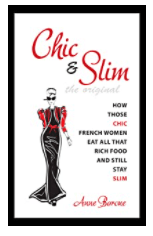
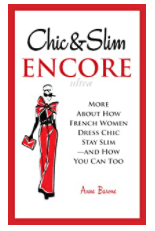
A couple of weeks ago, I mentioned the books that I read in the month of March. In that post, I mentioned that I read two books written by Anne Barone: Chic and Slim and Chic and Slim Encore. Naturally, the title reveals a little bit about the content: the book gives different ways to achieve slimness. But other than that, you may not be sure exactly what the books discuss.

In short, the books explain how the French lifestyle – from food to fashion to relationships – contribute to the ability to remain slim. After a particularly stressful year (most of us have been under tremendous stress this year), I noticed I’d put on a little more weight than I cared to have. So I pulled out Barone’s book and started to remind myself of the techniques I used to slim down a few years ago.

You see, back in 2015, I wanted to slim down, but I wasn’t sure how I could do it without feeling hungry or unsatisfied. I initially got a copy of Chic and Slim Encore for free on Amazon (there was a Kindle special) and, after reading it, I decided to purchase the original “Chic and Slim” ebook. So I started eating like the French and, wouldn’t you know it, I lost weight.

One of the best things about the French method of maintaining a slender physique is that it does not require deprivation. While on this eating and lifestyle plan, I am able to enjoy 4- and 5-course meals. I don’t have to exercise strenuously, and self-care is a priority. This eating plan allows me to lose weight without starving myself or sweating my life away in the gym. It’s perfect for me, because it allows my dining experiences to feel more elegant (and we all know how much I love elegant living!), as well as more intentional. My meals can’t be rushed, so I have a chance to really pace myself and avoid overeating.

So, if you’re interested in this particular diet, check out Anne Barone’s books. You won’t be disappointed!

Uncategorized

Why The Level Up Movement Is Full of Failures

Happy Monday, friends! I hope you had a great weekend. My weekend was busy, and my typical tiredness was compounded by a small bout with allergy symptoms (headache and sinus stuff). Aside from that, it was a good weekend overall.

Today’s topic is probably a bit surprising to you all, since this is not a subject that I speak on frequently. After all, my blog has been about my own journey, and I’ve only casually observed others who may be on the same path. I believe in keeping my figurative eyes on my own paper, so being invested in the activities of others always seems futile and distracting.

That being said, this topic has come up several times when chatting with some of my ambitious friends, especially since they and I are often part of online/virtual groups aimed at providing education, resources and advice to women that want to improve their lives. One thing that my friends and I have observed is how many ladies that claim to aspire to “leveled up” lifestyles are failing miserably at achieving their goal.

This is a topic that has been on my mind for a while, mainly because it always takes me a while to clarify, within myself, what patterns I’m seeing and what those patterns mean. When I see certain behaviors repeating themselves, I like to take a look at WHY this is happening, and how can I avoid falling victim to the same thing.

Here’s the pattern I’ve noticed: a woman decides that she wants to improve her life in multiple areas. So, she joins groups that claim to support these lifestyle changes. She makes a lot of surface changes quickly (new hair, new makeup, new clothes, and learns the “lingo” used within these groups). She posts her “before and after” pictures, and is quickly praised for the changes she’s made, then she goes out into the world, ready to get whatever she wants.

Except . . . The world does not hand her what she wants. In fact, most of what she experiences is only a fraction better than what her life was before. She is perplexed because she’s done all of the things that she was told would lead to her ideal life. But all of her efforts lead to miniscule rewards, and she sometimes gets a lot of criticism and coldness from people that were once her good friends and beloved family members. She doesn’t understand why her new life is still elusive, even after all of the changes she’s made. She ends up feeling discouraged, and before you know it, she’s stop maintaining her “new look” and settled back into the mediocre lifestyle that she was living before.

There’s a simple explanation for why so many women in the level up community end up failing. They are doing the steps backward! Changing the exterior and trying to pass yourself off as “leveled up” is only good if you’re trying to impress in a one-dimensional world (like virtual/online groups). But when it comes to the 3-D world, your facade will crumble if you think that you can skip doing the inner work. If the change doesn’t start with the inside, then you can be certain that whatever progress you’ve made will be difficult (pretty much impossible) to maintain.

One of my mentors from years ago said, “Life is a mental game”. I knew this to be true, but the older I get, the more I see it play out in real life. A lot of people really want to bypass the “hard” work of changing their mindset because, let’s face it, doing the superficial stuff is a lot more fun and easier. But the lives we want are right on the other side of our limiting beliefs, bad habits, unsatisfying lifestyles, and shoddy networks. Our wildest dreams can’t come true until our inner worlds are up to snuff.

I have more thoughts, but I think I’ll save those for another day. I hope you all are doing well! I’ll talk to you all tomorrow.

health · life curation

Fibro Fridays – My Current Favorite Fibro Vloggers

Happy Fibro Friday! We made it to the end of another week, and what a week it’s been! I’m looking forward to a quiet and restful weekend with my family, because I need a little downtime.

But anyhoo, back to Fibro Friday. Today, I’m sharing some of my favorite fibro vloggers. These lovely souls have generously shared their fibromyalgia journeys on YouTube, and I’m thankful for the knowledge, encouragement, and inspiration they’ve provided. A few of them have fibromyalgia-centered channels, while others discuss fibro occasionally, while vlogging about the rest of their lives.

If you’ve watched any of these vloggers, then you know that they have great content and are joys to watch. I hope this list of vloggers gives you some great ideas on how to manage your fibromyalgia symptoms and a heaping dose of encouragement.

In no particular order:

Grace at Home – she doesn’t post frequently, but she shares some really sound information on her fibro experience. The symptoms she mentioned are almost identical to mine. She was one of the first Black women fibro vloggers that I found on YouTube. That actually speaks to another issue when it comes to chronic illness (gross underdiagnosis and misdiagnosis of WOC, especially Black women), which I’ll discuss in a future Fibro Friday post. This video describes, in detail, how fibro feels. It’s great information for anyone that doesn’t understand the pain that fibromyalgia patients experience.

Marla Robinson – Marla’s channel has all sorts of lifestyle goodies, and I love the fact that she’s a mature YouTuber. Aside from that, she gives wonderful information on her fibromyalgia and other chronic illness journey, as well as the treatments that have worked for her, as well as what has been ineffective. She does a fabulous job explaining her journey, so for anyone that wants a very thorough explanation, this is a great channel to view.

Chronically Emily – While fibromyalgia is a devastating condition at any age, it’s especially disheartening to see younger people with the condition. There is a particular sadness that I feel when I see young people that are impacted so significantly by chronic illness, because I know that they won’t get to experience a pain-free young adulthood. However, dear Emily seems to take it all in stride and is living a wonderful, full life in spite of her pain. I enjoy hearing how she’s doing (she has multiple chronic conditions) and seeing her embrace new chapters and experiences in her life.

Olga Chronics – This charming channel centers around Olga’s chronic illnesses (mainly, fibromyalgia and IBS) but she also shares her other interests, such as reading books and spending time with her adorable pup. She goes into some of the ways that she is personally impacted by fibro, and she goes to great lengths to offer possible solutions to her subscribers. I also love that she gives her viewers a peek into how Portugal and its health system treats fibromyalgia patients.

Adventures with Fibro – Deena embodies living an active life while still taking care of herself and managing her fibromyalgia. She is an avid hiker and gives wonderful tips based on her 17(!) years of fibor experience. Deena does a great job of discussing some of the mental health aspects that can be affected by fibro (many people diagnosed with this condition also have to deal with anxiety and depression).

Lord and Lordettes – Nicola splits her channel between fibromyalgia-related content and family/lifestyle vlogging. She has a fibro-related post every Wednesday, and she takes her time to discuss a singular specific symptom in these videos. I also appreciate hearing how fibromyalgia is treated in the UK (as a US-based fibro patient, I’m always curious about which countries have better/more innovative care for invisible illnesses. US treatment approaches are mediocre in many ways, and absolutely nonexistent in other ways.)

A Life I Choose – This channel focuses on overall wellness, but the hostess, Emma, also discusses how she mitigated her fibromyalgia. I think that one key advantage that Emma has is a background as a psychotherapist, so she has extensive knowledge on how to condition the brain in a way that promotes healing and (possibly) minimizes pain. She has (if I recall correctly) successfully transitioned herself off of fibromyalgia medications and lives a normal life with minimal pain.

reading list

Book Review: Double Your Business

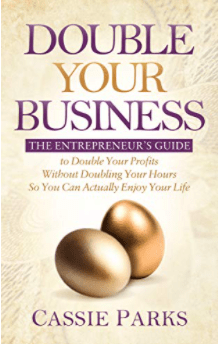
I’ve mentioned Cassie Parks in previous posts. She is one of my favorite law of attraction (LOA) coaches, and her simple, practical approach to crafting your dream life is refreshing. In a world full of coaches that make LOA complicated and inaccessible, it’s wonderful to have someone that breaks away from the pack and does it her own way. So, in my quest to learn more ways to create a stronger, more lucrative business, I turned to Cassie’s book, Double Your Business.

The full title of the book is, Double Your Business: The Entrepreneur’s Guide to Double Your Profits Without Doubling Your Hours So You Can Actually Enjoy Your Life. But, as you can see, I’ll be using the abbreviated title. In this book, Cassie reveals her step-by-step strategy for increasing your revenue without requiring additional time or extraordinary effort. Her approach involves using clear intentions and embracing your future lifestyle in order to align with your desired reality.

What I appreciate about this book is that it doesn’t give you a quick fix for business growth. As Cassie explains, “quick” strategies are rarely effective over the long term. We have to dive in the day-to-day reality of the lifestyle we desire in order to co-create our best lives. The exercises are easy to follow, Cassie’s writing style is engaging, and, if you follow her advice, you will absolutely double your business without having to work harder or increase your hours.

Additionally, I can see how this would support my goals for 2021. Cassie is careful to avoid the word “goal”, as it implies something very limited, as opposed to an “intention”, which is far broader and more flexible. I love that her approach is so much more wholistic/holistic than some LOA coaches. Instead of focusing on something finite (like a singular goal), she expands your focus so that you can design a business that easily accomplishes all of the goals that you desire to achieve.

I cannot recommend this book enough! If you have it, or would consider buying it, let me know in the comments. Talk to you all soon!

*This post contains affiliate links

writing

Writers Wednesdays – A New Cycle

Happy Writers Wednesday! I hope you all are having a great day or evening. I mentioned my writing, editing and publishing lessons learned in last week’s Writers Wednesday post. Now that I’ve churned out a few children’s books (like this one that teaches children about China, and this one that teaches kids about Vietnam), I’m getting back onto schedule.

The book I was working on (prior to working on the children’s books) is basically complete, so it’s time to move on. Starting next week, I’m entering a new writing cycle. However, instead of starting a new project from scratch, this cycle will focus on finishing some of my older, neglected manuscripts. I have quite a few unfinished books that I’ve wanted to complete for the past few years, and these next few weeks feel like a good time to do so.

The way I’m planning it in my mind will mean that I won’t stick to one manuscript, complete it, then move to the next. I’ll likely bounce between three or four works, doing writing and editing tasks until they’re all finished. For me, the challenges lie in four different things:

  • Refusing to start a brand new book (given my short attention span, this will be my biggest challenge)
  • Creating a practical daily schedule (as my schedule has been busier recently, this may be a bit harder to do)
  • Finding enough willing beta readers for my books (not a major challenge, but something to keep in mind as I get closer to completing my edits)
  • Setting a reasonable end date for these writing and editing tasks (my second biggest challenge, since I tend to underestimate the time needed for tasks)

As I look forward, I can see where my weaknesses are, and, by seeing them, I can prepare. In the next few days, I’ll be concentrating on how to avoid or mitigate each of the challenges I listed above. And, more than likely, I’ll share about my strategies, tactics and more lessons learned during the next few Writers Wednesdays posts.

That’s my writing update for this week. Have a great day!

*This post contains affiliate links

art

The Met Turns 151!

Happy Tuesday, friends! On this day, 151 years ago, the Metropolitan Museum of Art in New York City was granted an Act of Incorporation. This means that today is the Met’s birthday!

Google Doodle commemorating the Met’s 151st birthday

Now, I’ve not been to the Met yet, and, seeing as how I probably won’t be going to New York this year, I can’t say for sure when I will visit. But this impressive museum is on my bucket list, and for good reason. The museum has over 2 million works in its permanent collection and is by far one of the most famous art museums in the United States. As a matter of fact, they have multiple works by my favorite Neoclassicist, Jean-Leon Gerome (you all remember that I wrote about how much I love Gerome’s work in this post and in this one).

However, my admiration of the Met includes a serious criticism. One thing that has made me raise an eyebrow at the Met is the decision in 2018 to start charging $25 for most out-of-state and foreign visitors. The original Act of Incorporation indicates that the Met should be free in perpetuity, but museum president Daniel Weiss decided to break tradition and start charging fees. At first glance, it seems like a shameless money grab (and in many ways, it is), but it’s a little more complicated than that. This decision to charge fees was allowed by the City of New York, in exchange for decreasing the Met’s funding from the city. These funds that are no longer going to the Met have been allocated to increasing “artistic diversity” and will support other facilities that give a platform to more diverse creatives.

However, ever so often, we get to see balanced restored in our world, and what seems like fairness reappears for a brief shining moment (if you know the reference, leave it in the comments!). Yes, the Met collected fees in 2018, 2019, and the early part of 2020. However, COVID-19 reduced the annual visitors from nearly 6.5 million per year to just over 1 million. The loss of revenue has left the museum in the awkward position of deciding whether to deaccession or sell of part of its collection, just to cover their expenses.

I can’t say that I’m not partially amused that greed came back to bite the Met, but my chuckles are tempered by two things. Firstly, this loss of revenue caused 20% of the Met’s staff to lose their jobs (this saddens me tremendously). Secondly, this is even more motivation to keep the admission fees, as the Met will need to build up its cash reserves and avoid becoming insolvent as best it can. Now, I’m sure that the Met will do just fine (I don’t foresee any long-term closures, especially now that there are safe visiting procedures in place). I’m just concerned that COVID-19 may have built a stronger case for admission fees than anything that the museum could have offered in a public statement.

So, today, I’m celebrating the Met, praying that they eliminate the admission fees, and keeping my fingers crossed that I may be able to purchase a Gerome sketch during some sort of auction of the Met’s works. A girl can dream, right?

writing

Writers Wednesdays – Things I’ve Learned About Writing, Editing and Publishing

I’m finally back with a Writers Wednesday post! It’s been a while, mainly because there were other things that were more important for me (namely, getting into a new routine that accommodates my increased offline activity). But, seeing as how I quickly churned out two books (I mention them in my goal update post for March), it’s safe to say that I have some insights on what I’ve learned through the writing, editing, and publishing experience.

About writing . . .

When it comes to writing, it’s far easier to get into my “zone” than it used to be. The more I write, the easier it is for me to write. And since I’m not as critical about my rough drafts as I used to be, I am able to actually complete a book (instead of wasting time agonizing about the right things to say). Also, setting a fixed time to complete a certain number of words daily is pretty useless for me. I know that having a routine is important, but micromanaging every detail of my daily writing routine (such as the number of words to type) is too stressful for me. I give myself a lot of flexibility, and I don’t criticize myself for writing outside of my scheduled time. I do my best writing at 2-3 AM, and I’m okay with that.

About editing . . .

For me, editing is best done in small chunks. I focus on a few pages at a time, and read it aloud, making the changes as I go. And I get through the entire manuscript, then I start all over again. And then I share with friends, to see if it makes sense. Most of my friends are too busy to read my books nowadays, but if they spend a few minutes looking through my work, I’m appreciative. I stop worrying about editing after 2-3 rounds of edits. Anything more than that is obsessive, and it prevents me from publishing my book in a timely fashion.

About publishing . . .

Amazon used to quickly approve manuscripts, then, at some point, they got overwhelmed and the publishing queue became far too long. Now, they are back to quickly approving books again, and I’m thankful. For me, publishing is the easiest part of the process: I’ve done this enough to get through the process easily. Also, it’s a good idea for me to pre-write my book description before I start going through the publishing process.

**********

Those are just a few of my observations from working on my latest books. If you’ve published a book before, what are some crucial things that you’ve learned? I’d love to hear all about it!