life curation

Living Your Best Life: Managing Overwhelm

As part of this ongoing discussion about living my best life, I’m taking the time to assess what worked – and what didn’t work – when crafting a better lifestyle. What good is knowledge if I’m hoarding it instead of sharing?

Early in my separation (leading up to my divorce) I felt like I was going in 1000 different directions. There was so much to attend to and so little time and energy to handle it all. I wanted a business, a successful federal career, a healthier body, more sleep, better relationships with my family and friends, a writing career, a financial benefactor, etc.,. So many things to do and I was trying to do them ALL!

relax

Look, we all have too many tasks and not enough time. We ALL are overwhelmed to some degree or in some area. The overwhelm may not be ever present but it comes up at the most inopportune times. Here are a few things that I did when I was crushed under the weight of all of my “to-dos”. I hope this list helps you!

  1. I took naps. Naps are such an underrated source of stress management. When things were just too much to handle, I’d lay down and sleep for a bit. I was always more clearheaded and rational after I got a little rest.
  2. I delegated and outsourced. As much as I could, I entrusted some of my tasks to family or friends that were invested in helping me during that difficult period. Just having an extra set of hands on the scene can do wonders for managing overwhelming situations.
  3. I focused on tackling the smallest items first and let my momentum build up. Instead of doing it all, I focused on one thing at a time. That really worked wonders for helping me feel accomplished, which lead to me feeling more relaxed and energized to tackle the rest of my to-do list.
  4. I confided in friends. Sometimes, just vocalizing my frustrations would work wonders for my stress levels. I made sure to reciprocate: I’d let my friends vent to me, as well.
  5. I journaled. When I didn’t want to use my voice, I’d reach for my pen and journal. Writing my thoughts really helped me to get those confusing thoughts out of my head and into a tangible form that I could read and process at my leisure.

Do you have any tips for managing overwhelming situations? I’d love to hear about them in the comments below!


life curation

Living Your Best Life: Cultivating Calm, Part 2

calm2

Happy Wednesday, beloveds! In part one of my Cultivating Calm posts, I mentioned how to become more aware of when you are feeling stressed, anxious, or frustrated. Once you identify the patterns and triggers, you can begin to control or manage them. Here are a few tips for controlling and managing triggers that threaten your feeling of calm.

angry

-Avoid people who stimulate an anxious or agitated feeling. You know who I’m talking about: there are some people who have a nervous energy that’s contagious: they walk into a room and everyone starts feeling “on edge”. I noticed that a lot of inexperienced or insecure supervisors and managers tend to generate this energy. You also notice it from people that treat everything like a crisis or a tragedy, consistently overexaggerating the seriously of thing occurring in their lives.

news

-Avoid consuming overstimulating food, beverages or media. I adore chocolate, but I can’t have it late at night because of the caffeine. I feel jittery and agitated when I can’t get to sleep, so I avoid chocolate late at night as well as caffeinated beverages. Likewise, examine your diet and see what stimulants you consume regularly. Then, aim to wean yourself off of those stimulating foods and beverages: overstimulation frequently causes agitation and anxious feelings. It goes without saying that media can also make you feel anxious: sometimes the news makes us feel stressed and frustrated. So employing some selective ignorance can go a long ways in helping you preserve your calm.

clean

-Clean up your physical surroundings. Disorderly environments can disturb your sense of peace and tranquility. So clean up and enjoy your new, calmer environment.

stretch

-Practice deep breathing and relaxing stretches to help you unwind. Intentionally increasing your oxygen intake can really help with “resetting” your energy and improving your mood (there are studies confirming this, so do your research!). Relaxing stretches help to reduce the tension in tightly contracted muscles.

life curation

Living Your Best Life: Cultivating Calm, Part 1

calm

On this blog, I always strive to be authentic and positive. One of my keys to remaining positive is to continue doing the emotional work that will allow me to live my best life. Without doing this work, I would be stuck in the often-frustrating daily experience, and different situations could negatively impact my mood and perspective.

A crucial part of my self-care is the conscious cultivation of calm (if you can’t tell, I love alliteration). Calm is more than a feeling for me: it’s the state where I am most secure and clearheaded. I function best in calm, and for that reason, it behooves me to continue to cultivate it on a daily basis.

You, too, can cultivate calm regularly. All it takes is some inner and outer work. The first part of cultivating calm involves becoming aware of triggers and spotting the patterns. Once those triggers and patterns are identified, you can successfully develop tools to manage the stress and promote your peace. Here are some of the steps I’ve used for the first part of cultivating my calm (you can read about the second part of cultivating calm in a future post).

-Take note of when you feel anxious or agitated. You may have a physical reaction to aggravation (tense shoulders, jaw clenching, headaches, etc.,) or perhaps the aggravation shows up in your behavior (silence/lack of communication, aggressive interactions with others, violent outbursts, etc.). You don’t need to try to change the behavior immediately, just note it and stop yourself if you feel that you’re about to do something dangerous to yourself or others.

-Keep a journal to log your anxious or agitated moments for about one or two weeks. This will help you vent safely and can take a lot of the “fire” out of an aggravating incident. Jot down as many details as you can: time of day, what you were doing prior to feeling aggravated, the event that triggered the aggravation, how you responded, and what you feel as you write about it. Lots of details are key for the next step, so really take the time to write it all down. It helps to write in the red hot moment, as this usually means you’ll capture the detail in all it’s emotionally-triggering glory.

-Look for patterns: does your irritation come after interacting with certain people? Does it come from the tasks expected from you on the job? Were you hungry? Were you sleepy? Look for any commonalities between those frustrating moments. Once you start seeing a consistent trigger appear, then you know you’ve found a pattern and you can set out to manage that trigger more effectively.

If you need more help with this, there are countless online guides for helping you identify triggers and patterns. Also, I’m a big fan of using professional help to assist with managing things that feel overwhelming or beyond your control.

Look out for the next “Cultivating Calm” post coming soon!

food

My Secret Weapon for the Summer

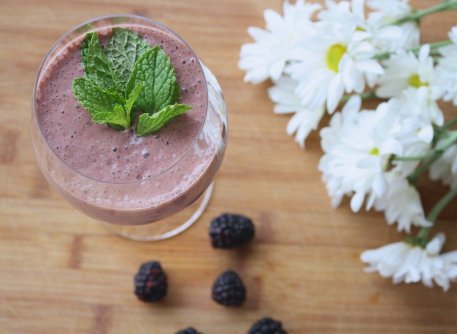
After the languishing winter we’ve had, I’ll admit that I’ve been anxiously awaiting warmer days. For one thing, I’m a summer baby, and so I feel like I come alive during the summer months. Secondly, the foods that are abundant during the summer – fresh fruits and vegetables – are my favorites. I love eating salads and drinking freshly made smoothies.

smoothie.jpg

Summer’s almost here!

This brings me to the topic of today’s post. I have had a handy gadget since the fall, and I’ve used it several times, though I’ve never mentioned it on this blog. This gadget is such a game changer for me: it’ll allow me to easily create the fresh smoothies that I want, anywhere and at any time. This gadget is my portable, personal blender.

Sadly, the one that I purchased in the fall is no longer available, but I’m linking a suitable alternative below. Just click here or on the picture to take a look at it.


I got my personal blender in pink, as well. This device is ingenius: it has a charging port that allows you to recharge the battery using your standard phone charger. Once the blender is charged, you can make smoothies without having to be bound to an electrical outlet. It’s small and lightweight, not to mention very cute. These blenders are powerful enough to turn fruit into smooth, creamy deliciousness.

Do you have a personal blender that you’d like to recommend? Let me know in the comments below!


life curation · reading list

Book Review: How to Think Like Leonardo da Vinci by Michael J. Gelb

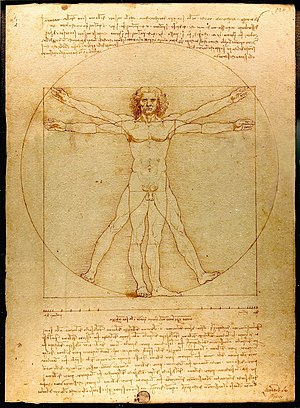
I’m a bit behind with my book reviews, but it’s great to finally get caught up.  February’s book selection was  “How to Think Like Leonardo da Vinci” by Michael J. Gelb.

I enjoyed that this book is broken down into 7 broad concepts, and the author goes to great lengths to describe how da Vinci embodied those concepts

The seven Da Vincian principles – Curiosita (curiosity), Dimostrazione (closely examining beliefs and learning via questioning), Sensazione (fully engaging the senses), Sfumato (embracing uncertainty and ambiguity), Arte/Scienza (balancing between arts and sciences), Corporalita (physical health and fitness), Connessione (understanding relationships between and connection among all things)- are the building blocks for living a genius life. Gelb provides examples from da Vinci’s life, as well as practical exercises, to describe how these principles worked in the past and how we can make these work in the present day.


300px-Da_Vinci_Vitruve_Luc_Viatour

I especially appreciated how Gelb provided exercises for embodying the Da Vincian principles at work and while parenting. He took great care to show how these concepts can be applied wholistically. I feel that many books exclude multiple groups in favor of focusing on one particular group. But this is a testament to Gelb’s application of da Vinci’s stance of connessione: all groups are connected, related and at some level inseparable.

I thoroughly enjoyed this book and will definitely reread it! I think I’ll draw upon these concepts for future posts, because I strongly feel that this multidimensional approach to life is crucial. In these times, where change can happen in an instant and we need to be able to respond quickly, I feel there is so much benefit to training ourselves to be the best thinkers that we can be.

Make sure that you check this one out! You won’t regret it!