art · culture · festivals · international · life curation · nature · travel

My Heart Belongs to Scotland – Inverness and Montrose

In my last post, I shared how much I enjoyed our time in Stirling Scotland, and the highlights of that city. Our next two stops, Inverness and Montrose, were equally delightful, but I have a bit of bad news related to these cities. I ended up catching a cold, so I had to pass on many of the fun things I would typically enjoy. Sadly, I know I’ve forgotten half of my experience due to being unwell and dazed. It’s a shame: these were among some of the most active days of the tour. In any case, I’ll share what I can remember.
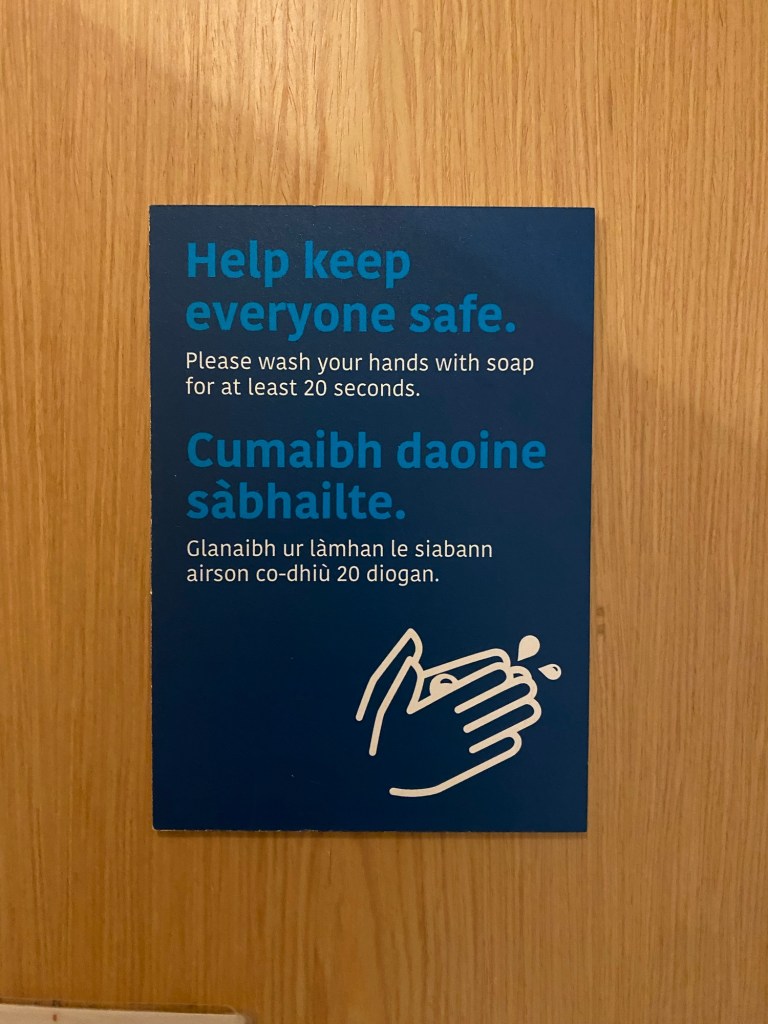
Bathroom sign written in English and Scottish Gaelic

We left Hotel Colessio in the morning, after eating breakfast and putting our bags on the tour bus. on our way to the next town, we got to stop at the beautiful Loch Lomond, and we drove through the Trossachs again. Loch Lomond is the famous lake of the song, “The Bonnie Banks o’ Loch Lomond”, and it’s just as enchanting as you’d imagine. It’s immense, and photos couldn’t really capture the beauty of it.

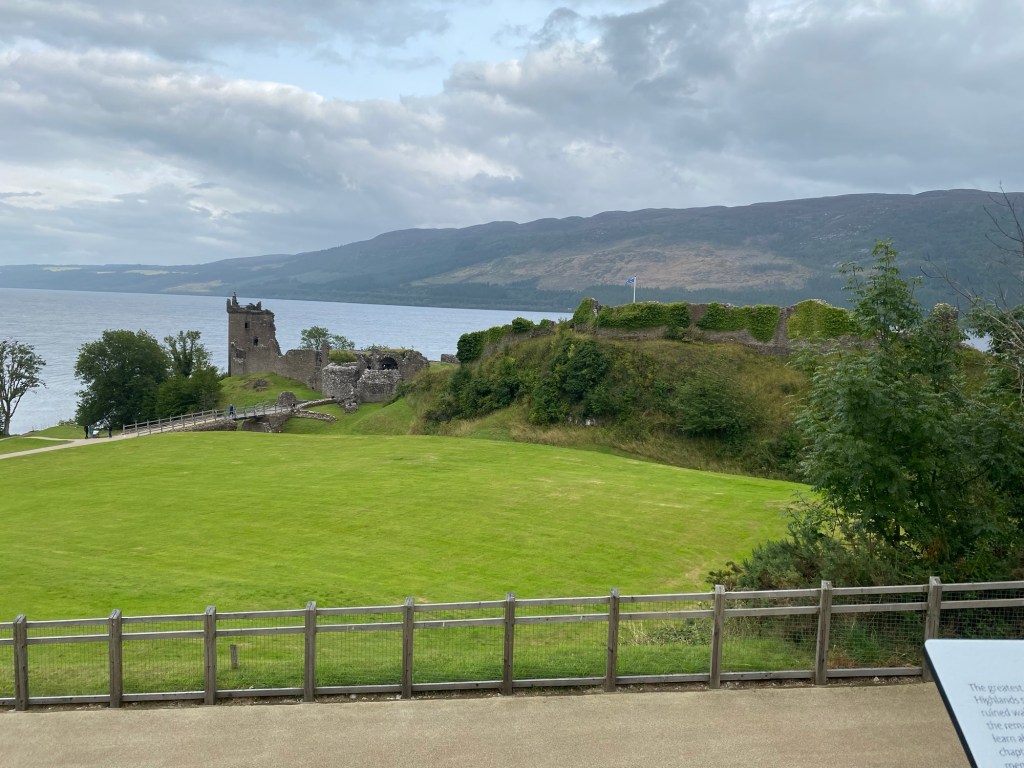
After enjoying Loch Lomond, our next stop was Urquhart Castle. This was a few hours away, and situated on Loch Ness. The bus ride was perfect for getting a much needed nap, though I hate that I missed some fantastic history lessons from our tour guide, Alasdair. What’s striking about many of the most picturesque castle in Scotland is that they are situated on prominent cliffs. What seems like a fantastic security device – a great vantage point for seeing possible invaders – ends up being a prison of sorts. Many of these castles fell under siege and the families dwelling in there could be cut off from food supplies in cases of war. The ruins that remain are stunningly beautiful but also a sobering reminder of the turbulent history of the location.
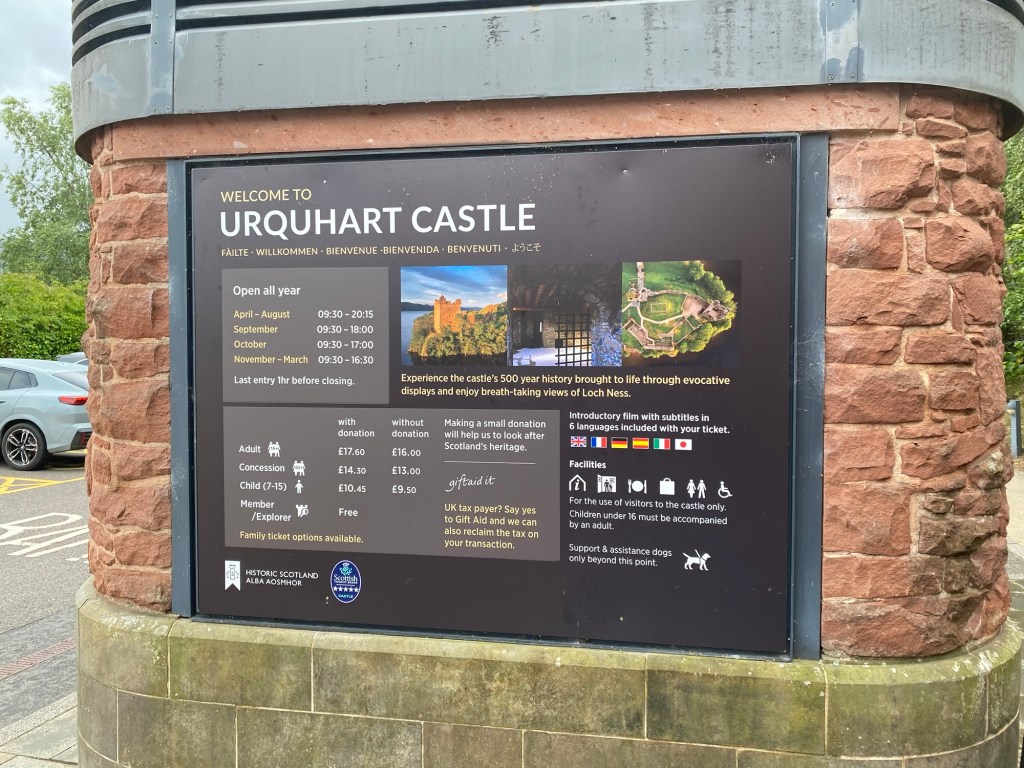
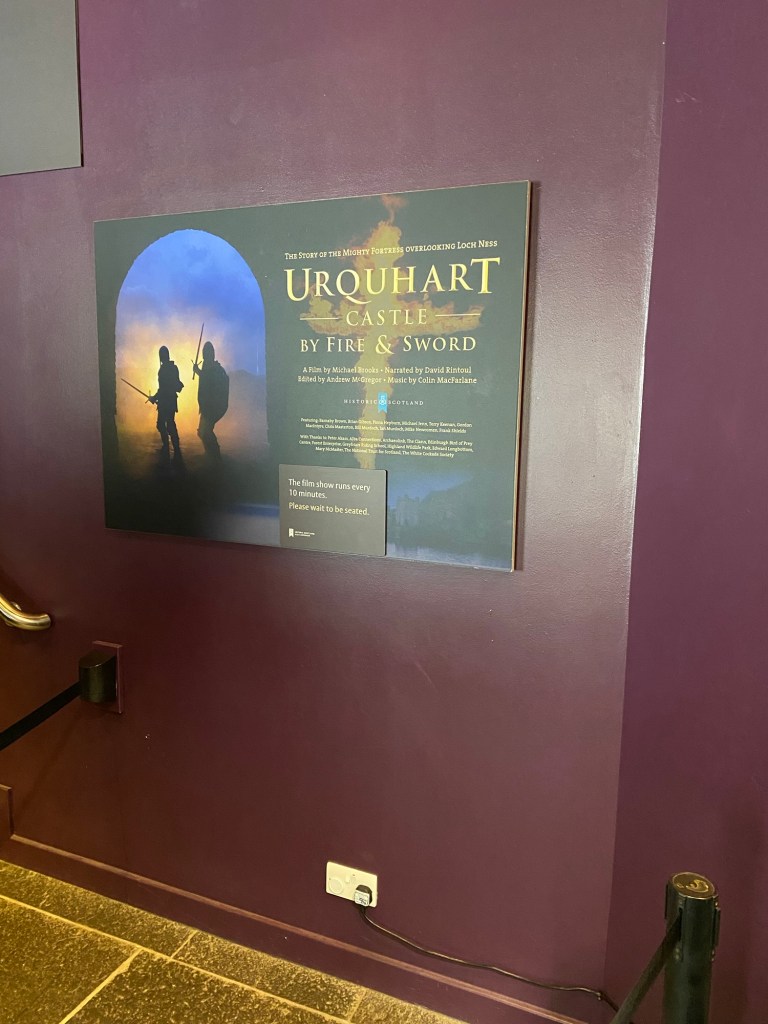
Welcome to Urquhart Castle sign
In the Urquhart Visitor Centre
Urquhart Castle from a distance
Artist depiction of Urquhart

No, I didn’t see the Loch Ness Monster. Maybe I’ll be lucky next time and spot Nessie!
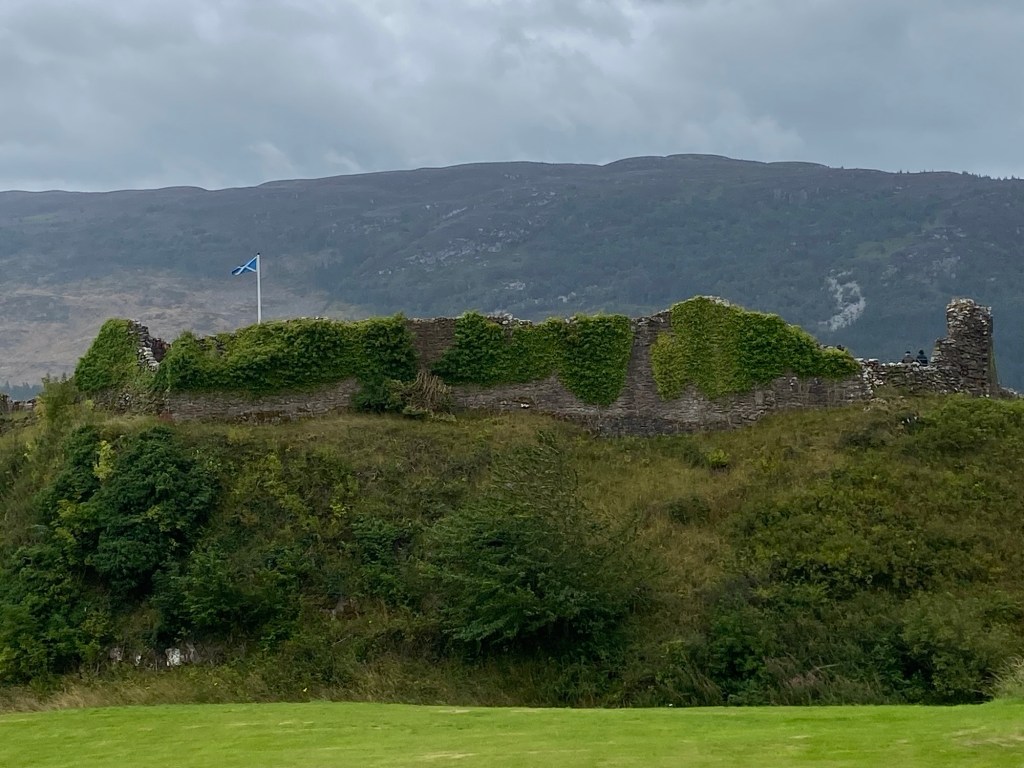
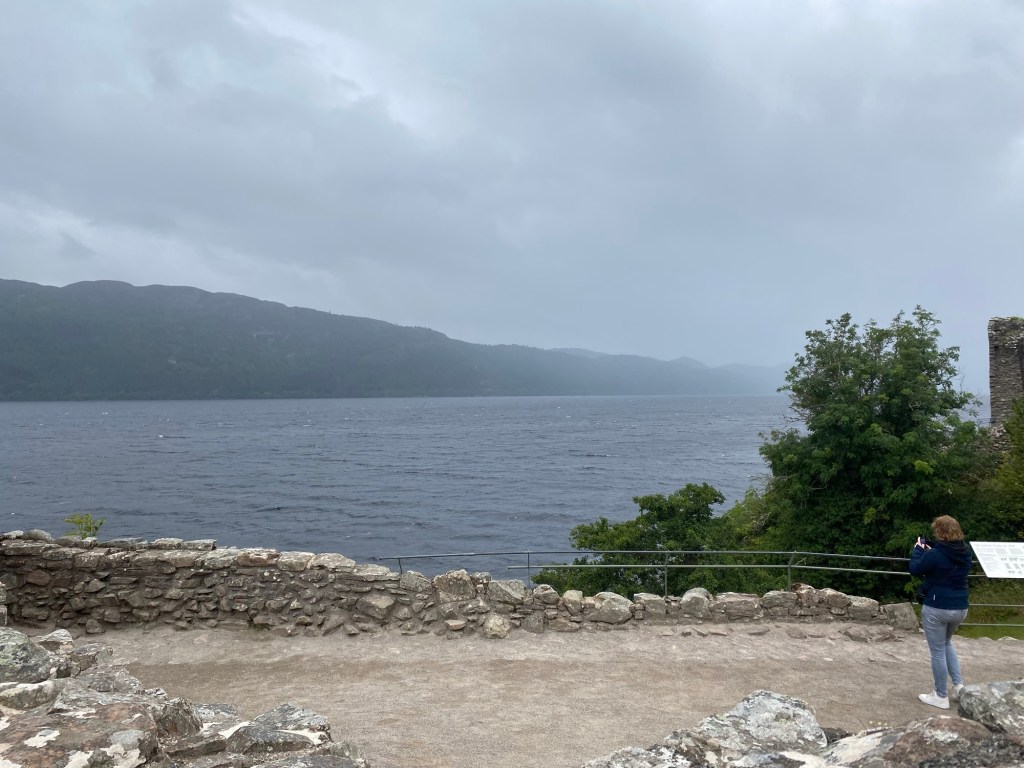
Structure at Urquhart Castle
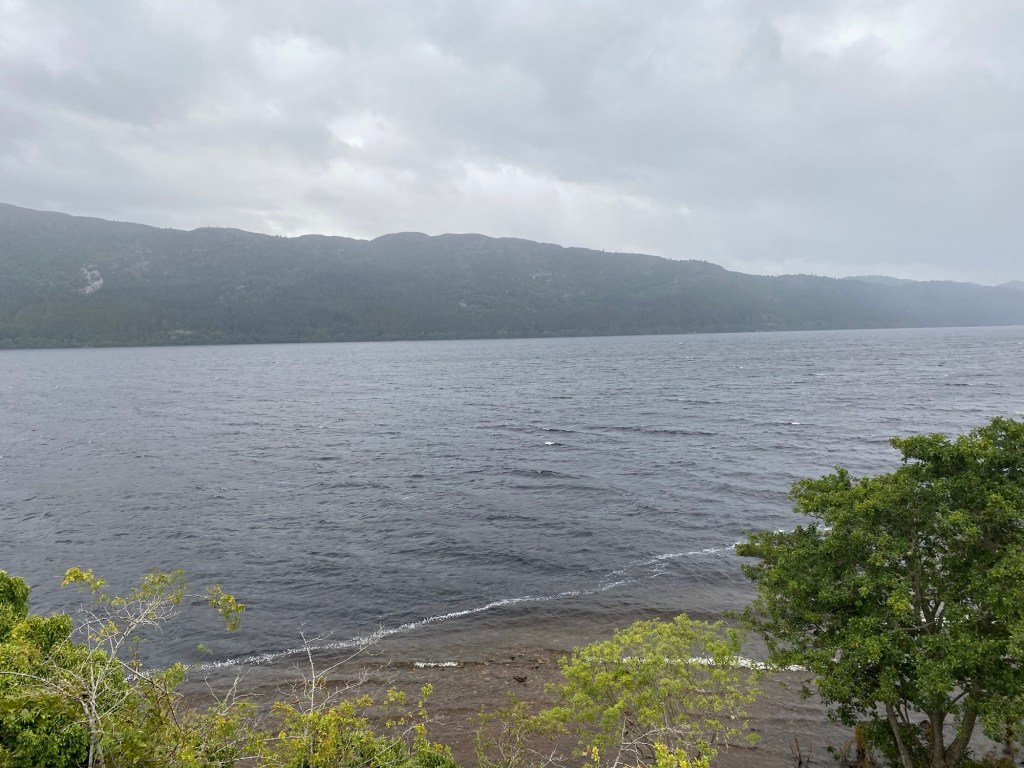
Shore of Loch Ness
More of Loch Ness

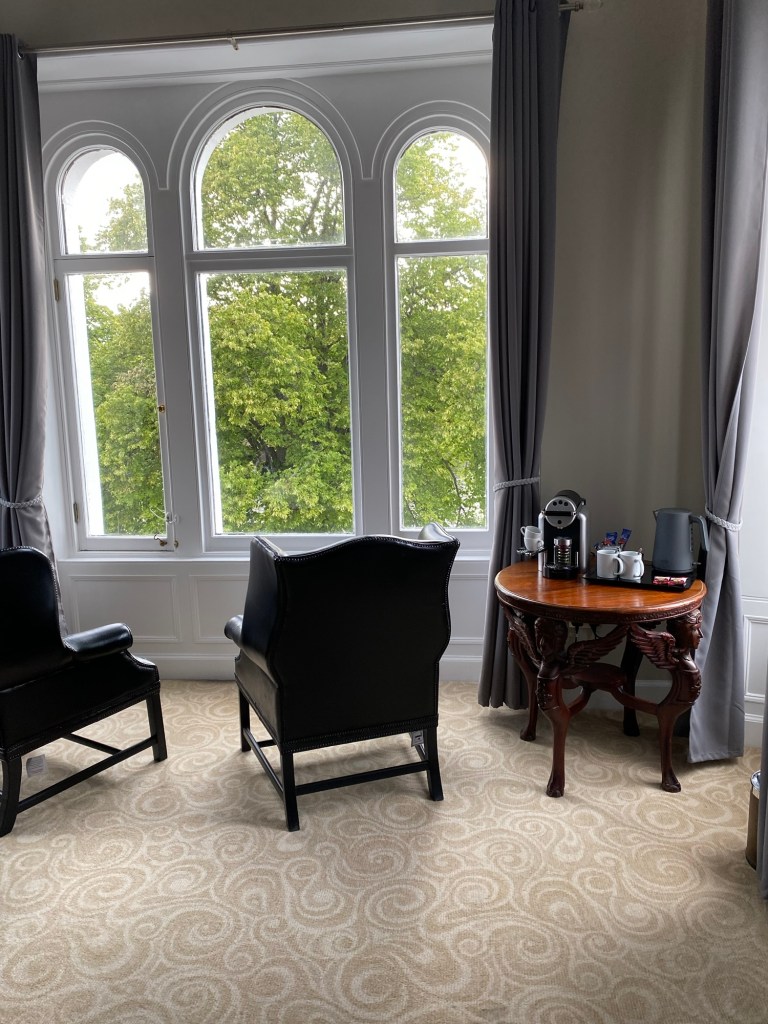
After a full day of activity, we settled into the Glen Mhor Hotel in Inverness. Aesthetically, this was probably my favorite hotel. It’s a boutique hotel in Inverness, and it’s absolutely gorgeous. The armchairs situated in front of grand, arched windows made me swoon. Since I was under the weather, I stayed in bed while my friend explored nearby pubs. She had a marvelous time and vowed to return. Oh, how I wish I was feeling better, and that I had more days in Inverness! This town has a lot going for it, and I will absolutely return and explore on my own.
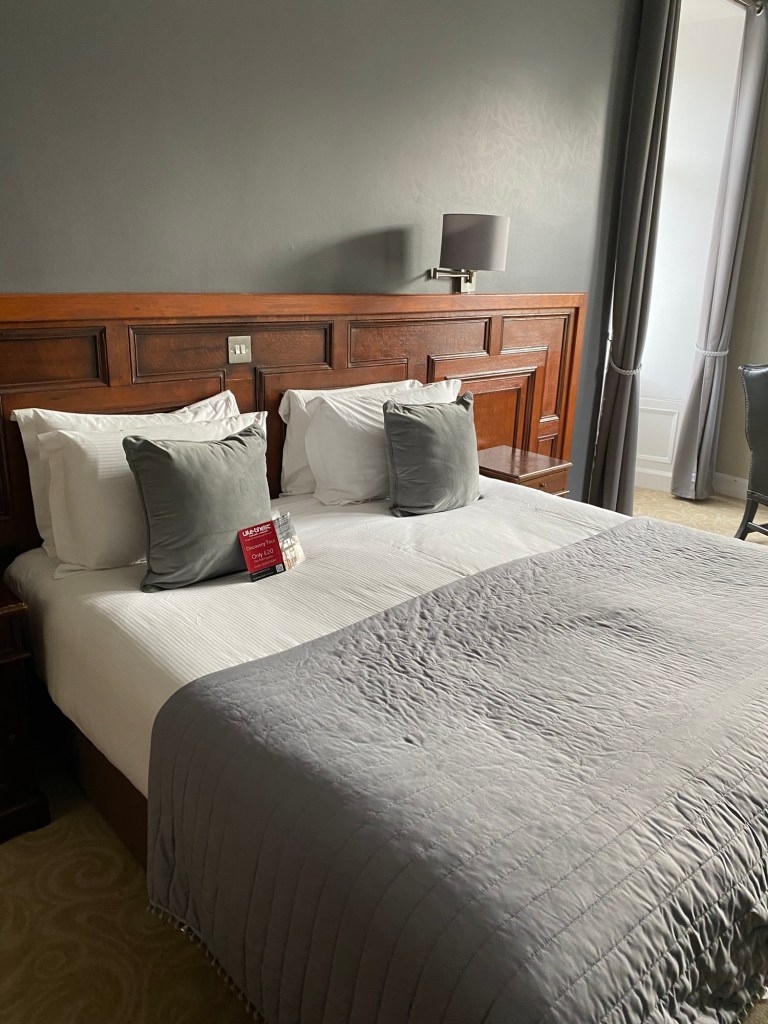
Bed at Glen Mhor Hotel
Sitting area in my room

The next morning, we ate breakfast, loaded our bags and made our way to the next town, but before we checked in at our next hotel, we stopped at the Culloden Battlefield Visitor Centre. This was one of more somber stops of the tour: this was the site of the Battle of Culloden, which marked the end of the Jacobite uprising. The bloodbath that occurred at Culloden was chilling, with the Jacobites losing 5 times more soldiers than the British. The heartbreaking story of Culloden is one that will never leave me.

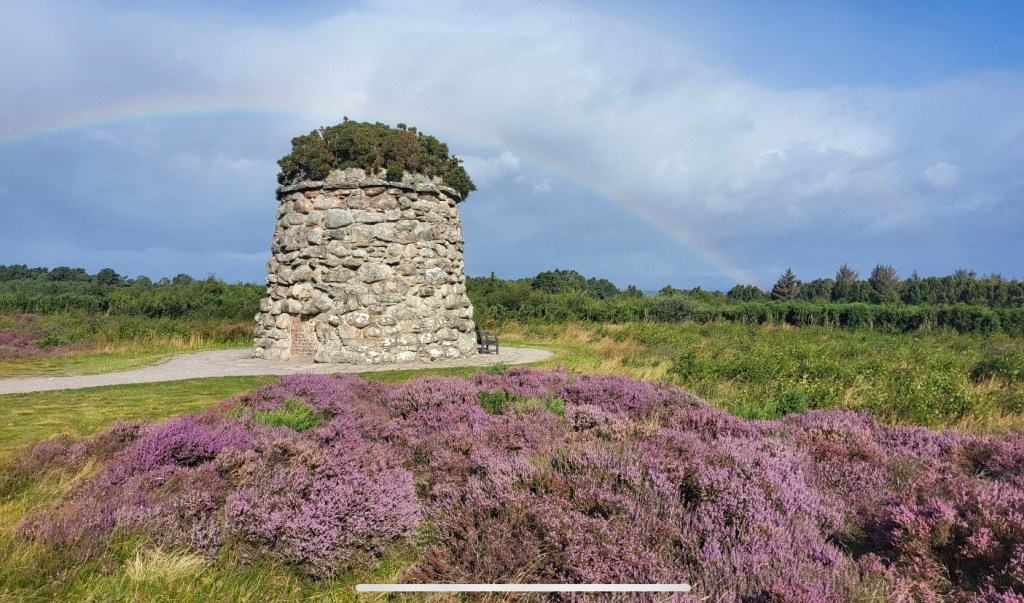
The road to Culloden
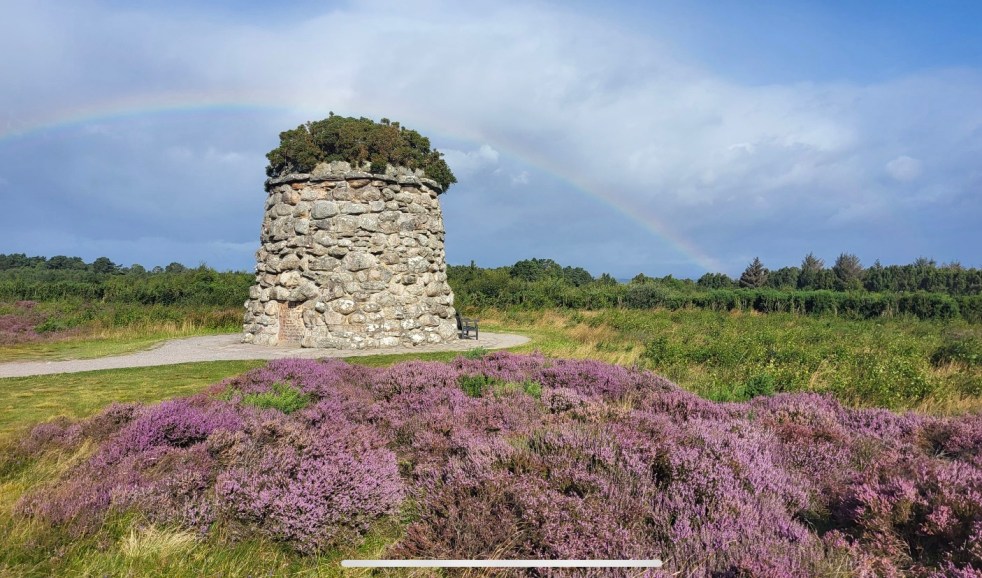
Culloden Memorial (photographed by Barry Graham)
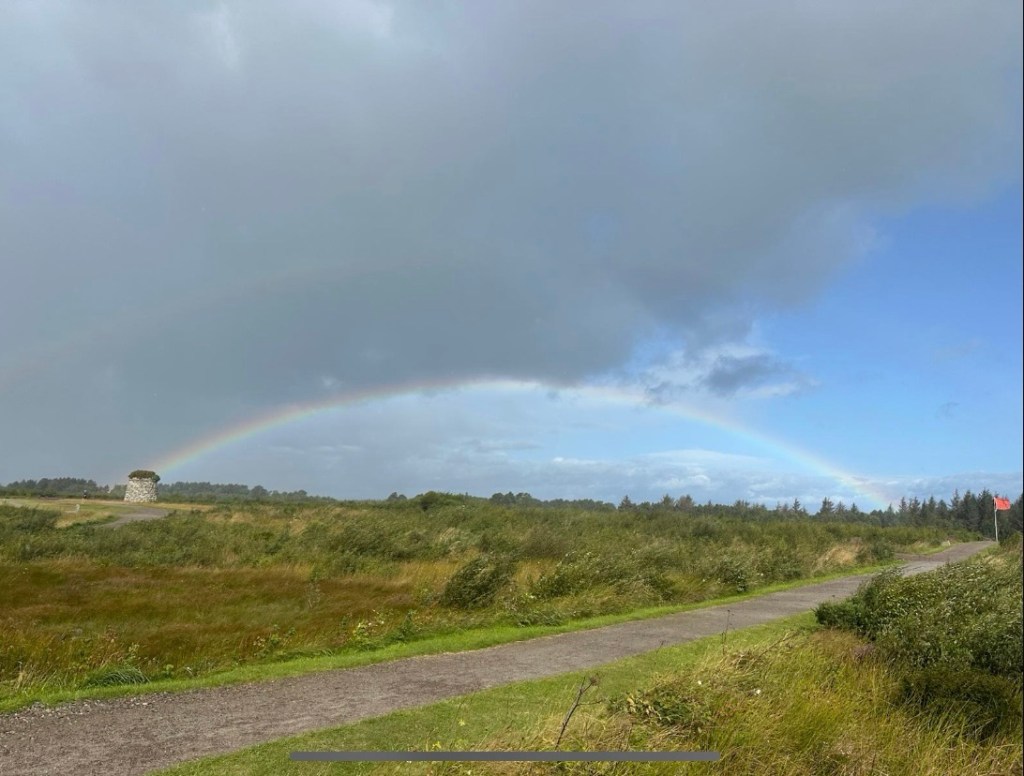
Culloden Memorial with full rainbow captured (photographed by Harrison Graham)

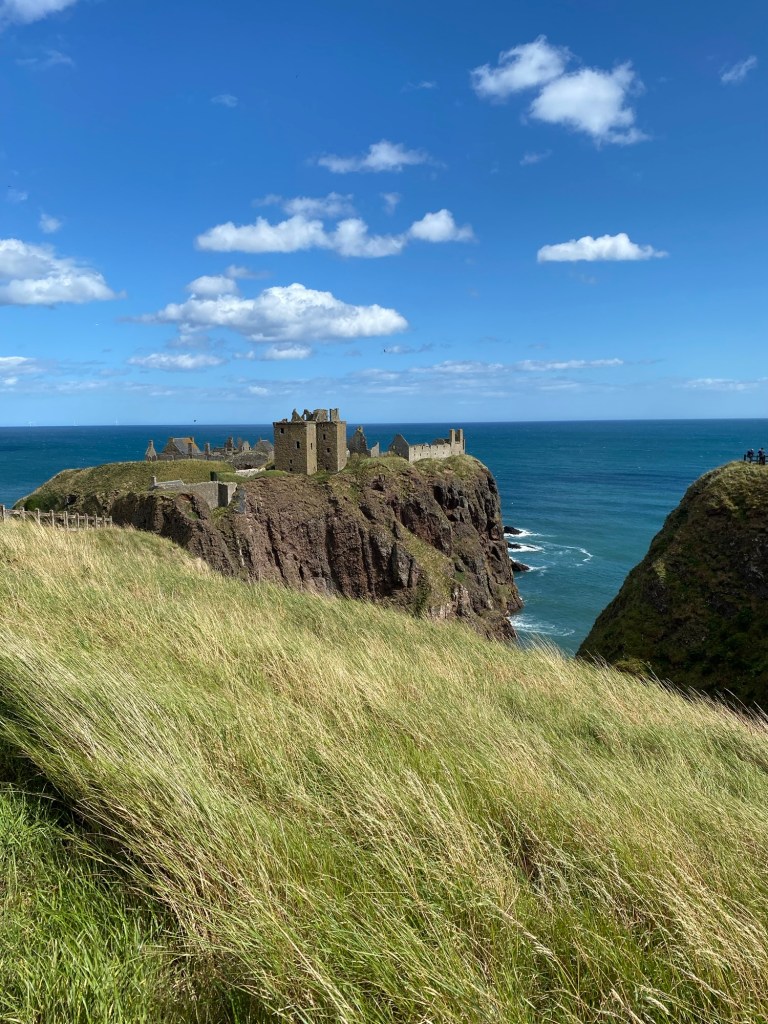
Our next stop is Dunnottar Castle, which brought us back to (you’ll never guess) . . . Stonehaven, where my Scotland vacation started! Dunnottar is another striking fortification located on a cliff, and, just like Urquhart, the safety of being mostly surrounded by water becomes dangerous when raiders cut off food supplies. Nowadays, Dunnottar Castle is a museum, and the views leading up to it are stunning. We stopped to take photos, then we resumed our ride to Montrose.
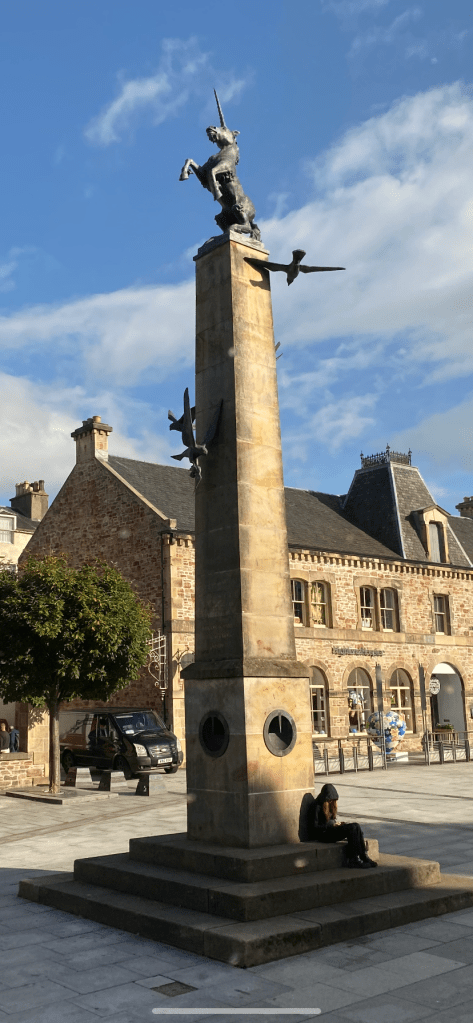
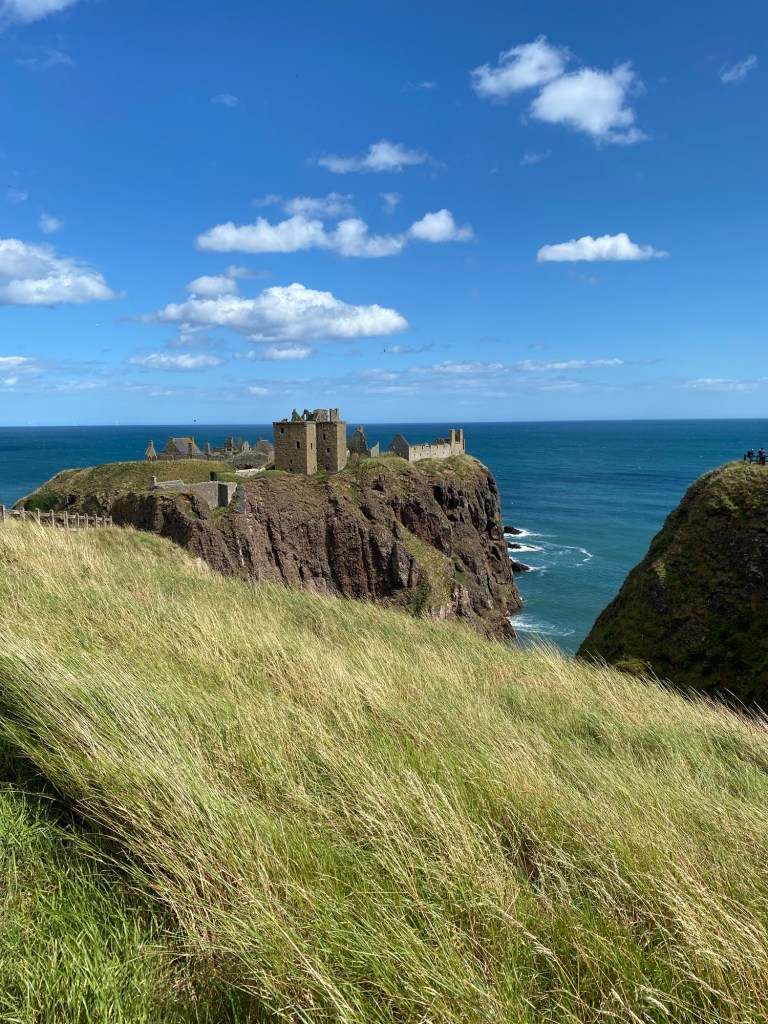
Unicorn spotted! En route to Dunnottar Castle
Dunnottar Castle in the distance
Another photo of Dunnottar
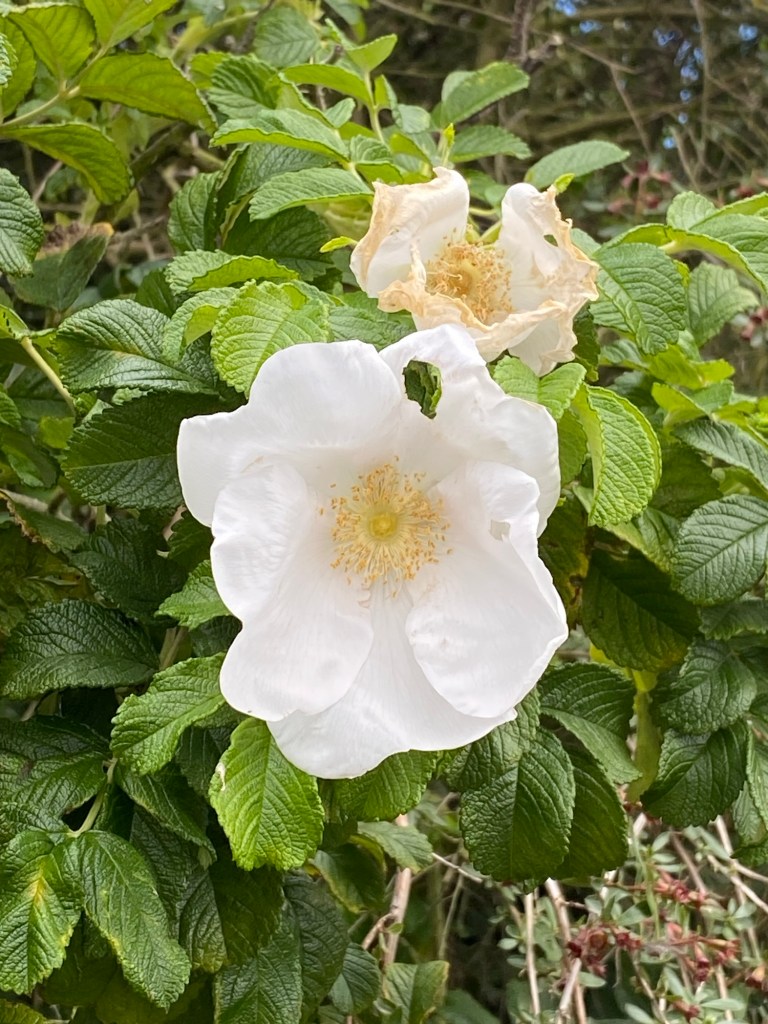
Flowers at Dunnottar

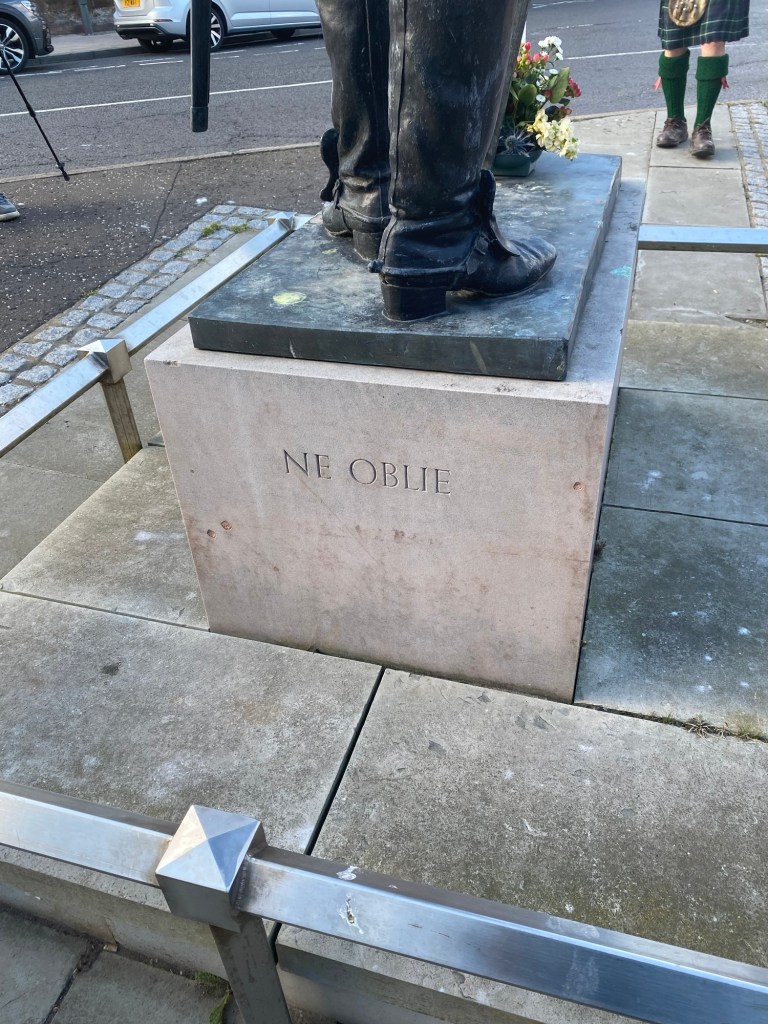
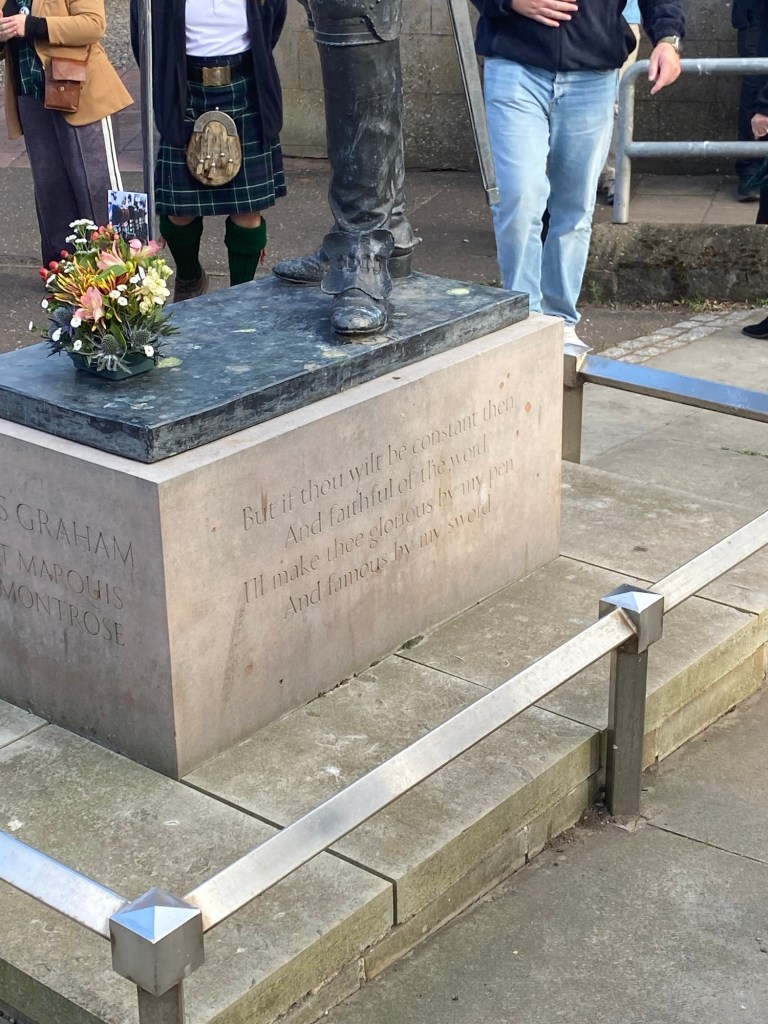
We arrived in Montrose, and settled in to the Links Hotel. This charming bed and breakfast was cute, cosy and a wonderful place to refresh ourselves before making our way to the next city. After checking in and resting for a moment, we roused ourselves to visit the statue of James Graham, 1st Marquess of Montrose. Yes, the town of Montrose is the historical city associated with Clan Graham’s peerage connection. James Graham was not just a peer and soldier, but he was also a poet, and his words adorn the base of the statue, along with Clan Graham’s motto, Ne Oublie (variably, N’Oublie or Ne Oblie). We were treated to a highland dance performance at the site of the statue, and we enjoyed meeting the lovely young ladies who performed for us.
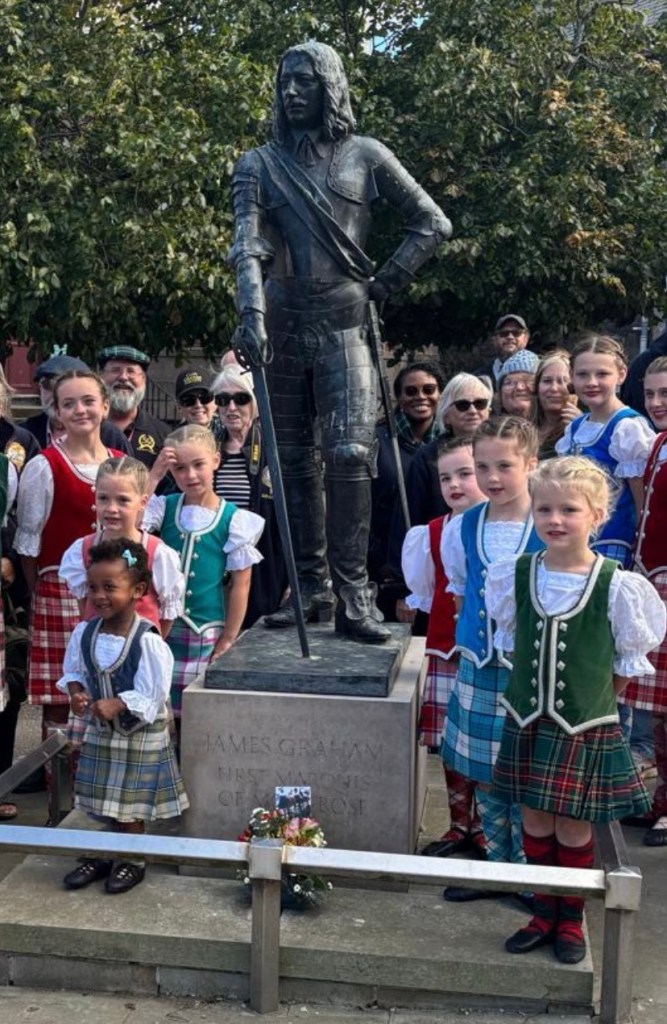
Darling highland dancers posing next to the statue of James Graham, 1st Marquess of Montrose
Poetry written by James Graham, 1st Marquess of Montrose
Clan Graham motto

We returned to The Links and ate our dinner, then we settled in for the night. The next day would lead us to our final city of the tour – Edinburgh – and we needed our rest for the full and fantastic days ahead.

That’s it for this installment! The next post will detail my Edinburgh exploits (including some Fringe photos). Stay tuned for that! Thanks for reading.

Uncategorized

Spring Plans

I can’t believe it’s the first day of spring already! It feels like New Years Day happened just a couple of weeks ago. The time is moving quickly, and, quite honestly, I wish things would slow down a bit. That’s not my normal opinion, by the way: I’m a summer baby so I always greet the spring season happily, as I know it will quickly give way to my favorite time of year. But this year, because my life has been especially hectic and not going exactly as planned, I find myself yearning for an extension of the winter season. I would love just a few more weeks to transition into springtime at a pace that works better for me.

In any case, my time-controlling powers have not yet kicked in, so today remains the vernal equinox. While I wish for a little more winter, I am delighted to be closer to the warm, sunny days I crave. I have been eager to do a proper garden project, and this will be my year to do it. I’ve reviewed the Old Farmer’s Almanac website to see which plants I need to start this month. I’ll also be taking a few visits to Home Depot, Lowe’s, Southern States, and any other garden shop that can help me get a solid start.

Part of my garden planning is thinking of a theme. It’s a lot easier for me to wrap my mind around what I want to grow if I can see that it all works harmoniously together. I’m thinking I’ll stick to lilies for this year: day lilies, true lilies, lily of the valley, and canna lilies (my favorite, calla lilies, don’t do well in my hardiness zone, so I’ll skip these for now). I’m envisioning lily of the valley hanging over my balcony, with the rest of the lilies on the sunniest side of my home. I’ll probably also add another rose bush or two, as well as planting another jasmine plant and peony plant to give more volume to the jasmine and peony plants I currently have.

I’ll keep you posted as my garden project comes together. I’m particularly excited for this year’s garden, as I’m hoping that being in the yard will help me savor the spring and feel like time is moving a bit slower. . . As I think about it, maybe time isn’t moving faster: maybe it’s me that needs to slow down. I can make slower, more intentional movement and activity a priority, and I think that will make the difference for me.

That’s it for today. I’ll talk to you all soon, and Happy Vernal Equinox!

beauty · nature · relaxation

Spring Has Sprung! Early Spring Blooms

I spent part of my week bemoaning the haggard look of my yard. With the warmer weather and more sunshine, my grass has been flourishing… And so have my “weeds”.

I’m inclined to quickly schedule someone to tend to the yard but, as a baby herbalist, I know that the new growth cropping up in my yard has a purpose. I also know that it’s to my benefit to be very familiar with local “weeds”, especially the ones in my own yard. So, before I get the first lawn mowing of the season, I decided to learn more about these early spring weeds.

My mini violet bouquet

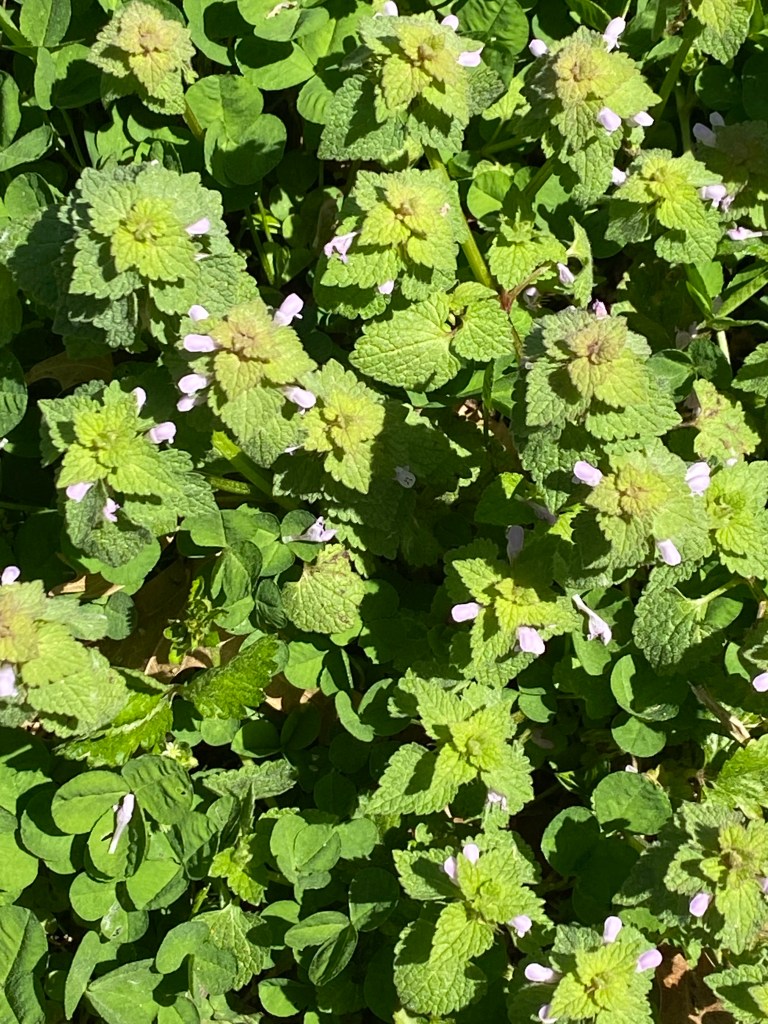
I have a ton of purple dead nettle in my yard. These pretty little plants are among the first to shoot up when the seasons change. I harvested some and dried them, and I plan to try making a tea with them. These are purported to help with seasonal allergies and are also supposedly anti-inflammatory, anti-bacterial, diuretic, purgative, etc.,. Luckily, these plants – and their lookalike, henbit – are edible. Unluckily, I dislike the flavor of fresh purple dead nettle. I’m hoping that the dried leaves can be combined with another herb to make a pleasant tea.

A patch of purple dead nettle

I found a narrow leaf plantain coming up near my driveway. I don’t plan on doing anything that requires me to use plantain, as this is commonly used to numb the sting from stinging nettle and from insect bites and stings. But, it’s good to have it nearby, just in case I get a bug bite that needs attention.

Narrow leaf plantain

My yard also gets quite a few mock strawberries (snake berries) later in the season. These little devils are harmless and edible but they have no flavor. For now, I’m seeing their pretty flowers and sighing about how those little tasteless berries will be popping up soon. Though the resulting fruit tastes like water, the blooms are sunny spots in my yard.

Mock strawberry (snake berry) bloom

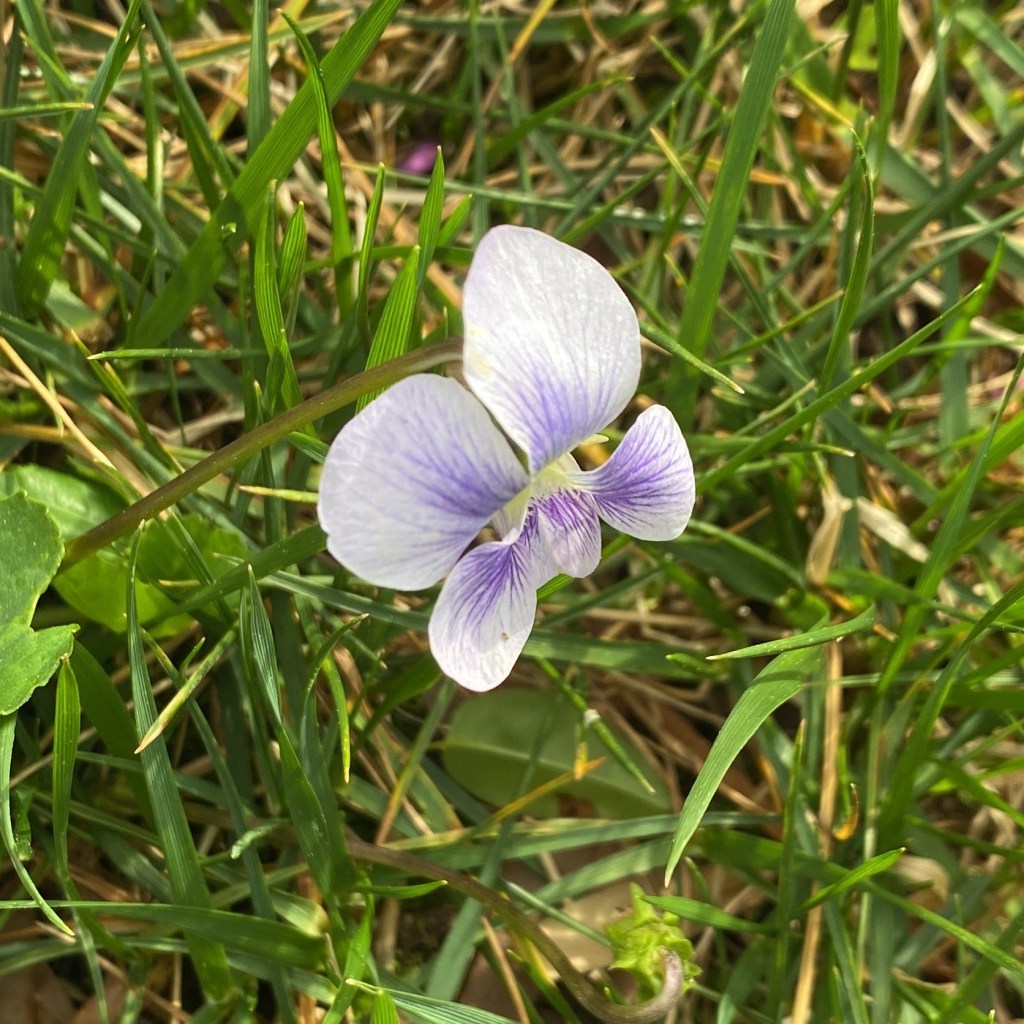
Finally, my favorite weed has appeared! Violets are all over one particular patch of grass, and I love it! These delicate blooms add such pretty colors to my yard. I have “confederate violets) a cultivated subgroup of the larger blue violet family. These are edible but I’m not interested in consuming them: I just love to look at them.

Blue violet

I’m looking forward to seeing what will bloom at the end of this month, and in May. I planted a few seeds, so I’m hoping that those flowers will be blooming in a few weeks.

Did you do any planting or foraging yet? I’d love to hear all about it!

reading list

Book Review: Lunar and Biodynamic Gardening

Hi friends! I’m really excited to discuss today’s book with you all. As you all may know, I’m still a new(ish) homeowner, and I love flowers and gardening. So instead of waiting until March or April to start thinking about my garden, I decided to begin my garden planning now, so that I can hit the ground running after the first frost.

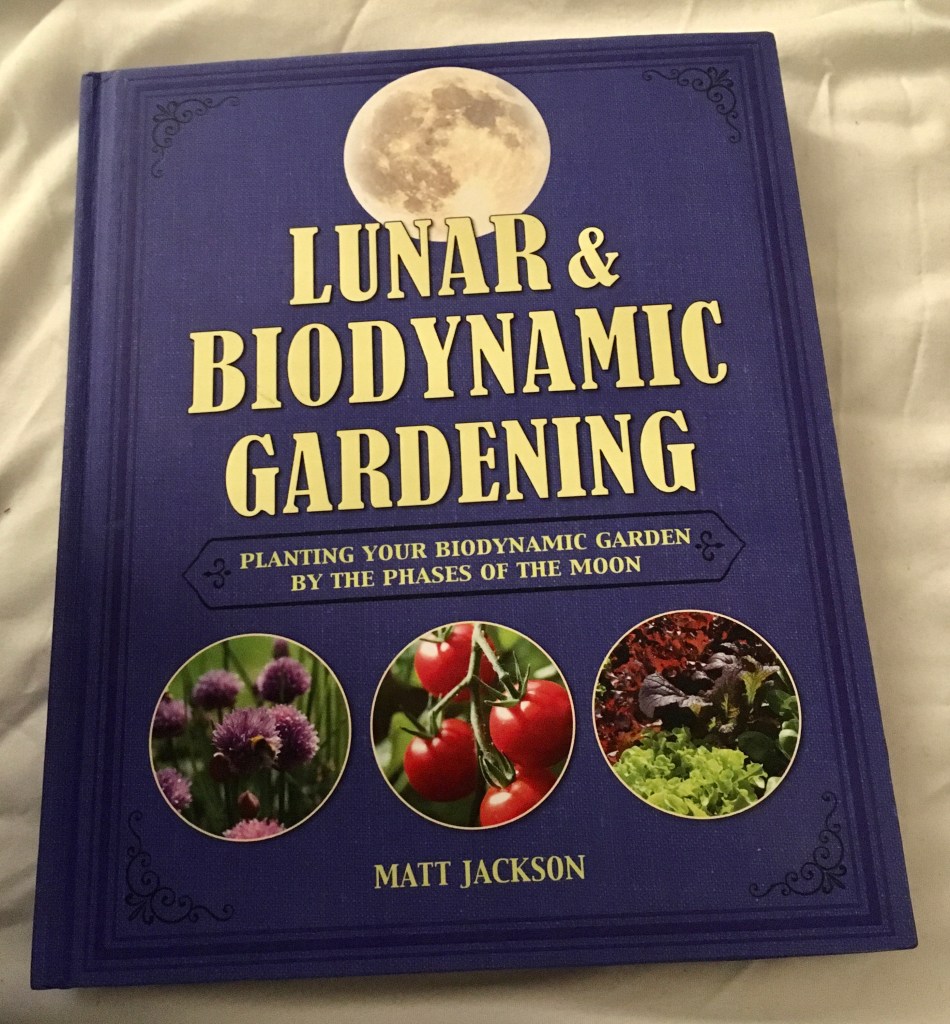
The book I’m reviewing is Lunar and Biodynamic Gardening by Matt Jackson. The book focuses on gardening in a way that allows you to create an optimum environment that supports the plants organically. This focus on healthy soil, working with nature’s natural rhythms, and disturbing the environment as little as possible makes it so that both the plants and all wildlife thrive.

Unfortunately, I got this book from the Dollar Tree and I’m unable to locate it on Amazon. However, the author has another book on Amazon that may be worth checking out (it covers the lunar phases and their effects on plants). Make sure to check that out if you enjoy this sort of content.

This book is broken down into six, easy-to-read chapters. The first chapter teaches the basics, explaining what lunar gardening and biodynamics are, and how these two differ from one another. The next chapter outlines what you need to start, depending on the size of your intended garden. The next chapters focus on soil and compost, growing food, growing flowers, and container gardening.

The author resides in the UK, so he is located in the Northern Hemisphere like me. But, he has generously provided resources for readers that may be in the Southern Hemisphere. He also shares resources to help readers get further clarification on certain principles.

I love how accessible lunar and biodynamic gardening approaches can be for novices. Jackson does a great job explaining how to work with various yard/garden sizes. My yard is medium sized, but my garden will be planned as if I have a small yard, and if I’m inspired, I will expand in future years. It’ll be great to start small so I can really master the concepts before I dive deeper.

In this world of law of attraction/conscious creation, it’s really easy to focus on the spiritual or esoteric sides of things to the point where we may not see the practical side of tuning into nature. But this book is a great reminder of how energy works, and how everything works together. I’m fascinated by the moon cycles, and I’m eager to see how these principles influence my garden’s success. I’ll be writing about this in upcoming posts, so look out for updates!

That’s it for today. I hope you all are staying safe and having a great day. Take care!

*This post contains affiliate links.

health

Herbalism: My Favorite Tools

As a baby herbalist, I feel fortunate to have so many tools at my disposal. Plant identification apps, online herbalist courses, and countless hours of discussion on YouTube have really opened my eyes to the depth and breadth of the herbalism world.

Today, I’ll be sharing a few tools that I’ve found invaluable in my growing herbal practice. If you’re interested in taking your wellness back into your own hands, I implore you to research safe and effective plants that you can incorporate into your wellness plan, and then venture out into preparing those plants in different ways: as infusions (teas), tonics, tinctures, poultices, and more. The more that you experiment, the more that your knowledge grows. I hope this little list of tools helps you. Enjoy!

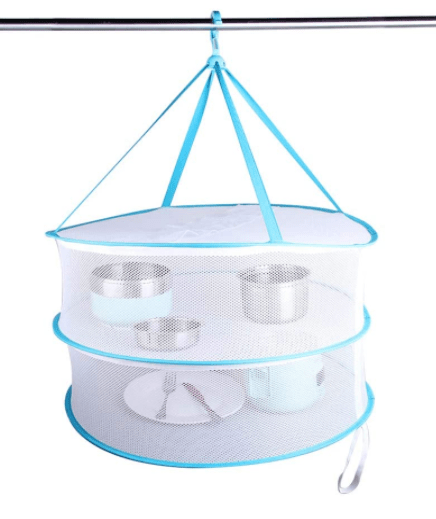
One of my first major investments into my herbal practice is my drying rack. I love using this when preparing herbs that I harvested myself, or when I purchase a bundle of fresh herbs at the store. This one by Adwaita is large, and can accommodate a lot of plant material. I use this almost every day, as I frequently find myself eager to preserve my fresh herbs.

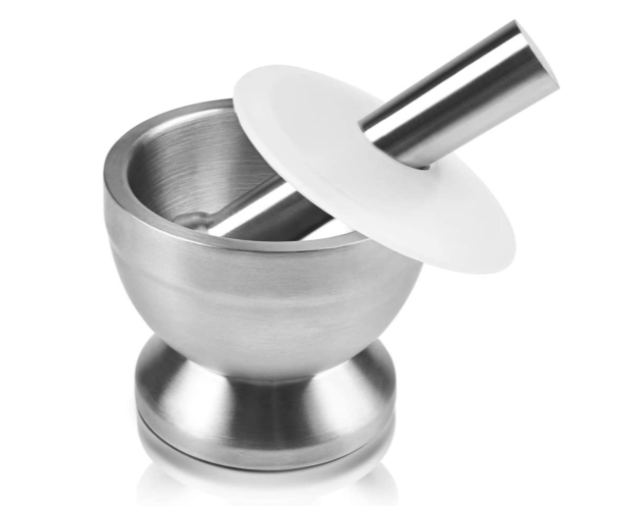
After trying to crumble herbs by hand a few times, I knew that I needed a mortar and pestle. This one has a really nice weight and ergonomic design. I love that it doesn’t shift around when I use it: the weighted base keeps the bowl firmly in place. It also has a sleek look that I enjoy.

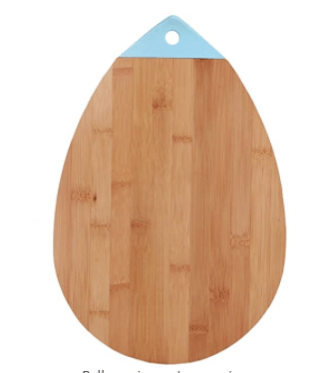
I regularly prep my herbs on this cutting board. It’s a large and attractive workspace: using it is always a pleasure. I sometimes use it to take photos of some of my herbs as I’m trying different blends. I love this work surface!

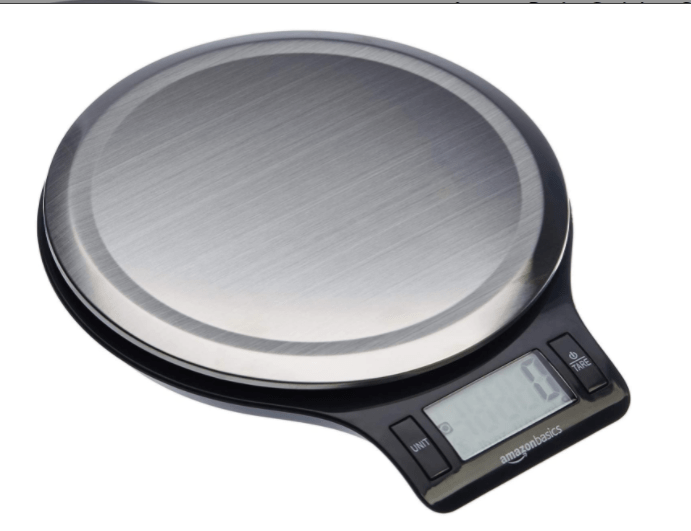
Eventually, I’ll be standardizing some of my preparations, so an inexpensive digital scale was a must. I purchased this last week but I haven’t used it yet: I’m looking forward to eventually offering my herbal mixtures and I fully intend to be consistent in my formulations.

These are my favorite herbal tools at this point, and I’m slowing growing my collection to include all of the tools that I need to create the herbal products that I enjoy using. That’s all for today: let me know if you use anything like the items that I mentioned above!

health · life curation

Preparing for Mid-Summer Gardening!

I have still been enjoying time out in my yard, and I’m considering what plants I can start in July (since I was SO behind the ball this season). For the record, I didn’t know that I was going to be so fascinated with gardening, flowers, and nature in general this spring. My fascination blindsided me, so I’m very LATE in garden planning. But that doesn’t mean that all hope is lost! There are quite a few plants that can be started in midsummer and still thrive with ease.

Dreaming of summer gardening . . .

Burpee’s website outlines all of the crops that can be started in July. I wasn’t interested in growing vegetables per se, but if I change my mind, I may try to grow squash. My preference is smaller herbs and maybe some flowers. I found this guide published on The Spruce to be the best one for planning the kind of plants I would like to grow.

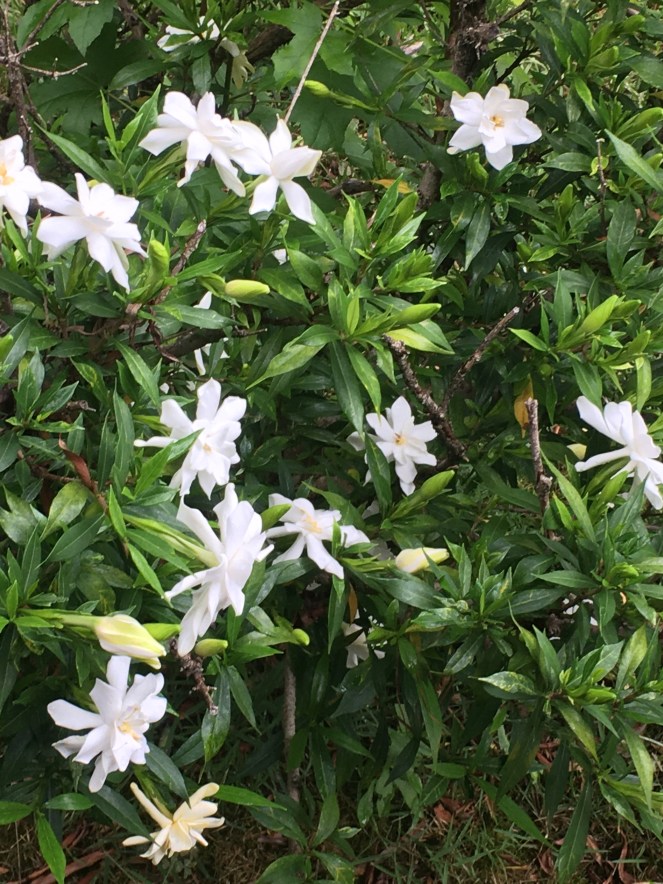
The only thing currently blooming in my yard: my gorgeous gardenias!

I’ve very interested in growing cilantro, garlic, basil and (perhaps) arugula or looseleaf lettuce. I want to start small and then expand into bigger plants. I really enjoyed seeing my overall growing options over on the Old Farmer’s Almanac website. There are a lot of plants that can grow in my zone (zone 7) so I’m excited to see if I can squeeze in one more herb or maybe even a fruit (perhaps blackberries or raspberries).

I watched this fantastic video that also gave me some ideas for what I may grow in my zone in July. I like that this guide can be used for multiple zones, not just zone 7. Rare Seeds’s YouTube channel is a wealth of information.

Will any of you be trying some midsummer gardening? Let me know about it in the comments!

beauty · life curation

The Novice Gardener’s Digital Toolkit

untitled designAs this is my first year cultivating a true flower garden, I’ve been eager to learn as much about the plants surrounding my home as I can. Sadly, I don’t know much about plants and I don’t have any nearby friends or relatives that can easily identify the bushes and trees in my yard. Desperate, I reached out to my Facebook family, and they didn’t disappoint! They made some excellent recommendations to help me get the information that I need. So, since I have some great tools at my disposal, it’s only right that I pass them along to you!

PlantSnap and PictureThis have been my constant companions over the past few weeks. I love that I can take a picture of a plant and process the picture through both apps to get a good idea of what kind of plant it is. I find that PictureThis has more reliable results than PlantSnap, but I love them both and find them very easy to use. I really enjoy the fact that the apps allow you to identify plants for free, and PlantSnap even lets you know that you can identify 25 pictures per day before a paid account is required (I’m not sure how many pictures are allowed using the free membership of PictureThis, but I imagine that the number is similar). The biggest advantage to PictureThis (other than the higher identification reliability) is that it automatically keeps a log of the pictures that you’ve submitted, so you can easy review previously identified plants within the app. For PlantSnap, you have to manually save the photos to a collection in order to retain that information.

YouTube has so many great videos for learning more about the wild plants growing near you: I simply cannot list them all! However, you can search for wild edibles by clicking here and you will find the most popular videos on the topic. Of course, you may not be interested in plants that you can eat; however, edible plants are fascinating to me, and the fact that many “weeds” are also edible and nutritious makes it a topic that I think may interest some of you, as well. As I continue exploring various YT channels, I’ll make a post in the future listing the best gardening channels that I’ve found.

Finally, the USDA Plant Hardiness Zone Map has been one of my favorite references during this growing season. Viewing the zone map and using other USDA resources has taught me a lot about what kind of zone I live in, as well as the different zones within my state.

Do you have any digital tools that you use for your garden? I’d love to hear all about them!

beauty · life curation · luxury

Embracing Natural Beauty When You Can’t Leave Your Home

Last week, I shared a post about how I’m enjoying the natural beauty around my home. I’m fortunate to live in a suburb where I have a yard, beautiful plants, and a climate that is conducive to growing the kind of plants I enjoy.

For those that aren’t able to walk outdoors and take in natural beauty (either because of strict quarantine measures or due to living in a “concrete jungle”), I wanted to share some links to websites and YouTube channels that highlight natural beauty around the world.

My current favorite is the Keukenhof Garden in Holland. With millions of stunning tulips bulbs planted, the garden is a feast for the eyes. I’m thrilled that I can take in all of this natural beauty from the comfort of my home.


There is also the US Botanic Garden (located in Washington, DC). This incredible garden used to have many fascinating public events and was a wonderful resource for anyone interested in learning more about botany. At this time, however, you can do a virtual tour as well as many online programs. You can even do “yoga in the garden” online every Saturday during the pandemic.

doublefloweringlentenroseusbg

(A double flowering lenten rose, from the US Botanic Garden website)

Another lovely garden that I used to visit regularly during my workday was the Enid A. Haupt Garden. This stunning pocket of serenity was my perfect place to “get away” when I needed some time to relax away from the office. I always walked around the “parterre”, though this was only a small portion of the garden.

UrninHaupt-1280x720

(A photo of one of the urns in the Haupt Garden Parterre)

In my hometown, there is an incredible botanical garden. At Lewis Ginter Botanical Gardens, it is also possible to do a virtual tour. These gardens are particularly special, because of their stunning annual butterfly exhibit.

light-and-graceful-butterfly-Phuong-tran-cropped-600

(Elegant butterfly featured on the Lewis Ginter Botanic Garden website)

If your city has a public garden or other outdoor space, you can probably do a virtual tour (a quick Google search should let you know if virtual tours are available). Do you have a favorite garden to tour? Let me know all about it in the comments below!


food · life curation

Free Online Courses for Improved Wellness

One of the pleasant side effects of our current crisis is the increased interest in improving our health through natural methods. If we can employ safe, effective natural remedies to complement conventional (Western) medical treatment, then maybe we can promote better health, improved vitality and increased longevity.

In my desire to learn more about natural remedies (as you know, I’ve been studying The Women’s Herbal Apothecary by JJ Pursell), I took to the Web to see what complimentary courses I could find to deepen my knowledge. I was delighted by what I found!

Untitled design (2)

Coursera is currently offering a five-part specialization program in Integrative Health and Medicine. Each of the five courses in this program covers a different aspect of using alternative medicine to support overall wellness. I’ve signed up for a couple of the courses because I’m very interested in what will be taught! The course will be taught by University of Minnesota professors, so you can be assured that what you will learn is akin to what may be taught in a course on campus. You can either sign up for a paid subscription to Coursera or you can audit the courses, which allows you to view the instructional material for free but does not offer a certification if you complete the assignments in a timely fashion.

Another fantastic course that I found while searching for free online alternative medicine courses is this free Introduction to Aromatherapy course offered by Aromahead. I really like the fact that this is a self-paced course, so you can complete it as you have the time available to do so. I have a small collection of essential oils so I’m excited to learn more about tapping into their power and harnessing the maximum benefit.

Finally, the American Herbalist Guild has generously provided a library of archived webinar materials for free. This may be great for you if you don’t want to commit to a full-fledged course but still want to learn more about herbs and natural remedies. I like that these concentrated teaching sessions can help you get targeted information about a specific topics. 

There are many more free online herbal and alternative medicine courses that you can find by simply doing a Google search, but these were my favorites that I wanted to share with you.

I hope you all are having a great day! Take care, and I’ll be back tomorrow.


(This post contains affiliate links)


beauty · life curation

Embracing Natural Beauty

With all of this “free” time at home, I have been concentrating on slowing down and enjoying the simple pleasures around me. The main pleasure I’ve indulged in regularly is taking in the stunning beauty of the flowers and trees surrounding my home. Here are a few of my favorite photos. Enjoy!

img_0473

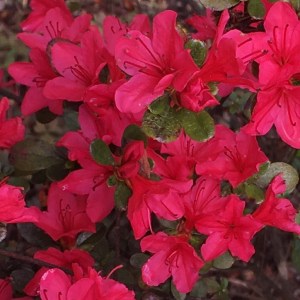
My hot pink azaleas

A yellow rose bush that is beginning to bloom

Baby pink rhododendrons

My Japanese maple (the leaves are stunning!)

I find that spending a little time walking the perimeter of my home does wonders for my mood and my energy. Embracing natural beauty has such a calming effect on me. I also planted some irises, tigridias, and gladiolus bulbs that I’m patiently waiting to bloom. When those flowers bloom, I’ll take more pictures and share them with you all.