international · travel

My Time at Nairobi National Museum

You all know how much I loved my time in Kenya. I wanted to make sure that I took in the local history, arts and culture while I was there because, why travel if you don’t wnat to learn about the place you’ve traveled to?

While in Nairobi, I visited the Nairobi National Museum. This museum DID NOT disappoint! I took photos in every area except the art gallery, in which photography was prohibited. Which is a real shame, since the artwork was wonderful. However, I understand the need to protect the artists from having their work ripped off and duplicated without credit.

Without further ado, here are some of my photos from the Nairobi National Museum:

Photos from the exterior of the museum

The mammal exhibit

IMG_3124

Decor inside of the museum

The bird exhibit

IMG_3181

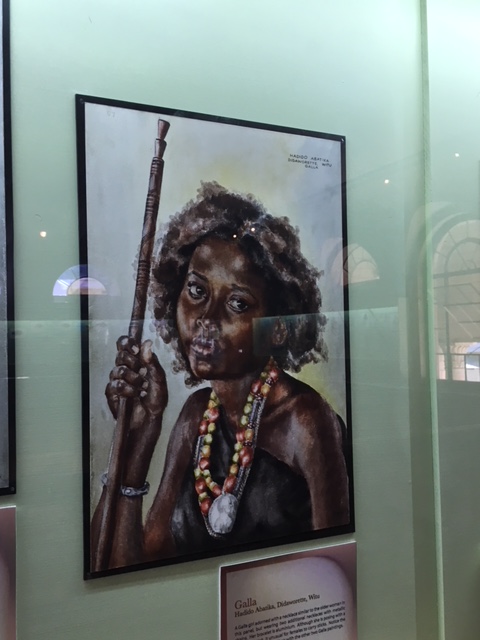
Drawings from Joy Adamson,

Artifacts from the exhibit describing social customs in Kenya

Artifacts from the political history of Kenya


I wish I could have visited this museum again, because one visit simply wasn’t enough. This area is so rich in history, beautiful and culture: Kenya is an incredible experience. I highly recommend anyone visiting the area to go to the Nairobi National Museum. The price of admission is roughly $12USD for nonresident adults and $6USD for nonresident children. It was worth every penny!

art · luxury

Art Collector Conundrum: Affordability

As part of this (informal) series, I want to explore some of the difficulties I see within the art world. These things aren’t obstacles, per se, but they can be challenging for people that are on the outside “looking in”. As I learn more and find myself exploring the business, historical, and aesthetic side of art, I can see the individual factors that make art collecting and the entire business of art frustrating and intimidating to the average person.

One of the biggest obstacles to pursuing either a career in or a collection of art is affordability. Prestigious disciplines and hobbies have always been cost prohibitive, and rightly so: this maintains the integrity, prestige and lucrative nature. But in these increasingly egalitarian times, the question remains: how can affordability be part of the art world while maintaining esteem?

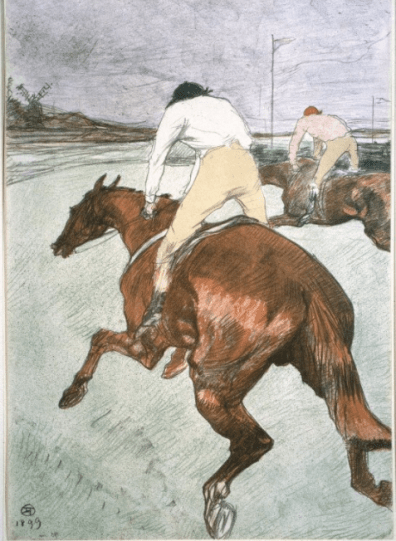
Screenshot 2018-01-27 at 7.45.32 PM - Edited

Le Jockey by Henri de Toulouse-Lautrec (uploaded by the Brooklyn Museum)

The best recommendation I can pose is this: start where you are. That applies no matter where you want to fit into within the art world. Instead of aiming to have a personal art collection on the level of the Louvre, new collectors that have less capital to invest should start where they are and purchase what they enjoy and can afford. People aspiring to be curators and consultants should start by educating themselves as affordably as possible: attend free or low-cost art courses (some of which can be done online), volunteer at a museum or gallery, or even purchase used art textbooks and read the material.

The key to avoiding overwhelm is to take it one step at a time.

There are some entities that are striving to make art more affordable. Educators like ALISON, Coursera and Saylor (especially the Saylor Legacy Courses) make art education affordable. Taking classes at local museums, galleries, art organizations, and community colleges is also another another way to obtain art knowledge at a low cost.

Entering the art collecting world need not be expensive. New collectors should seek out local artists that are talented but not yet famous. Being an “early adopter” often means securing wonderful artwork at an affordable price. Also, it’s important to support smaller artists that may one day become one of the big names in the art world.

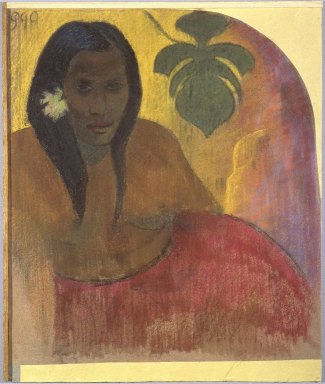
brooklynmuseum-o4399i000-21.125_SL1

Tahitian Woman by Paul Gauguin (uploaded by the Brooklyn Museum)

There are also companies that will finance the purchase of high dollar art. One of these is ArtMoney, a company that offers financing options for people that want to buy art. ArtMoney is currently affiliated with 500 galleries nationwide to help art appreciators acquire works of art that would normally be out of their budgets. Also, there are innovative artists that offer lease and lease-to-own option for interested parties. This allows collectors to enjoy the art of their choice on the terms that best suit them.

So there are always ways to navigate around issues of affordability. Many times, this means setting aside preconceived limitations and approaching a solution with a fresh perspective. By exploring unorthodox and less popular strategies, it’s possible to make any part of the art world affordable.

art · life curation

The Next Art Class(es) On My List . . .

Happy Friday, beloveds! The weekend is here and, I must admit, I’ve been feeling pretty fired up for the past few weeks. I was determined to have a strong start to my year, and so far, I’ve kept my word. I’ve been focusing on everything that I want and need to get done so that I can accomplish the goals I’ve set for the year.

If you all recall, in my New Years goals post, I mentioned that I wanted to eventually transition into a career in the art world (hence this blog’s gentle but steady turning toward more art-related content). I intend to take some in-person courses through Christie’s but I am also supplementing those courses with some online education.

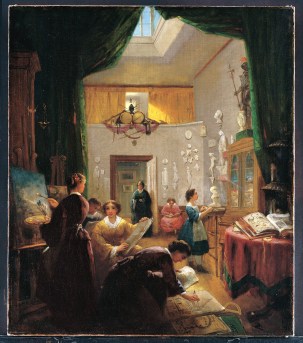
womensartclass

Women’s Art Class by Louis Lang (1814 – 1893), at The Metropolitan Museum of Art

I’m an autodidact, so I’m very comfortable with teaching myself. You all will probably recall the art course on Alison that I’m currently taking (I’m doing this one very leisurely, though I’m already about 50% done with the material). However, I occasionally enjoy having a structure to lean on while I’m learning. That’s why I was excited to see that Coursera is offering several arts courses this year, that can either be completed without a certificate (the no-cost option) or with a certificate of completion offered (has a small fee). Since I’m doing these courses for personal development and I don’t intend to provide certification to anyone in the future, I’m doing the no-cost option.

The two classes I’m taking are Modern Art & Ideas and Fashion as Design. Both classes are taught by Museum of Modern Art curators, researchers and directors. If you find that you benefit from interaction with other students and a more structured format, then Coursera’s offerings may be a good fit for you.

I’m looking forward to learning more about modern art and fashion. I can’t wait to share what I learned with you all!

art · luxury

Art Collector Conundrum: Accessibility

As I learn more about the art world, I see, not only the beauty and complexity of it, but the problems surrounding it.

Here’s the thing: every industry is plagued with its own problems. As a result, the professionals within each industry are tasked with serving current needs as well as creatively attempting to solve existing and potential problems. This presents a bit of a conundrum for both the problem solvers (who are trying their best but may be limited in what they can do) and those awaiting a solution (that feel excluded and frustrated).

There are several big issues within the art industry, which I’ll attempt to explore over several posts. I’m no art expert, but I love the thought of toying around with solutions to existing issues, because, at the heart of it, I’m a problem solver.View of Children placing poppies on the grave stone of the Unknown soldier

(Courtesy of the War Museum in Ottawa)

One of the biggest issues I see within the art world is the issue of accessibility. Like many subjects and areas associated with the elite/wealthy/exclusive groups, there is no definitive path for entry. Those that want to make sense of this world are overwhelmed by the options but really don’t have any clear directions on how they can make art and the art world a part of their lives.

That’s both great and confusing.

The upside to lacking a defined path of “entry” is that the barriers aren’t clearly defined, either. If those desiring entry want to find a way “in”, they can probably ease in through many different paths and still eventually “arrive” at their desired destination. Let’s be clear: there are ALWAYS barriers in every realm. But these can often be navigated in unconventional ways so long as the person desiring entry is willing to explore the options available and be creative.

The confusing part is figuring out where to start. Unlike college or the corporate world, there is no simple, straightforward way to enter the world of art collecting/patronage.

This undefined path presents an amazing opportunity for art galleries, auction houses and museums. For the huge names in the art world, there may not be an urgent need to reach out to novice or aspiring collectors: after all, these entities aren’t hurting for sales! But for the entities that are interested in undertaking the challenge of opening the art world to a new kind of patron and clientele, there are several ways to accomplish this. The Guggenheim Museum is leading the way with their Young Collectors Council, a subgroup of museum membership that allows millenials and other inexperienced collectors under the age of 40 to have a more active role in museum acquisitions.
moma

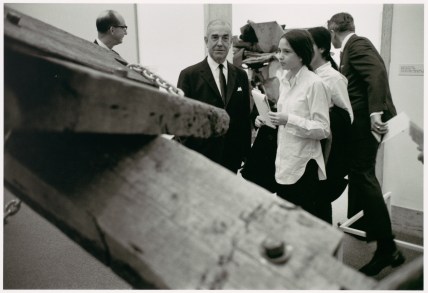
Young visitor touring Metropolitan Museum of Art in 1969

Other museums, art galleries and auction houses can modify the structure pioneered by the Guggenheim and create their own Collectors Councils to help nurture and develop interest in the art world among those that are inexperienced. Setting aside two or three annual events to be organized by councils and offering mentoring opportunities from senior individuals involved in the organization would be great for collectors that are trying to find their way on the art scene.

Do you all think there are some other ways to increase accessibility in the art world? Let me know in the comments below!

art · culture

Currently Listening To . . .

I’ve been researching more resources to help me increase my art history knowledge. Along with visiting museums, taking ALISON courses and reading books, I wanted another way to take in art instruction, so I was thrilled to find the Art History Babes podcast.

1200x630bb (1)

Their logo is the cutest!

Jen, Natalie, Ginny and Corrie – the hosts of the podcast – gather together to discuss different art-related topics. It’s hard to say whether it’s their knowledge or their chemistry that makes this such an irresistible podcast.

A nice podcast to help you get a feel for the Art History Babes is this post about Leonardo Da Vinci. It’s pretty short (a little over 15 minutes) but packs a lot of information. This will lay a great foundation for a post that I have coming up in a few days . . .

Let me know what you think about the Art History Babes! You can, of course, check out the podcast, but also check out their blog, as well.

culture · international

An Unforgettable Army

A few days ago, I got to return to the Virginia Museum of Fine Arts to spend some time with the exhibits. When I found out that the museum was featuring statues from the world famous terracotta army (the 8,000 Chinese sculptures created to accompany China’s first emperor in the afterlife), I knew I couldn’t miss it.  The exhibit, Terracotta Army: Legacy of the First Emperor of China, appealed to my love of Asian art and history. Since I didn’t see any of the terracotta soldiers during my trip to China in 2016, this exhibit was the perfect chance to glimpse into the first Chinese empire.

You all may recall a few months ago I visited VMFA to see the Yves St. Laurent exhibit. I felt awful about only going once: I wish I had visited several times before the exhibit left.

I learned my lesson well. I gave myself enough time to see this exhibit more than once.

Just as a heads up: this is truly a once-in-a-lifetime exhibit. VMFA states, “More than 40 objects in the exhibition have never before been on view in the United States.  Terracotta Army is the first exhibition the Virginia Museum of Fine Arts has presented in its 80-year history that is devoted to the art and archaeology of ancient China.”

If you can’t make it to see the artifacts in person, never fear! I took LOTS of pictures. I can’t promise that you’ll feel like you were there, but at least you can imagine . . . First, the small artifacts and information posted throughout the exhibit:

And now, the soliders (I’ll share 5 of them in this post):


I was awestruck by the artifacts and am so happy that I get to share them with you all. The true treasure, however, is the HISTORY behind each artifact. The Qin Dynasty was revolutionary and set all of the groundwork for Chinese unification. It’s amazing how much Qin Shihuang accomplished during his less than 50 years on earth.

Terracotta Army: Legacy of the First Emperor of China will be at VMFA until March 11, 2018. I implore you to go if at all possible: you won’t be disappointed!

art · culture · international

Haitian Embassy Tour

Back in May, I participated in the Around the World Embassy Tour event in Washington, DC. This is part of the annual Passport DC event, which allows visitors to tour various embassies during the month of May. Generally speaking, the first weekend of May features African, South American, Caribbean and a couple of Asian embassies, the second weekend of the month is the European Union Open House weekend, and the following weekend is the Festival of Asia.

I’d never toured the Haitian Embassy before, so I was excited to visit this year. Funny enough, I’ve been to Haiti when I cruised with Royal Caribbean in the past, and I always loved the island. In fact, I’ve stated on multiple occasions that Haiti is my favorite Caribbean island. So it’s a marvel that I’d never gone to the Haitian Embassy until this year. In any case, I was eager to go. And the embassy DID NOT disappoint.

IMG_0890


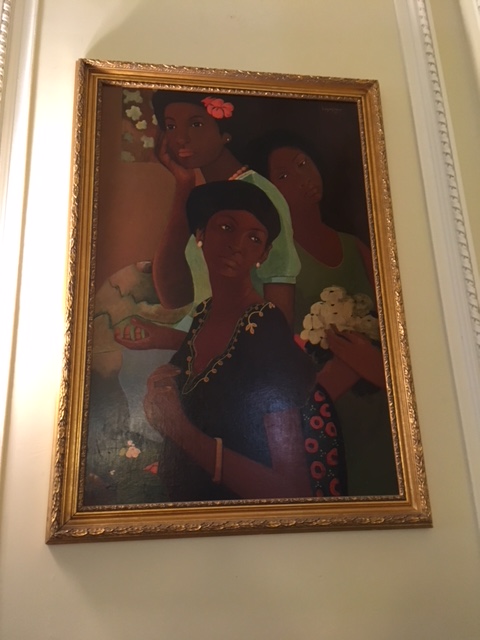
I think the thing that I found most incredible was the prominence of Black mermaids in Haitian art. As a born-and-bred American, the mermaid image I see most frequently is the Disney version, with porcelain skin, red hair and blue eyes. Seeing the Haitian depictions of Black mermaids was deeply moving. These depictions are far more accurate to the creatures that Christopher Columbus reported seeing in his travels, and they also predate Hans Christian Andersen’s tale. Of course, practically every culture has stories of merpeople, but seeing the image of magical brown-skinned beings was surreal.

The embassy is a stately, breathtaking building, and the art that lines every wall is stunning and memorable. It looked more like an incredible museum than a political office space! It has multiple floors, and, sadly, I only toured one level.

My biggest regret? Not allowing more time to tour. But no worries: I will return next year!


art · culture

Return of the Drawing Salon at The National Gallery of Art

drawing-clip-art-drawing-clip-art-1

(image courtesy of ClipArtPanda)

Recently, I shared that the National Gallery of Art hosts Writing Salons, to assist all interested in getting in touch with their inner author. However, the Writing Salons have a counterpart that is equally as, if not more, popular: the Drawing Salons. NGA has finally began accepting reservations for the Drawing Salons, and I’m here to tell you all about it, both as an art enthusiast and as a former salon attendee.

Similar to the Writing Salons, the Drawing Salons are hosted monthly and the salon topics vary for each session. The Drawing Salons also run from now into the springtime, though they end one month after the last Writing Salon session. There are also only 5 Drawing Salon themes, as opposed to the 6 Writing Salon themes available this season.

The topics being explored during this season of the Drawing Salon are as follows:

American Impressionism

Cézanne’s Landscapes

Picasso’s Palette

Rodin’s Sculptures

Matisse’s Cut-Outs

I attended one of the Drawing Salons in 2015, and thoroughly enjoyed it. NGA provides supplies and is well equipped for each group of budding artists. I found that the art instruction was solid and appropriate for any skill level. I liked that the groups were small enough that the art instructor could provide each attendee a measure of one-on-one attention. But the most impressive part of the session was the art history lesson provided to attendees: the historical context deeply informs the sketch that attendees create during the session.

So, much like the Writing Salons, if you have a chance, GO! You won’t be disappointed!

art · culture

Return of The Writing Salon at The National Gallery of Art

One of my favorite museums in Washington DC is the National Gallery of Art. It’s technically not part of the Smithsonian Institute, but the museum has an awesome art collection and lots of superb activities and events.

Each year, the museum hosts Writing Salons, which use art as a focal point when discussing different writing techniques. I am excited to see the lineup of Writing Salon topics for this upcoming season! 
cliparts101

The topics that will be explored during this Writing Salon season are:

  • Memoir: The Power of Metaphor
  • Historical Fiction: Reimagining the Past
  • Point of View: Narrative Choices
  • Poetry: The Rhythm of Color
  • Character: Exploring Identity
  • Flash Fiction: Building Tension


The events occur monthly, from September to April (except during the month of December). The event page lists when the tickets are available (usually one week before the event starts). This is a great opportunity to received specialized writing instruction in an intimate setting. The tickets are free of charge but they go fast, so you must quickly register if you’d like to attend.

I’m thinking about taking a few of these courses: I love writing and can always use more instruction and experience. Have any of you attended a National Gallery of Art event? Let me know in the comments below!

art · luxury

My Time With Yves

I would love to give you a bunch of captions, but this was an exhibit that had to be EXPERIENCED. Writing about it just doesn’t do it justice.

Yves St. Laurent “The Perfection of Style” was a perfectly balanced exhibition. Gorgeous outfits, lots of his personal notes, video clips, and great biographical information. I’ll post some of my favorite photos from the exhibit, but be warned: photos really can’t capture the genius that was YSL. Enjoy!