This post feels like it should be a reblog, but, oddly enough, I never wrote about this topic on my now defunct blog. However, this topic was too important to ignore, so I had to share it over here, and I invite conversation about how you all have either seen this or applied it in your own lives.
Back in a previous life, I worked as a paralegal (fabulous work, by the way). I remember sitting through a hearing and a few of the opposing attorneys mentioned the term “Hobson’s choice”. As soon as we had a recess, I looked it up, because I didn’t want to be confused over what it meant. I felt some relief when I realized that the attorneys I worked with had also not heard of “Hobson’s choice”.
In short, a Hobson’s choice (named after stable owner Thomas Hobson) is a “take it or leave it” scenario. It often presents itself as two options, but in reality, only one option is feasible, and this option is always in favor of the person presenting the offer. Most of us present Hobson’s choices to our families regularly: in the case of dinner, instead of saying “take it or leave it”, we’ll say, “You can either eat the dinner I prepared, or you can cook your own meal, and clean up afterward.” See how the option creates a win-win scenario for the offeror?
One of the challenges of stepping into my personal power is interacting with people that intentionally or inadvertently attempt to undermine my boundaries. It’s natural for humans to advocate for their own preferences or to try to sway others to their points of view. However, it is never okay for someone to overstep the boundaries of others, or to treat other’s preferences dismissively.
The question is, then, how can we become Thomas Hobson? It starts with listening to our gut, and learning to trust our visceral reactions. Instead of ignoring how we feel, we have to learn to be honest with ourselves and acknowledge when we hear something (or are offered something) that we don’t like. Becoming Thomas Hobson requires that we realize when our heart and gut say, “No” to an offer, and opt to NOT judge ourselves for saying “No”. It’s hard to not judge ourselves, especially since we live in a culture that thrives on people’s inclination to second-guess themselves. But learning to silence our inner critics is key to embracing our inner Thomas Hobson.
After we recognize that we feel an authentic “No”, we can start experimenting with how to offer solutions that give us a subtle win-win situation. The key to this is subtlety: no one wants to accept a “hard bargain”. We have to become skillful at offering solutions that have the appearance of being somewhat fair, while still offering us what we prefer, regardless of the solution being chosen. The best solutions make the offeree feel empowered, respected, and acknowledged: the moment we can offer ourselves win-win scenarios that generate these sort of feelings in the offeree, we have mastered the Hobson’s choice.
I’m still learning how to do this, but on the few occasions when I’ve gotten it right, it felt AMAZING! I encourage everyone to start experimenting with this concept and see how it works in your lives.
That’s it for today. I hope you all are doing well! I’ll talk to you all tomorrow.
Happy Monday, friends! I trust that your weekend was safe, happy, and relaxing. It was another hot weekend in Virginia (my favorite type of weather!) so the weekend started and ended on a great note, as far as I’m concerned.
Today’s post is the first domestic one that I’ve done in quite some time. There would have been far more of these sort of posts this summer, but I ended up not planting my garden, so there were no flower or herb pictures to share. Also, a lot of my time during the pandemic was spent care for my grandmother and great-aunt. For that reason, I didn’t have much time to focus on the “fun” domestic activities that I’ll be talking about today.
That being said, my life is returning to normal. My grandmother and my great-aunt returned to their home, my health started to improve, and I finally had more free time to explore my creativity leanings. This newfound time freedom gave me the space to play around with craft ideas that, at one time, I didn’t think I’d have the time or energy to do.
So, in the upcoming weeks and months, I’ll be sharing all sorts of domestic posts and videos. I have an upcoming video where I feature a do-it-yourself autumn wreath that is beautiful, easy and inexpensive. I’ve also been tinkering with some foraging and wildcrafting recipes that I’m eager to share with you all. Today, however, I’m going to share a super-simple autumn-inspired tea recipe that I filmed last year, that will be perfect once the air starts to cool and the leaves start turning to red and gold.
I hope you all enjoy the video! I’ll talk to you all tomorrow. Take care!
Hey friends! My apologies for the premature posting of this blog post: last week was far busier than I anticipated. However, this topic was far too important to skip, so here it is, a week later!
As part of my review of different fibromyalgia treatment approaches, I want to make sure that I am exposed to a variety of perspectives. I want to ensure that I go beyond the points of view of medical doctors and naturopaths, and also put a spotlight on the regimens that are promoted by laypeople that actually have fibromyalgia. Besides Dr. Liptan (whose protocol was among one of the first that I reviewed), all of the other doctors and health professionals that I’ve reviewed have not been diagnosed with fibro. I value their opinions and research, but I find myself more motivated to try a recommendation from someone that has experimented on themselves to find a solution, as opposed to someone whose work is limited to theory or results as reported by their clients.
That being said, today’s protocol is not from a medical doctor or naturopath. Rachel of PainFreeKitchen successfully minimized her fibromyalgia symptoms to the point of complete elimination. In fact, her doctor confirmed to her that she was in “remission”, since she no longer showed any of the symptoms of fibro.
So, what is Rachel’s secret? Here’s a video, describing exactly how Rachel cured her fibromyalgia.
I highly recommend that you watch the video in full, especially since Rachel is very direct with her answer, and the video is less than 10 minutes long. But, for your convenience, here is a summary of the PainFreeKitchen Protocol:
Try a gluten-free and dairy-free diet (Rachel recommends The Whole 30 diet)
Prioritize rest (she offers a few recommendations for improving rest, like purchasing blackout curtains or taking sedatives to assist with obtaining deep sleep)
Reduce stress levels dramatically
Begin a yoga routine and weightlifting (or, for that matter, any other exercise that feels manageable)
The PainFreeKitchen Protocol does have points that are seen in some of the other protocols. However, she is the only person that I’ve reviewed so far that specifically recommended The Whole 30 diet and weightlifting.I think that her recommendations are reasonable and certainly worth a try. Prior to my diagnosis, I loved doing fitness classes, especially ones that involved the use of kettlebells. Now, I find myself really “pushed” by even gentle yoga routines. It would be nice to eventually return to working out with weights, but I will be patient and gradually strengthen myself until I’m back to full health.
As far as my personal opinion goes, I think that the PainFreeKitchen Protocol could be an excellent starting point for wellness, especially in the cases of people that are newly diagnosed and unsure about where to start with rebuilding the body. However, I can also see where this would be great advice for someone that has been treating fibromyalgia for many years or decades.
That’s all for today! I hope you all have a great and safe weekend, and I’ll talk to you all soon. Take care!
It’s almost the end of the month, so it’s time to do a quick recap of how my annual goals are progressing. There is at least one goal that I’ve reached, a couple that I’ve revised, and others that are still in progress. As a quick reminder, here are my 2021 goals:
Publish 5 books
Lose 15 lbs
Manifest 3 international trips
Earn 6 figures in my businesses
Read 100+ books
Luxury purchases – Hermes, Christian Louboutin, Sophia Webster, Ralph & Russo
Cure my fibromyalgia
And, here is an overview of the changes I’ve made to my goal list:
Publish 5 books – DONE!
Lose 15 lbs
Manifest 3 international trips – Manifest 3 incredible trips before the end of the year
Earn 6 figures in my businesses – Earn 5+ figures in my business
Read 100 books
Luxury purchases – patronizing at least 3 Black-owned luxury brands
Cure my fibromyalgia
As you all can see, there are some changes to my list worth noting, as I discussed in my July Goal Update and my book publishing posts. Other than the completed items, everyhting else is progressing as expected.
I’m planning major promotional activity for my businesses starting in mid-September. I ordered some samples so that I can determine which Black-owned luxury brands are ones that I want to invest in. I’m still working on my fibromyalgia cure, as well as my weight loss. My book goals are still coming along well, and I’m feeling confident that I’m closer to my goals than I could have ever dreamed.
That’s it for August! Sometimes, there aren’t major changes: there may only be incremental steps that will eventually come together to create enormous shifts. But those small steps are worth praising, thus this post. I hope you all are doing well and making progress toward your goals for the year!
I hope you all are having a really great week. This is going to be a short post, because I’m not working on any longer writing projects this month. I felt this was a good time to take a quick break, since I intend to doing some intense writing sessions starting in the fall.
However, I did have a mini-project that I wanted to knock out this week. I had this genius “flash” of inspiration while driving a few days ago, and I felt very drawn to putting that idea into writing, then publishing it as a free booklet that I will offer here, as well as on my publishing website, Bronze Butterfly Books. I’ve been keen on creating more freebies for visitors because I know how much I’ve benefited from the materials that other content creators have generously offered on their platforms.
So today and tomorrow, I’ll be writing all of my thoughts that I want to put into the booklet, then I’ll spend some time editing and structuring the booklet over the weekend. The goal is to publish the booklet before the end of the month (just a few days). I’m eager to have it ready by September 1st, and the only way that will happen is if I work on it, starting today.
That said, that’s all for today’s post! Stay tuned to see what the booklet will be about, and I’ll talk to you all soon.
Happy Monday! I hope you all have a wonderful and peaceful weekend. Here in central Virginia, we experienced a series of storms that kept us from having too much outside fun, but the temperatures stayed pretty warm overall, so I have no complaints.
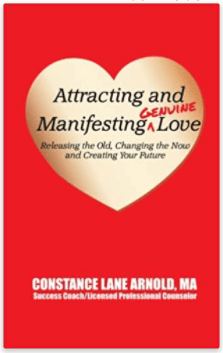
Today’s post is short because I have only one thing to say: I’m a winner! I mean that literally: I won a contest on Instagram. One of my favorite Law of Attraction coaches, Constance Arnold, held a contest on her Instagram (you can follow her here), and the prize was her incredible ebook, Attracting and Manifesting Genuine Love. And I WON!
Many of you all know that I’ve been a student of the Law of Attraction (LOA) for nearly 20 years, but as with any school of thought, different teachers clarify certain principles in their own unique way. As a result, the lesson becomes easier to apply. Ms. Arnold is one such teacher that provides a fresh perspective that I’ve found very beneficial. I even listed her among my 5 favorite LOA podcasts back in 2018, so you know I’ve been a fan for quite some time!
I’ve listened to Ms. Arnold’s radio show for a little over 5 years now, and I’m always delighted to hear her words of wisdom. I really enjoy her instruction when it comes to how harmonize LOA teachings with a Christian perspective. She’s interviewed some of the foremost experts in the world of LOA, and I love that she’s done her show consistently for 12 years! You can listen to her radio show on the Law of Attraction Radio Network.
I’m looking forward to reading her book and sharing my key takeaways with you all. In the meantime, I’ll continue to bask in the fact that I WON!
I hope you all have a great day! I’ll be back tomorrow. Take care!
It’s another Fibro Friday! I’m feeling pretty good after having a much less intense week than normal. I rested more, I had fewer tutoring students, and I started my yoga routine again, so life has been great. I’m excited to be back to share another protocol with you all today!
I enjoyed Dr. Mandell’s video, because he clearly explains a point about fibromyalgia that some medical professionals may not emphasize, and I think it’s a critical part of understanding why diagnosis and treatment are so difficult to obtain. Fibromyalgia is a syndrome, not a disease, so it is a body of symptoms that cannot be attributed to other sources. It is a condition that is diagnosed after an extensive process of elimination has been undertaken by a medical professional. It is possible that a person that appears to have fibromyalgia may experience relief after being treated for common comorbidities, such as rheumatoid arthritis, various other autoimmune conditions (like lupus, inflammatory bowel disease (IBD), celiac disease, or Sjogren’s syndrome), or depression. Because it is easy for these symptoms to exist throughout multiple conditions, it’s important to assess a patient thoroughly before assigned a fibromyalgia diagnosis. While this is a frustrating process for patients, it is the best practice for ensuring that an accurate diagnosis is reached.
Here is Dr. Mandell’s video on fibromyalgia:
Here are some key takeaways from the video:
Focus on decreasing inflammation in the body, as well as reducing stress
Seek alternative treatments, such as chiropractic care, massage (especially myofascial release), meditation, exercise and nutrition
Reduce omega-6s in the diet (commonly found in corn oil, sunflower oils, sugars found in desserts, whole grains, fast food, etc.,)
Increase omega-3 foods in the diet (flax seed, chia seed, fatty fish, or supplements like cod liver oil and krill oil)
Increase vitamin D3 and magnesium intake, as well all of the B vitamins
Explore herbal supplements, such as chamomile and valerian root
Be mindful of your physical posture and ergonomics
My overall impression of the Mandell Protocol is, it’s nothing “brand new” when compared to the other protocols. However, the recommendation of specific herbs as well as the encouragement to improve physical posture for pain relief were points that I hadn’t heard previously. As always, I believe that, even if the information isn’t “brand new”, sometimes it pays to hear the same information explained from someone different, in order to get additional clarity.
Are any of you familiar with Dr. Mandell? Have you tried any of his recommendations for fibro pain relief? I’d love to hear about it in the comments below!
Today, I’m doing a reblog of a post that I released 9 (!) years ago, almost to the day (originally posted August 11, 2012). I remember writing it, but I honestly couldn’t remember what I wrote! So it was fun to read through my old musings. I didn’t bother to edit it, since the typos and grammar errors I noted were minimal. So here you go: my guide to severing ties and moving on. Enjoy!
“Last July, I wrote a post about inconsiderate people, and different tactics for dealing with them. After giving people some time to correct course, you may find it necessary to cut the person loose. I don’t particularly enjoy severing ties with people, but SELF-PRESERVATION comes above all else. In my case, “self” extends to those that I love and want to protect from inconsiderate individuals. There is NO ONE that I will allow to mistreat me. Please do not misunderstand me: there are people that are supposed to love you, that can, and will, mistreat you, ignore your concerns, and regard you with little respect.
********************
What does it take to cut someone loose? You must first decide to do it. You can’t simply talk about it: in fact, I recommend you stop talking about it. At the point where severing ties becomes necessary, you’re probably tired of talking. I don’t recommend that you talk until you are weary, but if the relationship means enough to you, you’ve probably tried to talk and mend/correct things until you are blue in the face. Save your energy, and decide to just let the person go.
Eliminate contact with the individual. No more texting, phone calls, emails, letters, or homing pigeons LOL! Don’t announce to the person that you are ceasing contact with them: simply do it. If you feel compelled to tell someone “I’m cutting you off” then you probably haven’t made a firm decision to get rid of the individual. Giving an inconsiderate person a goodbye speech only opens the door for more dialogue, delay in correcting action, and more time to HURT YOU. So close the door, do it quietly, and deadbolt it.
I know that *someone* will want to do the “cutting you off” speech. If it gives you a feeling of closure, then go for it. I personally feel that true closure comes from making a decision and sticking to it, and having the satisfaction of knowing that the other person didn’t see it coming, nor do they know all the details behind your decision. But if finale speeches are your thing, then go ahead and do you. The best way to do it is to lower the boom, while ensuring that the other person CANNOT RESPOND TO YOU. If that means blocking a few phone numbers, sending emails to the junk folder automatically, and blocking them on all forms of social media, so be it. The last thing that you want is an open door; open doors only lead to more suffering.
********************
Now that the door is closed and a particular person is cut off, what do you do? MOVE AHEAD. Don’t dwell on your decision: when you find yourself regretting your actions, take time to remember all of the things that preceded your decision. Hopefully, you did not cut someone off hastily. More than likely, however, you have given the person adequate time and warning to correct course, yet they insist on staying the same. When you start regretting the decision to move on, you must not doubt yourself! If your life and routine feel weird after removing certain people, it’s probably because you’ve become accustomed to the dysfunctional relationship. You probably aren’t missing that person, you are just feeling awkward because you are readjusting to normal living.
Removing inconsiderate people from your life is a lot like having sea legs. After spending some time on a boat, you may feel weird when you start walking on dry land again. But the problem isn’t the ground that you stand on: it’s the abnormal condition (walking on a sea vessel) to which your body got adjusted. You’ve had to learn to keep your balance in a naturally unbalanced environment; likewise, dealing with inconsiderate people can cause you to adapt to their off-kilter ways. But, just like sea legs, you will adjust to normal living again- in time. The key is to keep moving on dry land, or, in the case of someone post-cutoff, immerse yourself in normal living.
Immersion into a normal lifestyle is the key to moving on after severing ties. But how is this done? For a time, avoid the places, people, and activities that remind you of that individual. Did you two enjoy a particular restaurant, entertainment venue or activity? Now is the time to stop going, at least until you can go without reminiscing over the relationship. Did you two have mutual friends? You may even want to avoid them for a spell. Of course, you may want to stay in touch with any of your mutual friends that are mature enough to neither take sides nor do anything that will distract you from your goal of eliminating the toxic person.
Get involved in any activity that will keep you from thinking too much about the person that you cut off. This *could* mean throwing yourself into your work, if you find that you are just as or more productive than before. But don’t get absorbed in work if you find it draining or depressing. Now is the time to meet new people, do new things, and get caught up in a whirlwind of enjoyable activity. Make plans to do all the things that you couldn’t enjoy with the inconsiderate person, or that you didn’t have time to do, because Mr. or Ms. Inconsiderate tied up your time, zapped your energy, criticized your dream, etc.,. Have you always wanted to travel out of the country? Start setting aside money for your trip (preferably in a bank account that you find it difficult to access.) Want to finish school? Sign up for a class and move heaven and earth to attend it regularly. Always been interested in painting? Buy some watercolors and a canvas and have at it.
One of my favorite recommendations for satisfying distraction is retail therapy (also known as shop ’til you drop LOL!) Retail therapy can be great and very satisfying (as well as distracting!) But if you indulge, keep all of your receipts and make sure that you know the store’s return policies. Last thing that you want to do is buy something far too expensive, something that you’ll NEVER enjoy, or a ‘spite” gift (i.e., buying red lipstick because the inconsiderate person hated it and thought that red lipstick looks cheap) just because you needed a pretty distraction. Buyer’s remorse is bad enough, but being able to undo the madness is golden. Done responsibly, retail therapy can be effective at helping you move ahead.
********************
That’s just a few of my tips for severing ties and moving on. I hope you all enjoyed it. Please look out for more posts soon: my maternity leave will be over in a few weeks, so I got to get as much writing done as possible, before I’m thrown back into the working world LOL! Until next time …”
Happy Writers Wednesday! Today’s topic came to me after I spoke to several people that are part of writer support groups, or they have gotten writing coaches to assist with creating their books. Further, I’ve seen numerous advertisements for writing coaches that are appearing on the scene, all claiming that they will help the aspiring authors to finally release their works into the world.
The question on my mind (and possibly your mind) is this: is a writing coach necessary?
Personally, I’ve never used a writing coach, but given how many delays I’ve encountered on my writing journey, perhaps a coach would be a good investment! That being said, I will admit that I don’t think a writing coach is necessary for *most* people. I think that there is only a tiny subset of people that actually need a writing coach. However, I believe there are enough people in the subset to provide an abundance of potential clients for writing coaches.
My recommendation for anyone considering hiring a writing coach is to go through this list of questions and see where you fall on the writer spectrum.
Are you having difficulties with determining which direction your writing needs to take?
Do you need regular external motivation in order to work on your writing project?
Do you struggle with structuring your writing?
Do you have questions about writing that can’t be answered through other means?
Do you generally respond better to verbal instruction, as opposed to written directions?
Answering “yes” to any of these questions may make you a prime candidate for a writing coach. I’m still of the mindset that the best way to write is to problem solve for yourself, then, after you’ve hit a wall, consider reaching out for help. However, everyone is different, and what works for me may not work for you. I do think there’s some value in the practice of solving your own problems through your own efforts, but I’ll be the first to admit that time is precious and if a coach can save you time and energy, then it may be a worthwhile investment.
I’m curious: have any of you ever hired a writing coach? What was that experience like? Also, if you’re a writing coach, please comment on what that experience is like for you, and how you can help aspiring authors. You can leave your comments below.
That’s it for today! I look forward to talking to you all tomorrow. Take care!
There’s nothing quite like reflecting and seeing how much you’ve grown over time. The older I get, the more I recognize the changes that have occurred in me, and how those changes have impacted my overall quality of life. I feel inspired to share some of those lessons that have come to me when I sit in silence and allow the highs – and lows – to show me what I need to master. Here are three of the hardest lessons that I’ve had to learn, and how I’ve approached and incorporated each of these lessons in my life.
The hardest lesson I’ve had to learn is the art of being gentle with myself. I often behave as if I have inexhaustible energy (despite having fibromyalgia for the past several years), so when I fall short of the goals that I’ve set for myself, I tend to beat myself up over it. My fibromyalgia diagnosis was a turning point for me, since I found myself physically unable to complete activities that I once enjoyed. I felt a tremendous amount of guilt over the fact that I had to rest more and stop feeling bad for it. For me, resting and being gentle with myself felt like laziness.
,This is something that I still struggle with, though mindfully practicing gentleness every day (slowing down and grounding myself daily, yoga, and gratitude practices help) has made it a little easier to accept that this is the path I have to walk, and there is no shame in it. I continue to indulge these practices, as well as listen to YouTube videos of people advocating for gentleness with ourselves, like Alina Alive, Sarah Armide and Ella Ringrose.
Another difficult lesson I am still working on is setting boundaries based on love, not anger. I think it’s normal to react to a hurtful or angering incident with the immediate establishment of a boundary. But I’ve been playing around with proactively setting boundaries based on loving myself and having love for others. This sounds a little contradictory, because in American culture, we’re taught that love is supposed to be without boundaries, all-absorbing and unconditional. However, I’ve found that the most loving that that we can do is have boundaries that maintain our dignity and sense of self.
Again, I struggle with this because I was previously more reactionary as a default. But, with time, I realized I feel more relieved by setting boundaries before offenses happen, as well as standing resolutely with my boundaries when others – even well-intended loved ones – attempt to encroach them. I have to practice this daily as part of my self care, since I have a few of my family members living with me. Some powerful tools that I’ve utilized on my journey have been the book Boundaries by Drs. Henry Cloud and John Townsend, as well as YouTube videos published by Dr. Ramani Durvasula, Dr. Tracey Marks, and Irene Lyon.
The third hardest lesson for me to learn was learning to play, particularly, how to do so without guilt. Going back to the art of being gentle with myself, I had to learn ways to care for myself that would help me to heal my body and mind. For me, that involved recreating periods of joy in my life, and that meant I had to reflect back on the times when I was unabashedly, overwhelmingly happy. I found most of those times occurred during my childhood, so I had to start indulging myself and doing the things that made me happy again, which, for me, was playing games and creative expression.
The same guilt behind being gentle with myself crops up when I’m indulging in play. I have to continually remind myself that playing *is* productive, and more play = more creativity, which I can channel into other, more “adult” tasks. It has become easier for me to participate in play, because I have several younger children in my circle of family and friends, but I also have to indulge in play by myself, usually in the form of painting, making jewelry, working on a puzzle, or playing in makeup. I also find it helpful to connect with personalities that are light and playful, which is why I often go to YouTube for inspiration. I really enjoy play and fun from various perspectives, so I love videos by Mintfaery, Darling Desi and The Unexpected Gypsy.
Are there any difficult lessons that you’ve had to learn? I’d love to hear about them in the comments below. Also, if there’s any way that I can support you all, please feel free to leave a comment or send me a message. This journey through life isn’t an easy one: the most important thing we can do is share resources with each other, so that we can make our journeys a little smoother.








 Bronze Butterfly