life curation

Monday Musings – What’s Making My Life Easier Right Now

Yesterday I wrote how I was trying to plan effectively for this week, and I mentioned how there are a few tools that I rely upon to help me get organized. But then, it occurred to me that there are a number of additional tools that I have been leveraging to make my life easier. Here are a few things I’ve been enjoying right now:

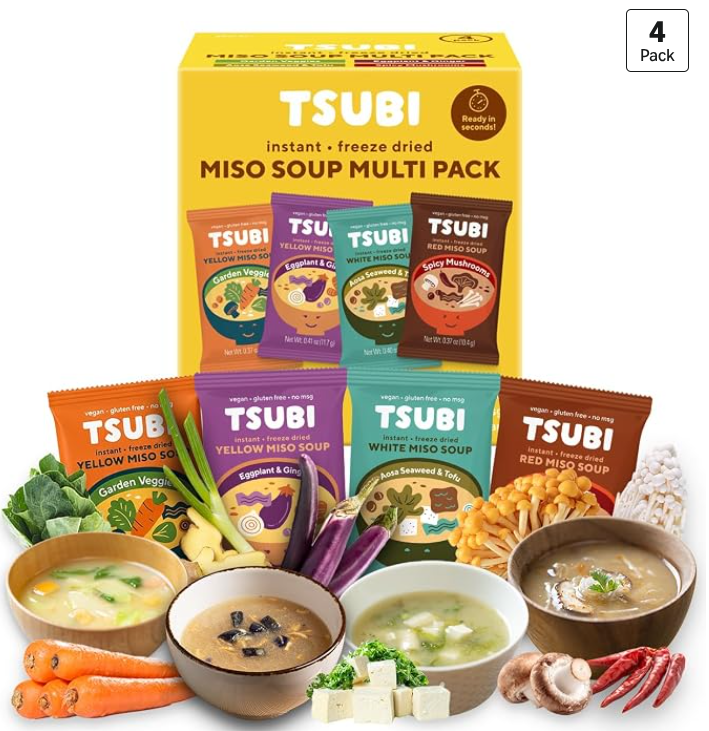
  • No Brainer Meal Options – I already mentioned Tsubi Soups on this blog before, and I’m happy to share that I’m still a fan of their soups. I purchased a box of soup mixes every other month, and when I just can’t be bothered with cooking a full meal, I’ll add one of the pouches to a cup of hot water, and either nibble on some leftover rice (I usually have some in my refrigerator) or add some glass noodles for a bit more heft. These packets are delicious, easy to prepare, and make my busy days much simpler.
  • Long Handled Shower Scrubber – I love how much easier it is to clean my shower when I use this. Now, I tire easily, so I have to really let my shower cleaner marinate before scrubbing. But when I start actually using a little muscle to get things squeaky clean, having this extra long handle gives my back a break, and is much easier for cleaning corners. This is ordinarily the kind of thing I’d recommend to my fibro friends, but the truth is, I think most people would benefit from using cleaning tools that are less taxing on the body. Love this!
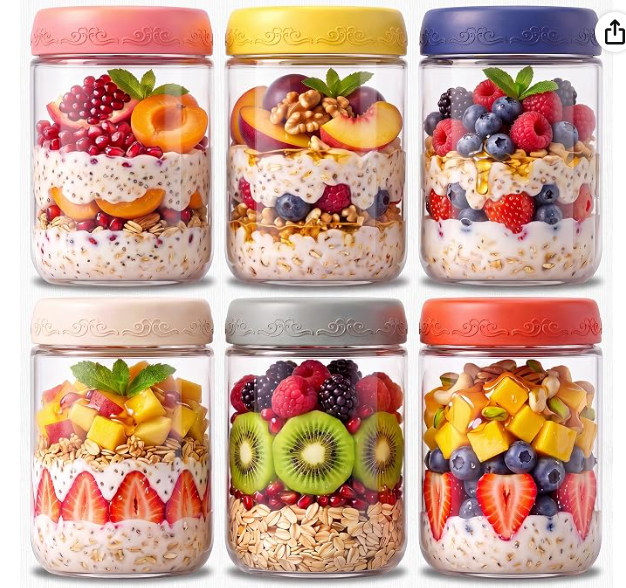
  • Overnight Oat/Meal Prep Jars – On the days where I have energy to do more than eat soup, I have been enjoying anything that makes meal prep easier. I bought some jars that have a larger opening at the top, so that they are easy for food prepping and easy to clean. I also love the wide lids, which are not only easy to clean in my dishwasher, but also don’t run the risk of becoming rusted like mason jar lids (I know that it’s easy to prevent lid rust, but it’s even easier to avoid it altogether). I don’t only use these for overnight oats (though I enjoy making those from time to time). I also like these for making mini ramen jars and for doing cold infused teas.
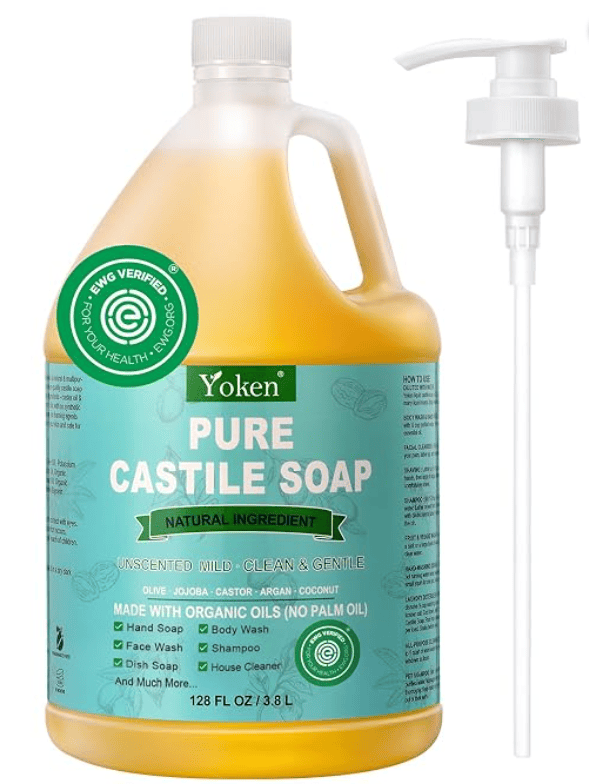
  • Castile Soap (by the gallon) – I purchase this pretty much every other month. I use this to refill soap dispensers (just add a little essential oil for scent), it’s my daughter’s preferred body wash, and I also use it as laundry detergent in a pinch. I love that it’s unscented and does a great job cleaning. I always get the Yoken brand since it’s reasonably priced and usually arrives within a day or two of ordering.
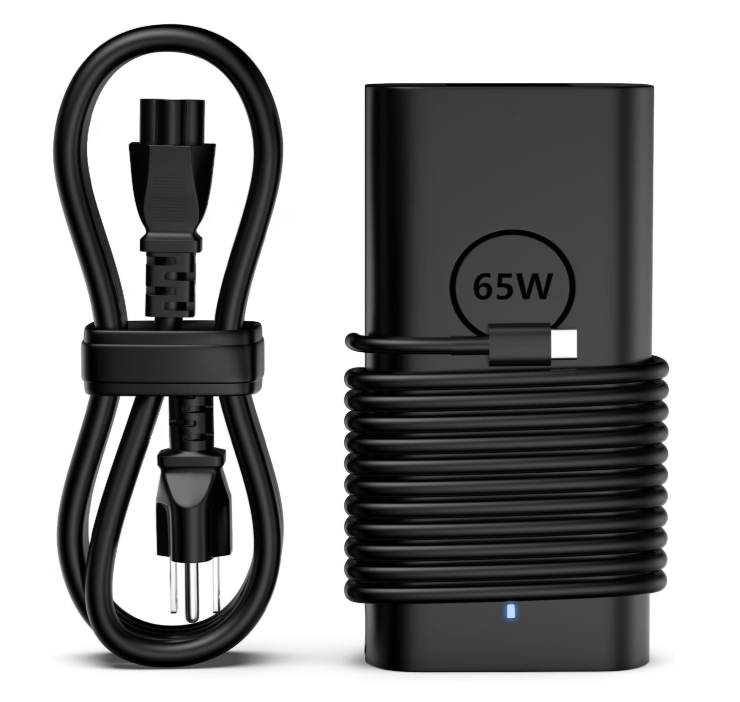
  • Replacement Laptop Chargers – A funny thing happens when every device in your home – laptops, cell phones, and tablets – uses the same size charger. Suddenly, chargers go missing . . . get broken . . . or just be reallocated to the most in-demand devices. On more than a few occasions, I would sit at my laptop and realize it was dead, because someone had “borrowed” the charger and forgotten to replace it. Some devices – like cell phones – had charger cords that would get misplaced and, suddenly, the laptop charger became the replacement. I just went ahead and bought four more laptop chargers. Believe it or not, there is STILL a charger shortage at my house! Despite buying multiple chargers, we still need one more (there are two laptops in the office but only one charger)! I ordered it as I wrote this paragraph. The house devours chargers, and I’m tired of fighting it. I just buy new ones when one goes missing or decides to stop working.
These are just a few things that have made my life easier recently. I have so many little things that improve my quality of life, that it’s often hard to recall them all. That being said, I love any chance I get to reflect on how truly grateful and fortunate I am to have so many useful and helpful things at my disposal. Yes, these are affiliate links and no, you don’t have to purchase anything if you don’t want to. However, I’d love to hear if you’ve got any recommendations for things that can make my day-to-day life easier: I’m all ears!
health · life curation

Fibro Friday Posts Resume Next Week

Since I’ve been getting back into the swing of things with blogging, I have neglected to write about fibromyalgia. Do you know there was actually a time where I wrote about fibromyalgia and chronic illness every single Friday? I did that for a LONG time, actually. I slacked up on my blogging and I discussed fibromyalgia less and less. There’s actually a good reason for that.

My symptoms had been, for the most part, manageable. All of those posts where I was trying different treatments weren’t in vain: I actually discovered that changing my routine, supplementing effectively, and learning the best physical activity for my body could effectively reduce my symptoms from devastating to only slightly annoying (a major improvement!) But, to be clear, fibromyalgia is a lifelong condition: a stressful situation, or a series of difficult events, can easily trigger my symptoms and undo a lot of the progress I’ve made. I recall how post-viral syndrome caused me to experience deconditioning (rapidly losing progress towards my physical wellness) after having the flu for a couple of weeks. Up until early this year, I had been managing life pretty well overall. However, life would have different plans for me. In February, I had a really bad flare that negatively impacted my mental health. Additionally, a heart-to-heart conversation with a good friend enlightened me and helped me identify the fact that I had unaddressed trauma that desperately needed my attention.

As a result, I had to take time to really start working on the dumpster fire that was my mental health, so that I could avoid the inevitable physical effects of being emotionally unwell. When you’re actively working on wellness, you don’t always have time to log your process and progress (I’ve tried that before, both on this blog and on my Fibro Friday vlogs: I get better results when I focus on wellness first, then report results much later). So I spent the majority of this year untangling various emotional blocks and trauma, working to resolve those core issues so that I can desensitize my triggers and reduce the likelihood of an emotional event progressing into a physical one.

I don’t make it a point to constantly talk about fibromyalgia in my daily life, so I don’t always write or vlog about it. It’s a central part of my life so I can’t ignore it, but I don’t discuss it all the time. But, just because I’m not talking about it doesn’t mean I’m not working on it. The more I take care of myself, the more I uncover better ways to heal the damage that is at the root of my condition. And I feel it is my responsibility to share what works, so that if there are people out there looking for solutions, they can explore what I’m doing and see if it helps them. I’m not a doctor and this isn’t medical advice, but I’m a real person, trying different things and seeing how I can live a normal life with chronic illnesses. On my journey, I’ll share what I learn and hope that my experience can help someone else dealing with medical issues.

That all being said, there will be more Fibro Friday content in the coming weeks. I had my annual lab work done recently, and I have my annual physical in just a few days, so I’ll be discussing how my health is going in the upcoming weeks. In the meantime, here is a Fibro Friday video from this year, discussing nervous system sensitivity and fibromyalgia:

health

Fibro Friday – Multi-Purpose Pain Oil

Happy Fibro Friday! I’m playing catch-up with my posts, because I’ve posted a number of Fibro Friday videos on YouTube that I never shared over here.

A few years ago, I posted a recipe to a pain balm that I used to help with nerve and muscle pain connected to fibromyalgia. This all natural pain balm was unique, in that it used essential oils and it went beyond muscle pain (the usual target for pain) and addressed nerve pain, too. I love this balm and make it a few times each year. But, sometimes I need relief quickly, and I don’t want to wait for the balm to cool and set. So I decided to try a pain relief oil instead. It wouldn’t need the setting time that the balm required, but it also had the potential to be messier if I needed to transport it. I decided it was worth a shot, since I wasn’t planning any immediate travel AND I needed some fast pain relief.

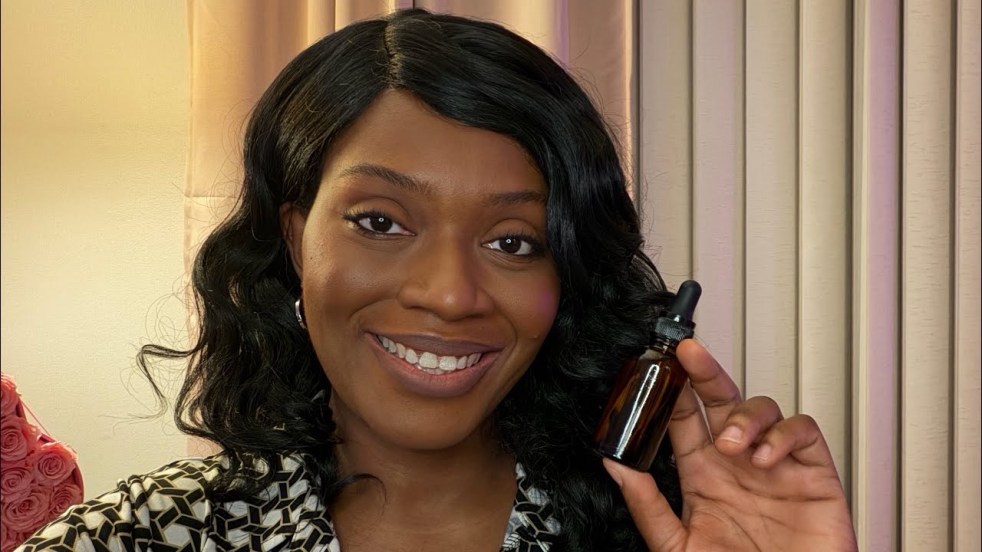
I combined my main actives – copaiba essential oil and dried arnica that I infused into avocado oil (arnica oil works, too) – into a clean amber jar with dropper. I then added a new ingredient, marjoram oil, since I was out of davana essential oil. I then added some orange essential oil, and filled the rest of the bottle with apricot oil. The oil has the same smell: herbal, medicinal, and a little citrus. However, instead of waiting for it to cool and set into a semi-solid state, it remained liquid.

I tried the new formulation on some muscle pain I had in my feet and ankles (a common sore spot for me, since I’m fairly active every day). I noticed that it not only relieved the pain, but it also calmed the tingling I experience in both my hands and feet. For those that don’t know, I experience some idiopathic peripheral neuropathy symptoms, including tingling and itching on the palms of my hands and soles of my feet. Sometimes I’m awakened by the nerve sensations, which usually feels like either pins-and-needles pain, or intense itching. And the oil actually gave me some relief! That confirms my suspicion that my nerve discomfort continues to be responsive to copaiba, and the relief can be experienced regardless of whether the product is liquid or semi-solid.

I always try to back up my Fibro Friday recommendations with peer-reviewed research, so here are the articles I used when figuring out exactly which oils to include in this recipe:

Effects of a massage-like essential oil application procedure using Copaiba and Deep Blue oils in individuals with hand arthritis

The effect of Copaiba aromatherapy on pain scale among postpartum Breast Cancer surgery patients at Prof. Dr. Margono Soekarjo Hospital, Purwokerto

Copaiba Oil-Resin Treatment Is Neuroprotective and Reduces Neutrophil Recruitment and Microglia Activation after Motor Cortex Excitotoxic Injury –

Marjoram essential oil – Efficacy of Topical Essential Oils in Musculoskeletal Disorders: Systematic Review and Meta-Analysis of Randomized Controlled Trials

Sweet Marjoram: A Review of Ethnopharmacology, Phytochemistry, and Biological Activities

Anti-Inflammatory and Pain-Relieving Effects of Arnica Extract Hydrogel Patch in Carrageenan-Induced Inflammation and Hot Plate Pain Models

Effects of Arnica Phytotherapeutic and Homeopathic Formulations on Traumatic Injuries and Inflammatory Conditions: A Systematic Review

And, if you prefer to listen to my discuss the oil ingredients further, here is the YouTube video:

If you experience fibromyalgia or neuropathic pain, what remedies have you found helpful? I’d love to hear your solutions in the comments below!

FYI: none of the information on this or any other post is medical advice. Please consult with your doctors before beginning any home remedies or other treatment.

This post contain affiliate links.

health · Uncategorized

Fibro Friday – Anger, In Retrospect

When it comes to chronic illness, it’s very easy to get so lost in symptom management that you lose sight of your emotional life. Figuring out your new lifestyle is a massive undertaking and doesn’t give you a lot of space to think, and act, and feel, simultaneously. You often have to forgo examining your feelings in order to figure out how to get the pain under control, and you put those difficult emotions on the shelf while you do the work of figuring out what’s happening with your body. Many times, those hard-to-describe emotions . . . are anger. Anger over the excellent health you may never enjoy again, anger over the misdiagnoses, dismissive attitudes within the medical profession, anger over the people who simply don’t understand what you’re going through.

So you do the doctor visits, buy the medicine and supplements, try adjusting your routine. You do a few things, figure out what’s working, then revise as needed. You do this for weeks and months, and hope that you’ll finally figure out a recipe for wellness that you can sustain over the long term. And while you do all of that . . . the anger sits.

And trust, that’s all the anger does. It sits, and it doesn’t budge an inch. It waits for you while you run around and try to put out the fires with your health condition. It doesn’t go anywhere until it’s processed. So, it stands by as you try to do everything you need to get your health back on track.

When you finally get things under control, or when you just accept what your life will be with your chronic condition, then the anger bubbles up. The lucky ones of us have a few times where the anger explodes, gets processed quickly, and it’s on to the next thing. But for some of us. . . it doesn’t happen like that. It may not feel like white-hot rage initially. It may feel like discomfort, being a little less patient with yourself and others, a repressed or otherwise forgotten memory reappearing and knocking the wind out of you. It doesn’t always look or sound like anger, that is, until you start peeling back the layers.

After you inquire within yourself, “Is this sadness? Disappointment? Frustration? Fear?” and find that none of those emotions fit, then (if you’re honest with yourself) it’ll hit you. You’re mad. Furious, even. Mad at your body for not responding to your medication, improved diet or modified routine. Enraged at the many doctor visits that didn’t get you an answer despite you always telling them your laundry list of symptoms. Fury over how little your family, friends, or acquaintances believe or understand your discomfort. And yes, white hot rage over the insurance systems, employers and government frameworks that make it more advantageous for you to suffer and expire than to get real help on your path.

Your anger may not appear at the beginning of your journey. It may appear in retrospect, like mine did. And it’s still just as holy, justified, and worth acknowledging as it was when you first felt it but didn’t realize what it was.

Give your anger space, and give yourself grace for feeling it. It is part of your journey, and it deserves space. And then, when the rage has cooled down, care for yourself, and press forward. Your improved health is on the other side of your process.

art · beauty · career · culture · life curation · style · travel · wine · writing

Returning To Myself . . .

As I write this, I recently kicked off a 3 week vacation from my day job. I love the work I do, but I’ve been feeling burned out and uninspired. I’ve always been clear on the fact that my occupation is not the source of my fulfillment, but I realize that work has an indirect connection to many of the enjoyable experiences that I’ve shared on this blog for years. The exhibitions I’ve discussed, food I’ve tried, travel and other adventures I enjoyed, books I’ve read, classes I’ve taken, and people I’ve met and loved have mostly all been in some way connected to work. My career began with commuting to a major city for 3+ hours every day, and the adventures I had during that time were numerous, life-changing and priceless. I love that I’ve created a life where there is a lot of pleasure alongside my work.

But recently, I’ve felt particularly disconnected when it comes to the things I enjoy. I traveled extensively over the past few years, and while I loved those times away, I still felt like something was missing. Something just wasn’t . . . clicking. I felt like I was going through the motions instead of really LIVING. During some meditation and reflection time, I saw exactly what I needed to do, to bring back the joy that I no longer possessed.

I need to return to myself.

The question of “Who am I?” has come up a number of times this year, particularly in sessions with my therapist. The question forced me to examine who I’d allow myself to become, in order to have the things I wanted. I adore the person that I am, but my current life doesn’t have the depth that I desire. I reflected back on the times when I felt most joyful and vibrant, and I noticed a recurring theme. Always, I felt my most alive when I was deeply engaging my senses. My senses of sight (artwork and natural wonders), hearing (live musical performances and listening to rainfall), smell (perfume, candles, and other home scent), taste (chocolate, international foods, whisky, wine), and touch (luxurious fabrics and exquisitely textured items) were all front and center when it came to sensory engagement. I even wrote a book on how our five senses help us to manifest our dream lives (Come To Your Senses)! My senses are crucial to how I enjoy my life. I’d even venture to say, that my senses are how I LIVE my life.

So I’m returning back to that. I’m making my five senses the focus on my writing and vlogging experience. I need to get back to the beauty of pleasure that I can measure with my body. And that’s what I intend to do. I don’t know how long I can keep up this focus, but I know that I will be closer to my ideal existence if I start centering my senses again. I hope you plan to stick around for this phase of my journey.

health

NEW Fibro Friday Posts Coming!

Now that I’m getting back into the habit of posting blogs, I’m excited to announced that there is NEW Fibro Friday content coming!

I’ve been researching herbs, developing new pain relief oils, trying different therapeutic practices, tinkering with my diet, and giving myself lots of time to figure out what works, and what doesn’t. I can’t wait to tell you all about the discoveries I’ve made over the past year(ish)!

Stay tuned, and thanks for reading!

art · culture · festivals · food · international · life curation · nature · style · travel

My Heart Belongs to Scotland – Glasgow and Clan Graham

This is a continuation of my recap of my time in Scotland. After landing in Edinburgh, traveling up to Stonehaven, and enjoying some time at the Aboyne Games, my friend and I journeyed to Glasgow to continue our adventure.

Instead of taking the LNER train, we rode ScotRail. We weren’t able to upgrade our tickets for this leg of our trip, but we ended up with good and comfortable window seats. We were joined by an adorable young married couple – Lola and Hal – on their way to Glasgow for a fun weekend. We had a fantastic conversation and enjoyed the sights as we chugged along for two hours.

We arrived at the Glasgow train station and started the walk to the Maldron Hotel. This was our first time at a modern hotel in Scotland: the hotels we stayed in before (and after) this one were mostly boutique style and more historical. The sleek and modern decor was fun and fresh. We dropped off our bags, freshened up, and prepared to meet our tour group for dinner.

My bed at the Maldron Hotel Glasgow
Enjoying the room

Our tour was hosted by Clan Graham Society, the organization endorsed by the head of Clan Graham, James Graham, 8th Duke of Montrose. The tour was organized to commemorate Clan Graham Society’s 50th Anniversary and was coordinated by several members of Clan Graham – specifically, Kate Graham and Kiersten Graham Dick, along with Gordon Graham – and every detail was considered with care. All members of the group, except for a few folks like me, have a connection to James Graham, 1st Marquess of Montrose. Clan Graham is extraordinarily warm and welcoming, and I joined the organization as a friend of Clan Graham. My friend, who was my roommate for the entirety of the trip, has a Graham-affiliated surname, so she’s a member of Clan Graham and encouraged me to join. I’m so thankful for her encouraging me to become part of the group!

In our ten day tour, we visited sites that were historically relevant to Scotland as a whole, as well as sites relevant to Graham history specifically. Every other day or so, we traveled to another town or city, each one significant in its own right.

Exterior of the Maldron Hotel

We enjoyed delightful meals at the Maldron each day during our stay (we were there two nights). On the first full day in Glasgow, we were supposed to go to the Isle of Arran, but the weather was unfavorable (one of the strongest storms of the summer happened on this day). While the group made alternate arrangements, my friend and I – still quite tired from our time in Stonehaven and Aboyne – decided to sleep in and explore Glasgow in the afternoon instead.

While walking around, we came across many interesting and old buildings that were photo-worthy. But, despite Glasgow being full of gothic, Victorian and art nouveau structures, the city has a distinctly modern, “concrete jungle” feel. It’s undeniably metropolitan energy gives it an edge and pulse that wholly unlike the laidback energy of Edinburgh. To be frank, I love both cities and will happily return many times, if I’m able.

Walking around in Glasgow
Beautiful architecture in Glasgow

After grabbing a delicious hot chocolate from Hotel Chocolat (complete with chocolate whipped cream rose, no less), we stumbled across Frasers department store, and I became an instant fan. As a lover of the department stores of yesteryear, Frasers reminded me of the kind of stores that are becoming rarer to find stateside. It was so nice to walk in and get an experience similar to Harrods, Harvey Nichols, Liberty or Selfridges. I found an amazing formal gown that I had to purchase, and had a wonderful chat with one of the sales reps at Frasers. I’m so pleased that we stumbled upon this store, because none of the other cities or towns on our tour had a Frasers.

Hotel Chocolat is always a must when in the UK
People Make Glasgow – I agree!

Once we finished shopping, we made our way back to the hotel. I snapped photos of interesting things I saw on our walk, including Nelson Mandela Place, a street named after the South African former President, Nobel Peace Prize recipient, and anti-apartheid activist. I also saw shops and architectural details that I loved.

Snapshot of Nelson Mandela Place street sign
Fun street art
Restaurant I want to try when I return to Glasgow

Before we walked the final block to our hotel, we stopped off at the DoubleTree by Hilton to check out their restaurant, Cask & Clyde. The menu had a fair amount of options, and I found a couple of things that looked good (namely, the soup of the day – lentil – and macaroni and cheese). I also enjoyed an old fashioned while I waited for my food.

Menu at Cask & Clyde
My soup and macaroni and cheese
My old fashioned

I enjoyed my Cask & Clyde experience, and will definitely return when I get back to Glasgow. After we were full, we returned to our rooms and relaxed for a few hours before dinner.

Neon sign outside of Cask & Clyde

The next day, we loaded our luggage onto the tour bus in preparation for checkout. Our bags stayed on the bus as we journeyed to our first stop on day 2: Mugdock Castle. This was the original stronghold for Clan Graham more than 800 years ago. The castle is now mostly in ruins, but Mugdock Country Park is still an incredible site and well worth the visit. The castle is about a 15 minute walk from the entrance. On the trail to the castle, you will see the remains of Craigend Zoo, as well as many dog owners taking their friendly pups for walks.

At Mugdock Visitor Centre
Ruins of Craigend Zoo

When we arrived at the castle, Clan Graham’s chieftain, Richard Graham, presented the caretakers of Mugdock Castle with a 50th anniversary commemorative plate. It was a touching ceremony and I’m so glad I got to witness it. Inside the castle, there are a number of Clan Graham artifacts, including a number of pieces emblazoned with royal crests. The site is a beautiful one that is listed by the Scottish Tourism Board. While the day was misty and cool, the walks to and from the castle were refreshing and picturesque.

Mugdock Castle
Sign depicting the original structure of Mugdock Castle
Mugdock Castle timeline and sketch of James Graham 1st Marquess of Montrose
Desk emblazoned with a crest
Closeup of crest which roughly translates to “Royal and United as One”
Colorized sketch of Mugdock
History of persecution of suspected witches in Scotland
Biography of James Graham, 1st Marquess of Montrose
Graham Room acknowledgement

We returned to the main entrance building and warmed up with lentil soup, sandwiches and coffee and tea. The guides graciously answered our questions and gave us a delightful end to a fantastic day at Mugdock.

Chuckling with the professional actor outside of Mugdock Castle
Snacks in the meeting area
Graham tartans
Tartans from a different angle

We boarded the tour bus and made our way to the next city on our tour, Stirling. However, we stopped momentarily at Loch Katrine, then followed that with a later stop at a local shop which had some highland coos in a neighboring field, and I got the treat of a lifetime when I was able to feed those sweet coos!

Riding from Mugdock
Roadside heather
More pictures of the local flora
Pretty pink thistle
Flower closeup
Gift shop at Loch Katrine
Cruise poster at Loch Katrine
At Loch Katrine
Stop near the Trossachs and seeing highland coos
Another coo photo

This full day of activity was only a glimpse of the magic to come on my Scotland vacation! I’m excited to share with you the next part in a few days, where I will discuss my time in Stirling. Until then, take care, and thanks for reading!

health

Fibro Friday – 5 Red Flags Your Doctor Might Miss

Happy Fibro Friday! I hope you all are doing well and are taking excellent care of yourselves.

I recently started looking back at my health history (thanks to my insurance for the decades-long record). I sometimes will look to see if anything is outdated, or if a diagnosis was slipped in unbeknownst to me. This most recent review didn’t turn up any unknown or outdated information, but I began thinking about my medical experiences and I asked myself, “Is there anything here that could have pointed to me being prone to developing fibromyalgia?” What I found surprised me: I had been diagnosed with multiple conditions over the years, all of which has shown some connection (some weak, some significant) to fibromyalgia. So, for this post, I’m going to tell you what conditions are fibro flags that you or your doctor may have missed on your road to diagnosis and treatment.

Before going further into this discussion, you may want to check out this journal article, titled, “The Prevalence of Fibromyalgia in Other Chronic Pain Conditions“. The researcher, Muhammad Yunus, outlines many of the conditions which have some determined link to fibromyalgia, and Yunus admits that the associations are bidirectional and the interrelationships haven’t been explored fully yet. I highly recommend that you take your time and go through this article as you try to determine if there is any overlap between fibromyalgia and any other conditions you may have.

Flag # 1: History of asthma – A 2020 study of Iraqi fibromyalgia patients confirmed that, “Fibromyalgia (FM) was more common in asthmatic patients compared with controls.” Perhaps it’s the fact that breathing difficulties would (naturally) trigger stress responses in the body, and those repeated stress responses condition the brain to interpret most stimuli to be more urgent than it actually is. Maybe being asthmatic trains the brain to be hyper-sensitive to everything. More study is needed to determine what this means for fibro patients, but it’s certainly something to keep in mind when coming up with a body of “clues” leading to a fibromyalgia diagnosis.

Flag # 2: TMJ syndrome – For several years now, it has been established that TMJ and fibromyalgia are linked, though the nature of the connection is still a bit unclear (a chicken vs. egg argument would fit in this scenario). This article by VeryWell Health references some excellent research on the topic. To put it plainly, it seems that TMJ actually may lay the groundwork for the sensitivity experienced in people that have chronic pain issues. As author Adrienne Dellwo states, “When TMJ occurs before CFS or FMS, it’s possible that TMJ pain contributes to the development of central sensitization. Hypersensitivity of the central nervous system is believed to be a key component of both fibromyalgia and chronic fatigue (also known as myalgic encephalomyelitis).” Again, this area still needs additional research, but there’s no doubting that a connection exists between the two.

Flag # 3: Epstein Barr Virus (Mono) or Lyme disease – Like the two previous red flags, we have to keep in mind that correlation =/= causation. That being said, there is research starting as early as 1987, which indicates that 55% of the test subjects self identified that a viral infection was the cause of their fibromyalgia. Personally, I was infected with mononucleosis in my 20s, and my fibromyalgia symptoms began and sustained after that point, often appearing as a chronic case of influenza or reactivated mono. More recent research confirms that EBV can either cause or contribute to fibromyalgia symptoms, which makes sense, considering that many of EBV’s symptoms overlap significantly with what many fibromyalgia patients experience (fatigue, body aches, even sore throat!) One article states that EBV “highjacks” the immune system, which may explain why fibromyalgia patients that have been infected with EBV tend to experience more sensitivity to viral infections like colds or the flu, as well as sustained symptoms once infected (I personally got a second positive result for the flu nearly a month after initially getting a positive result!) While I haven’t experienced Lyme disease, there is research from as early as 1992 which states that the bacteria responsible for this condition may be a potential cause of fibromyalgia. If you have either of these conditions in your medical history, please know that these may be contributing to your fibromyalgia symptoms.

Flag # 4 – Anxiety or depression – Anxiety and depression are chronic illnesses on their own, and, unsurprisingly, these are almost always present in fibromyalgia patients, too. This article on News Medical is informative and clearly explains the connections between anxiety, depression and fibro. The article, written by Dr. Anaya Mandal, MD, discussed the concurrence of these conditions, and how these overlaps contribute to exacerbated symptoms. According to Dr. Mandal, anxiety, “may increase the severity of pain perception and thus increase the severity of the disease.” Further, when discussing depression, Dr. Mandal writes, “Several studies have speculated that there may be a common pathophysiology between depression and fibromyalgia.” This should be a surprise to no one that has been diagnosed with anxiety or depression: in fact, one favored fibromyalgia treatment – serotonin and norepinephrine reuptake inhibitors, or SNRIs – are classified as antidepressants, and have had fantastic results when used to treat fibro.

Flag # 5 – Childhood traumatic experiences (CTE) – There is still a lot of research needed when it comes to this, but most of the research seems to agree that experiencing trauma in childhood can be a risk factor for fibromyalgia later in life. In fact, there is research that indicates that even the attachment style that we experienced from our primary caregivers may have a lot to do with our neurological health in later years. Interestingly, I have a loving, involved mother and a loving but inconsistent father, who divorced when I was 3 years old. My mother later remarried, and my stepfather was also loving, involved and consistent. So while my home life was stable, the inconsistencies that happened with my father had already made an impact. Further, a serious illness (such as asthma that required multiple hospitalizations in my childhood) is a type of trauma that can also create unhealthy attachment styles, which are a risk factor for fibromyalgia. I’m blessed to have grown up without physical, sexual or emotional abuse, and I’m also fortunate to not have been exposed to drugs or other substance abuse while in utero, but if you’ve had these experiences, your risk of developing fibromyalgia are even higher.

This post was a bit longer and “heavier” than my usual Fibro Friday content, but I wanted to cover something substantial, because I know what it’s like to try to “reverse engineer” your diagnosis and still be left with questions. If any of these red flags apply to you, please take heart. And if you’d like to discuss more about your journey and experiences with fibromyalgia, I’d love to hear about it in the comments.

Take care, and have a great weekend!

health · life curation · relaxation · Uncategorized

Fibro Friday – How I Deal With Chronic Headaches

Happy Fibro Friday! The weather is getting warmer each day, and I find myself feeling happier and more energetic. The summer season is HERE!

June is Migraine and Headache Awareness Month. As someone that has dealt with chronic headaches for almost 20 years, I know a little something about a “mal à la tête” (one of the few phrases I managed to retain decades after taking my last French class). However, I was not aware there was a month dedicated to all of us that have to deal with headaches and migraines on a regular basis. I’m fortunate to have never experienced a migraine (though my mother used to have them when I was younger), but I often have tension headaches and other pain patterns.

The weird thing that I’ve noticed about having that chronic headaches is the fact that I almost always have a low level of pain going on. It’s very similar to how fibromyalgia works: pain is a fairly constant companion, but the level of pain is what makes the difference. My headache may be (on a scale of 0 to 10, with 0 being no pain at all and 10 being severe enough to warrant an emergency room visit) either a 2 or an 8, but never 0. The pain is minimal on some days, but never completely gone. I’ve gotten really adept at functioning without pain medication on any day that’s less than a 5. That may sound awful, but when something has become your normal, you almost don’t recognize it. And, in the case of days where my pain level is a 1 or 2, I often feel ecstatic and like I can conquer the world!

A big part of how I manage chronic headaches is that I have an arsenal of things I do BEFORE I choose to use a pain medication. After years of using over-the-counter medication in an attempt to manage neurological and musculoskeletal pain, I became concerned with the long-term effects of these substances. Therefore, I try to avoid them for as long as I can comfortably manage. When I feel a slightly stronger headache, I don’t immediately reach for ibuprofen or acetaminophen anymore. Here’s what I try before I reach for pain

  • Check my hydration levels: I drink some water, because 9 chances out of 10, I’m dehydrated. Starting my day with a large glass of water is a great move that works well when I remember it. I usually keep a large glass of water on my nightstand, so I can sip before I go to bed and finish it in the morning.
  • Use my weighted eye mask: I’ve reviewed my eye mask over here before, and I still love it. There’s something about the counter pressure that really gives me relief. It’s a pretty inexpensive investment (I got mine from Amazon), and I find that laying down for a few minutes with this mask can really help with the pain.
  • Do some jaw and neck stretches: since most of my headaches are tension related, gentle stretching can relieve some of the tightness that contributes to the pain. This may not be particularly helpful if you suffer with migraines, or if your headaches are not tension related. But if you find that you clench your jaw or otherwise hold your face or neck muscles tightly, stretching them gently may help to loosen up those muscles and take off some of the pressure.
  • Pay attention to my triggers and actively avoid them: sometimes seasonal allergies, certain foods, or even particular daily routines can be headache triggers. If I recognize a trigger, I avoid it as much as I can. That can mean avoiding trips outside of the house during the peak pollen or poor air quality days, refraining from bread and other starchy foods, or getting extra sleep so that I don’t have an exhaustion-induced headache.
  • Eat something, and make sure it’s the right food for me: sometimes, the pain comes from eating too late in the day, not eating enough throughout the day, or eating the wrong food. A huge helping of fresh fruits and vegetables tends to give me a little relief. I’m sure it’s because these foods are more easily metabolized by me, but also, fresh fruits and vegetables tend to be very hydrating.

I discuss my practices for dealing with chronic headaches in one of my recent Fibro Friday videos. You can see it below:

Do you have chronic headaches? What have you found that works in helping you to manage them?

health · words of wisdom

Fibro Friday – Boundaries As A Form of Flare Management

We’ve arrived at the end of another week, and I’m delighted that I get to share with you all some more of my fibromyalgia insights. I have to say, this condition has taught me an infinite number of lessons (truly, more than I could ever recall for the sake of blogging). And even when I think I’ve got a good handle on a particular lesson, life always gives me the opportunity to attain a new level of depth and comprehension.

This past week, I got to revisit a lesson on boundaries. When managing chronic illness, boundaries are especially important, both to prevent overwhelm and to manage overwhelm when it occurs. If you haven’t practiced saying enthusiastic yeses and firm, confident nos, you may find that this isn’t an easy thing to do. But mastering this skill is vital, because one of the biggest pain culprits is overextending ourselves and being under a ton of stress. Effective boundaries can reduce or eliminate stress and make it easier to avoid or manage flares.

I did a video all about this topic: you can find it below:

If you’re unclear about what boundaries are, and how to deploy them effectively, the book Boundaries: When to Say Yes, How to Say No to Take Control of Your Life by Dr. Henry Cloud is a great place to start. This book drastically changed how I viewed yes and no in the context of all relationships, including the relationship I have with myself. I highly recommend it!

That’s it for Fibro Friday. Please continue to take care of yourselves, and I’ll talk to you all soon!

*This post contains affiliate links.