health

Fibro Fridays – The Latest Fibromyalgia Research

Happy Fibro Friday! I hope you’ve had a pleasant week with minimal pain and lots of joy!

There are two things I want to share with this post. First, I decided to spend a little time reviewing the most recent fibromyalgia research. I usually get my fibro updates from mainstream news outlets or medical websites. But this time, I wanted to look at what has been published in medical journals during the past year.

Here’s the problem (*steps onto soap box*): most of the journals will charge you anywhere from $20 to $80 to access a SINGLE article. I understand that the publishers need to be compensated, but none of that money goes to the researchers (if I’m mistaken, please let me know in the comments below). Which is why I believe in contacting the researchers directly to ask for a copy of their research, and offering them some sort of gratuity out of appreciation. Many of them complete their research due to grant funding, and they often live off of stipends. And most researchers are happy to share their work for free, which is why I feel strongly that offering some sort of “love offering” is a good gesture. *steps off of soap box*

Now that I’ve gotten that off of my chest, let’s get to the articles. There are two that I want to share in this post, and both of them can be accessed for free. The first article is all about T cells, the white blood cells that relate to the body’s immune response and how the body reacts to certain pathogens. This article explores the role of T-cells in the “neurological and inflammatory symptoms of fibromyalgia”. This is a long read, but enlightening if you have the time and interest to learn more.

The second article covers current pharmacotherapy options for fibromyalgia, as well as potential future research opportunities. This article does a great job of explaining how certain commonly prescribed medicines (personally, I take two of the drugs listed in the article) work on fibromyalgia symptoms such as pain, insomnia and even depression and anxiety. If you want a thorough primer on how certain fibro medicines work, this article is a fantastic place to start.

Now, onto the second item. Last week, I posted about my Everlywell Food Sensitivity Test experience. I also posted a video about Everlywell on my YT channel. I received a comment that asserted that the food sensitivity test was a bunch of bunk, to put it succinctly. The commenter also provided a link to a doctor’s video, explaining why food sensitivity tests are unreliable. I must thank the commenter for sharing this with me. However, I had a host of other reasons why this test wasn’t a waste of my money. If you want to hear my explanation, you can check out the embedded video below.

That’s all for today’s Fibro Friday! I hope you all have a great weekend and take good care of yourselves. “See” you all on Monday!

health

Fibro Fridays: My Everywell Experience

Happy Fibro Friday! I hope everyone is feeling well and having a great day or evening wherever you are.

As you all recall, one of my goals for 2021 is to minimize or completely eliminate my fibromyalgia symptoms. On this journey, I will do my best to learn as much as I can about my body so that I can formulate an approach that works for me over the long term.

On the quest to gather as much useful information about my body as possible, I purchased the Everlywell Food Sensitivity Test. This is not an allergy test: it’s a test that measures how much your body responds to certain foods by testing your body for antibody activity. The science for this is fascinating, which is why I encourage you to check out the website for an in-depth explanation.

When you first receive your test, you have to register it on the Everylywell website. After registration, you can commence with doing the test. My test involved pricking my finger and saturating a blood sample collection card. After saturating the card, I sent it back to the lab in a biohazard envelope.

After waiting a little over a week, the lab sent me an in-depth report, explaining my results. I was moderately sensitive to 3 foods, and minimally sensitive to 7 foods. I’ll be using this information as a starting point for an elimination diet. I will add more details about the elimination diet in a few weeks, but for now, at least I know what I should exclude first.

I filmed a video with a lot more details which I will embed below.

Have you all done a food sensitivity test? How did that go? Let me know all about it in the comments below!

health

Fibro Friday : My Magical Body Balm for Muscle and Nerve Pain Relief

Happy Fibro Friday, friends! I sincerely hope that you’ve had a great week, and I hope that your weekend is amazing!

Recently, I shared with one of my favorite vloggers, Deena from Adventures with Fibro, that I make a body balm that helps with both muscular and neurological pain. I also promised her that I would make a video. And yes, I kept my word.

If you have fibromyalgia, you are already intimately aware of the pain that occurs due to the condition. But if you don’t have the condition, I’ll try my best to explain it to you. The pain that comes from fibromyalgia is often diffuse: it’s not usually concentrated into just one spot. And the pain goes beyond just soreness (as if you overused a particular muscle group): the pain can include stinging, burning, prickly, tingly, or throbbing sensations.

Many of the products available for pain address the muscle component exclusively. So the neurological pain (or neuropathy) remains unaddressed. You usually have to use medication prescribed by a neurologist or a rheumatologist to alleviate the nerve pain. Sadly, these medicines do a poor job of offering relief, and can have a range of awful side effects.*

So I opted to create a product that could give me relief for both body systems (musculoskeletal and nervous). In this video, I give a nice, customizable recipe that can offer you some relief and hopefully make your flare days a little more tolerable. I’m writing out the recipe and instructions on this post, to be followed by a link to the video.

Magic Body Balm (makes 4 ounces (120 ml) of product)

  1. A few weeks prior to making this balm, purchase dried arnica and place 1 or 2 ounces of the dried plant into 2-3 ounces of avocado oil. Let it sit for several weeks in a dark, cool spot, gently shaking the oil every couple of days.
  2. Start by placing the nut butter into the glass bowl.
  3. Fill the bottom of the shallow bowl with less than 1 inch of boiling hot water. You only need enough hot water to cover the bottom of the shallow bowl.
  4. Place the glass bowl with the nut butter into the shallow bowl, allowing the hot water to heat the bottom of the glass ramekin and start melting the butter.
  5. THIS IS CRUCIAL – Avoid getting any water into the liquefying nut butter, the oil additives, or any other ingredients. This will prevent bacteria from growing in the balm.
  6. While the nut butter is melting, strain your arnica infused oil. (Skip this step if you’re using pure arnica oil that you purchased).
  7. Once the nut butter is liquefied, combine it with the arnica infused oil (or the pure avocado oil and arnica oil drops), copaiba oil, davana oil, and fragrant oil of your choice (I prefer tangerine, lavender or peppermint oil). Stir well.
  8. Pour the mixture into the container of choice. Place in a refrigerator to let it cool and set (roughly 1-2 hours). Remove and use on achy, sore body parts.

This recipe is mostly relying on eyeballing the measurements, so if it isn’t exact, try adjusting individual ingredients until you get the consistency you prefer. I’m linking the ingredients and tools above, so you can easily get what you need. I hope this helps you! Take care, and enjoy your weekend.

* Disclaimer: I use two medications for neurological symptoms. I weighed the efficacy versus the side effects, and I determined that it was worth the risk. Discuss the options with your doctor to see what is recommended for your condition.

This post contains affiliate links.

health

Fibro Fridays – My Current Vitamin and Supplement Regimen

Happy Friday, friends! I’m looking forward to this weekend: I will be getting lots of sleep and doing some additional writing. Here’s hoping I can get a good chunk of writing done!

Since I’ve never shared many details about the medication, vitamins and supplements I take, I thought that would be a good think to discuss on Fibro Friday. I believe wholeheartedly that filling in nutritional gaps can improve fibromyalgia symptoms. It doesn’t mean that fibro is a nutritional condition, but having a properly nourished body can do wonders for us and our pain levels.

Let’s start with medication first. Though these aren’t particularly nourishing, these help with pain management and other symptoms. I currently take 900 mg of gapapentin daily: 300 mg in the morning, and 600 mg in the evening. I also take 10 mg of escitalopram in the morning, and 10 mg of amitriptyline at night. These help with my serotonin levels and the nerve pain and discomfort I feel. When my pain is too intense, I may reach for 10 mg of cyclobenzaprine (a muscle relaxer).

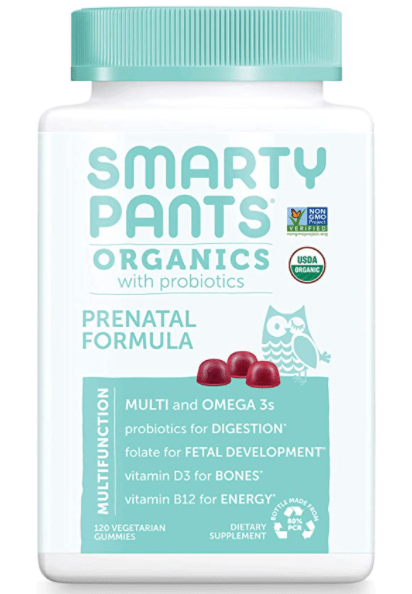
Now, onto vitamins! I take organic prenatal gummies from Smarty Pants. These taste really good and cover a lot of my nutritional needs. I also take a vitamin D3 supplement (I purchase one through Melaleuca’a Vitality brand). I also take chelated magnesium from Country Life, calcium with vitamin D3 from Nature’s Measure, as well as the Super B Complex by Nature’s Measure.

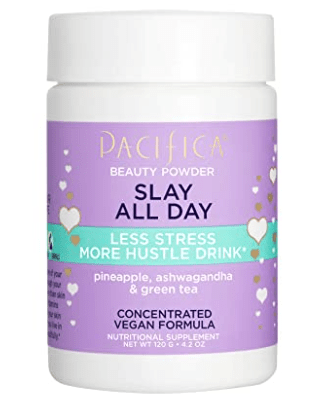
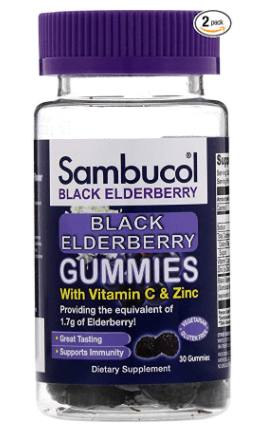
Lastly, I also take supplements. I use the Koala Pals protein shake by Melaleuca company. I also like taking Good Zymes (a digestive enzyme supplement) available through Melaleuca. Also, I really enjoy Pacifica’s beauty powders. After sharing information about my two favorite powders, I realized that Pacifica no longer sells them. However, I did find a seller on Amazon for the Slay All Day powder. I also really like Sambucol Elderberry gummies for immune support.

I also made a video about this, if you prefer to hear about the products as opposed to reading about it:

(This post contains affiliate links)

health

Fibro Fridays – Pain Management Tools

Happy Fibro Friday! We made it through another week: let’s celebrate!

I’ve been trying some new pain management tools over the past few weeks. These have helped me with some of the chronic pain symptoms that come along with having fibromyalgia. I really liked these items that I’m sharing today, so if you have fibromyalgia, or if you experience chronic pain, these may be worth a try.

First, I have the Nayoya Acupressure Mat and Neck Pillow set. At just under $40 USD, it’s a great item to try for some pain relief. I was going to review it, but Deena of Adventures with Fibro on YouTube (YT) beat me to it! Her review was great, so I’m going to link it here, but I’m also going to embed it in this post.

Now, there’s another tool that I’ve enjoyed using, and not only is it effective, but it’s reasonably priced, too. This tool is less than $20 USD currently, and I’ve loved using it to relieve some of the nerve pain I experience. It’s the La Vie Lactation Massage Roller.

Before you get any ideas . . . No, I’m not lactating! This massager is gentler than many other massage devices, which is crucial when your chronic pain is intense. Here’s the review of the lactation massage roller that I posted on my YT channel:

If you’re curious about the variety of tools that may be needed for those that live wtih fibromyalgia or chronic pain, you should check out Olga Chronics on YT. She is so thorough, and she’s charming to boot. I really liked her video on mobility aids (which I’m embedding below). I don’t use mobility aids, but it’s good information for anyone that has impacted mobility due to chronic pain or fibromyalgia.

Do you have any tools that you can recommend for pain management? I’d love to hear about it in the comments below!

*Post contains affiliate links.

health

Fibro Friday – Trying St John’s Wort

Happy Fibro Friday! I’m so excited to end this week discussing one of my favorite herbs to help me treat some of my fibromyalgia symptoms. This post is also well timed, considering that January is National Hot Tea Month (I’ve done posts about this in years prior: see here and here).

Enjoying my Winter Wonder Tea

The herb that I’m speaking of is St. John’s wort. St John’s wort is a powerful herb, known for its pain-fighting ability. It works by inhibiting the “protein kinase Cgamma and epsilon activity” through the chemical hypericin (you can find more about that here). It also has the ability to relieve symptoms of depression. That being said, PLEASE don’t try to treat your depression solely with herbal remedies! Make sure to consult your doctor before trying any new regimens.

I’ve been using it as an ingredient in my Winter Wonder tea. I combine it with pau d’arco, cranberry, tangerine and cinnamon. I noticed an improvement in my pain levels as well as a better mood. I am currently taking prescription medication to manage my fibromyalgia symptoms, but I have not achieved complete pain mitigation. So I was excited to see an improvement in how I was feeling and will continue drinking this tea throughout the cold months. I made a video featuring my tea recipe. You can find the video below:

You can purchase St John’s wort here, and if you’re interested in recreating the herbal tea, you can purchase pau d’arco here, and you can purchase freeze-dried tangerines here.

fitness · health · life curation · luxury · reading list · travel · writing

New Year, New Goals

To commemorate this new year, I want to share some of the intentions that I’ve set for 2021.

Over the past few years, my goals have felt a little lackluster, so I’m excited to share some goals that really light me up! I looked at several areas of my life, and I pinpointed what changes I need to make in order to make those areas of my life feel more balanced and abundant.

So, without further ado, here are my 2021 goals:

  • Publish 5 books
  • Lose 15 lbs
  • Manifest 3 international trips
  • Earn 6 figures from my businesses
  • Read 100+ books
  • Luxury purchases – an item from Hermes, a pair of Christian Louboutin shoes, a pair of Sophia Webster shoes, and a pair of Ralph & Russo shoes
  • Cure my fibromyalgia (as I mentioned in my last Fibro Friday post)

I discuss my goals further in this video, along with why I’m not creating a vision board this year (I’ve created one every year since 2014 or 2015). I usually don’t make my videos this long, but I needed this amount of time to discuss all of the things I’m planning for my YouTube channel as well as for this blog. Enjoy, and I’ll talk to you all tomorrow!

health

Fibro Friday – My Hope for the New Year

Happy New Year, and Happy First Fibro Friday! I’m keeping this simple, since it’s my favorite holiday and I’m feeling very hopeful.

My greatest hope for the New Year is to eliminate all of my fibromyalgia symptoms. In essence, I want to cure myself. I’m desiring to create a pain-free body in 2021.

I’m sure that sounds far fetched or even impossible, given the fact that fibromyalgia is generally considered a lifelong chronic illness. I don’t even have any case studies of people that have eliminated their fibromyalgia symptoms: at least if I had one or two examples, then maybe there would be some sort of logical basis for my hope. But that’s the thing – I’m believing in spite of the evidence around me.

So that’s my greatest hope for this year. I’m determined to cure my fibro and live a pain-free life. I’m so excited to share my progress with you all throughout the year. Here’s hoping that my discoveries will create a blueprint for wellness for someone else.

Happy 2021 to you all ❤️

health

Fibro Fridays: Aquatic Therapy

Happy Friday! We’ve been enjoying lots of hot, sunny days in central Virginia and, I’m not gonna lie, I’ve loved every minute of it!

Today is Fibro Friday, and I wanted to move away from discussing the pain and frustration of the condition, and move towards talking about ways to reduce pain and improve our quality of life. So I’ll spend a few weeks talking about treatments that work.

Of all of the treatments I’ve employed in my fibromyalgia journey, aquatic therapy was, hands down, one of the most effective. I spent two days per week in a heated pool, where I did careful stretching and conditioning exercises. The exercises were designed to stretch the muscles gently and to begin restoring flexibility and strength to previously stiff and achy body parts.

Water is a healer

After spending time in the pool, I noticed that my range of motion was better, and my pain was decreased. I won’t lie: those aquatic exercises EXHAUSTED me. I slept so well after each visit. But that was a good thing; as someone that experiences awful bouts of insomnia, a good nights’ sleep is a dream come true.

Along with the physical benefits of stretching in a warm pool, there were other unexpected positive side effects. I find that water stokes my creativity, so my mind felt clearer and rejuvenated after each visit. I also found my confidence in my body’s abilities growing with each session. You see, fibro made me quite unsure of what my body can do, since the condition significantly impaired my energy levels and range of motion. But the weightlessness I experienced in the pool reminded me of what I was like before fibro took its toll.

I haven’t gone to aquatic therapy since last year. My pain levels are far more manageable now so I don’t need this particular treatment any more. However, at the time, this worked extremely well for my pain, and I recommend it for anyone that is experiencing muscle discomfort or chronic pain.

That’s it for today! I hope you all continue to remain safe and take care of yourselves. Have a great weekend!

health

Fibro Fridays: My Difficult Diagnosis Journey

As promised, I’m back to share with you my journey to diagnosis. I’ve discussed some aspects of this journey before, but I really wanted to share additional details of what was involved with getting diagnosed. It’s really easy for me to focus on the immediate months leading up to my diagnosis, but, in all honesty, my diagnosis was a nearly 5-year journey of doctors’ visits and frustrating experiences before I confirmed what was happening with my body.

I had two primary care doctors throughout the time that I’ve suffered from fibro symptoms. My first doctor didn’t see anything concerning on my bloodwork, but she believed me when I said that I felt unwell. She referred me to a rheumatologist for clarity (an appropriate response), because some autoimmune conditions cannot be determined from basic blood testing. I visited the rheumatologist, who seemed to understand that I was experiencing extraordinary stress along with physical discomfort. However, after completing one round of blood tests, she ended up dismissing my concerns (as you all may know, fibromyalgia cannot be determined by blood testing, which is why some medical professionals deny its existence). I was discouraged by my pain but also relieved that I was not suffering from an autoimmune condition.

I continued to battle my symptoms and found myself vacillating between less pain and more pain, but never experiencing a complete absence of pain. After the first doctor decided to retire from medicine, I started working with a second doctor, who repeated the blood work 3 years after my last round of testing. This doctor also didn’t see anything concerning on my blood testing, but she attributed my symptoms to stress and a demanding daily routine. She didn’t seem to believe that my physical symptoms were real and not easily remedied by minor lifestyle changes.

After having a horrible symptom flare, I knew that I had to take my health into my own hands. I directly contacted a rheumatology office that had good reviews and scheduled my appointment sans referral (I have a PPO for this reason: waiting for referrals can be frustrating). I had already been discussing my symptoms with friends, and more than one of them mentioned fibro as a possibility. I did a little research and was able to clearly communicate my concerns with the rheumatologist. Less than one month later, I had a diagnosis confirming that I was indeed suffering from fibromyalgia.

I “fired” my primary care doc and got a new doctor that was far better for me and my condition. I worked with several specialists and finally started to feel better for the first time in years. The journey wasn’t easy, but it was worth it. I’m just glad that it only took me a few months from the time that I took control of my healthcare to get a diagnosis: for that, I’m fortunate. I know intimately how this process can take many years and many tears, and anyone suffering from this condition has my sympathy and empathy. This path isn’t for the weak, which is why some have labeled themselves “fibro warriors”.

If you have a fibro warrior in your life, please send them a little loving energy: this isn’t an easy experience, and many are doing the best that they can.

That’s all for this week. I hope you all have a wonderful and safe 4th of July weekend. Take care!