art

A Few More Pictures from “What Remains to Be Seen”

I have a few more pictures from the exhibit, “What Remains to Be Seen”, featuring the works of Howardena Pindell. I wrote about the exhibit previously, but I returned to see it one more time before it left. Pindell’s work left a huge impression on me, if you couldn’t tell!

I hope you all enjoy these final glimpses of the exhibition. I will treasure the time that I spent learning about Pindell and marveling over her work. Stopping by VMFA one more time before the exhibition left was a wise decision: I’m glad that I did it!

art · culture

Howardena Pindell’s “What Remains to Be Seen” at VMFA

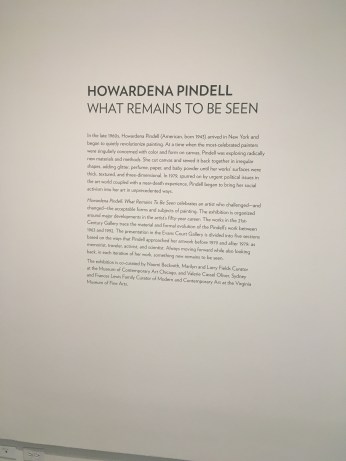
A few months ago, I went to a special event at Virginia Museum of Fine Arts, announcing an upcoming exhibition. That exhibition was a retrospective of the creative career of Howardena Pindell, multimedia artist, activist and professor. “What Remains to be Seen” is an impressive ouevre that showcases Pindell’s evolution as an artist, and is broken down into the different phases of her life and creative journey.

Today (November 25) is the last day to see the works, so I’m heading to the museum shortly so I can enjoy them one last time before they leave. However, I’ve got a few pictures for you all in this post, some additional commentary (of course LOL!) as well as a YouTube video of Pindell’s most famous short, “Free, White and 21”. Enjoy!

img_5688

Howardena Pindell

img_5689

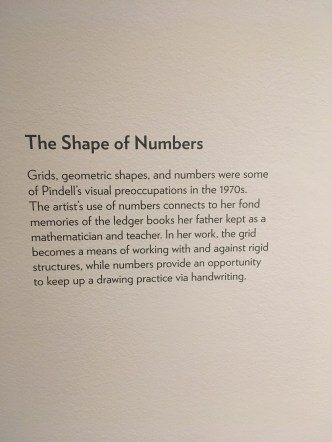
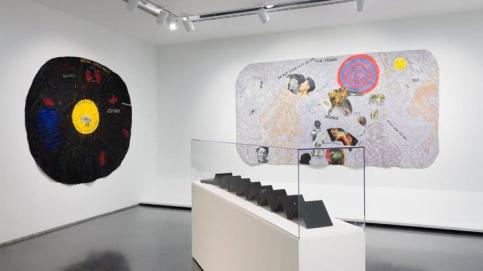
Pindell’s use of grids and numbers created some of her most riveting work. I love seeing how she turns numbers and otherwise sterile, math-related tools and objects, into art.

img_5692

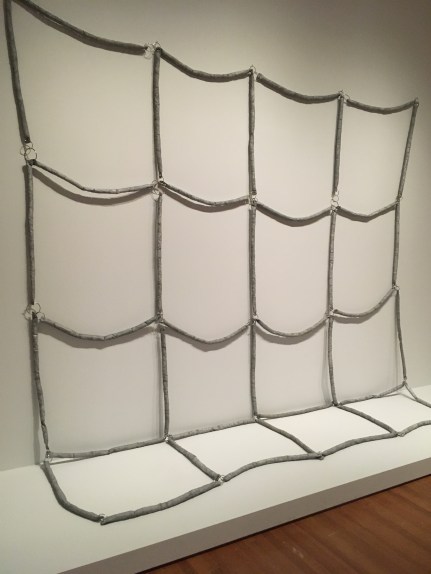
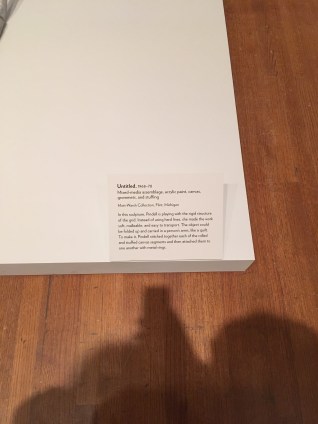
The 3-d grid below is a good example of the blend of art and math. It’s probably one of my favorite works by her.

img_5695


img_5696

The tiny individual circles affixed to many of Pindell’s pieces reveal her love of mathematic perfection reinterpreted. These pieces, attached to the grids she loved to work with, were occasionally numbered individually.

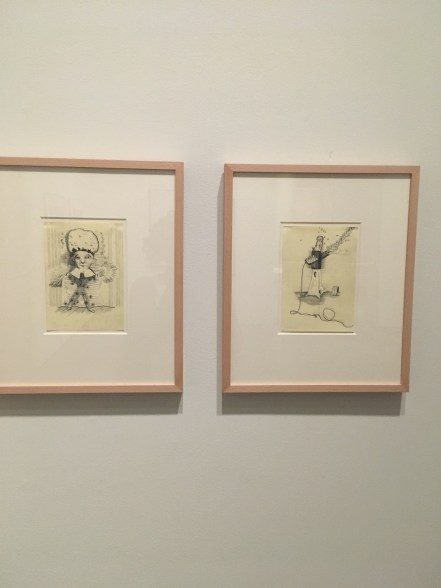
Like many artists, Pindell sought to promote cultural shifts through activism. Her works also featured socio-political themes that were near and dear to her.

img_5701


One of my favorite themes explored by Pindell was that of science. Closely related to her mathematics fascination, her interpretation of natural phenomenon and wonders created some of her most aesthetically charming works (though, to be honest, I love all of her work and find it all aesthetically pleasing). I especially loved “Nautilus” and “Night Flight” (pictures are below).

img_5706


Finally, here is “Free, White and 21”, Pindell’s video experiment where she aims to repair her memory loss (caused by a serious car accident) by recalling memories from earlier in her life.

art · international

Review: The Horse in Ancient Greek Art Exhibit at Virginia Museum of Fine Art

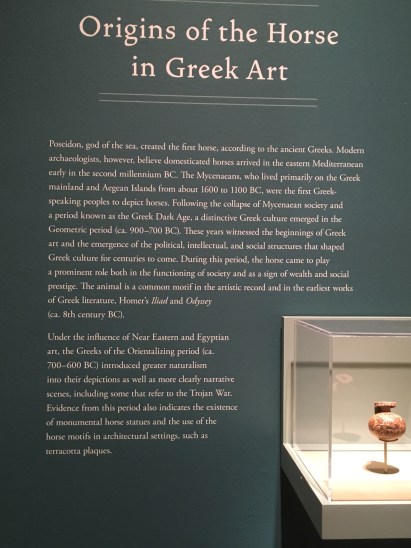
This summer, I spent several days at different museums taking in the exhibits. While I wrote about most of the exhibits that I enjoyed, I had a couple of exhibits that I haven’t yet discussed here. I opted to wait on this one because I thought I’d have a chance to check it out again before I left. Alas, time got away from me and I didn’t return before the last day of the exhibit. However, I have a sufficient amount of photos, and I’m familiar enough with the subject matter to do a decent post. So, let’s discuss horses in Ancient Greece, shall we?
img_4489


img_4490

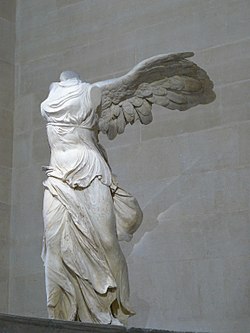
Way back when I first started studying art, I took an art history course and I fell in love with Greek art. Something about the draped garments of the kore and caryatids seemed ethereal to me. I was officially in love when I first saw the Nike of Samothrace – Winged Victory – statue. Headless and armless, she still seemed so dynamic and magical and that was the kind of thing I regularly saw when I looked at Greek art. Power, motion, and magic, all bundled into singular pieces of art.
nike

Winged Victory (Nike) of Samothrace, The Louvre Paris

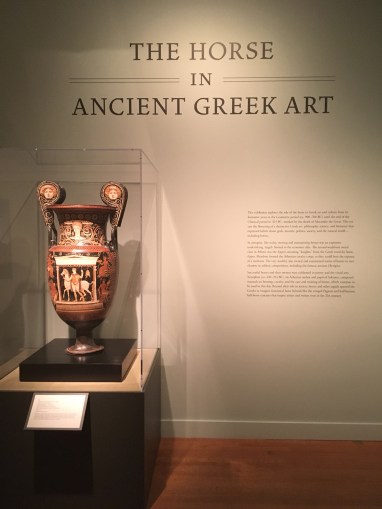
This exhibit, The Horse in Ancient Greek Art, was shown at the Virginia Museum of Fine Arts in Richmond, VA. The exhibit highlighted the horse’s significance in the social hierarchy and cultural landscape of Ancient Greece. Horses were valued possessions, and were a luxury not afforded to the average man. The cost of horse maintenance meant that only the wealthiest and most powerful people in Ancient Greece could afford to own and care for these beauties.
img_4495


The exhibit featured a lot of vases and urns, which were decorated with paintings of horses. Horses were featured prominently on coins and monumental plaques, as well. It was interesting to see how the depictions of horses changed over different historical and artistic periods.

Being a wine lover, I can appreciate any of the vessels used to hold the nectar of the gods. Naturally, I was entranced by the choes and oinochoes. The Greeks loved combining beautiful presentation with practicality just as much as we do today.

So I learned more about Greek art, the significance of horses, and the many kinds of vases in Ancient Greece. It was a great experience, and my only regret is that I didn’t visit it at least twice before it left. I seem to do this with almost every visiting exhibit – will I ever learn? Anyways, that’s all for today. I hope you all enjoy your Saturday. Talk to you tomorrow!
 

art · international

Portuguese Contemporary Art in Richmond, VA

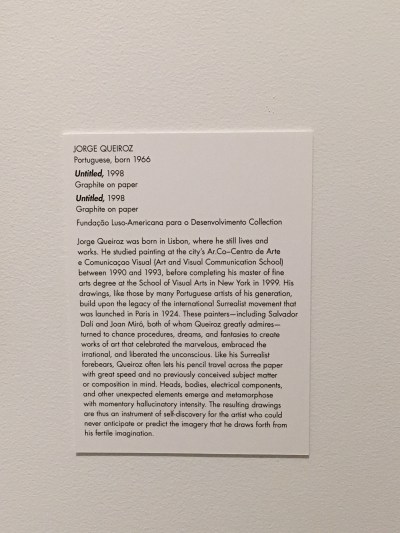
Recently, I had the pleasure of visiting one of my favorite museums, Virginia Museum of Fine Art (VMFA) to view the exhibit, Contemporary Art from Portugal. As you all know, I’m currently studying the Portuguese language so this exhibit was an obvious choice. Also, last month (June) signified Portugal’s 900th anniversary of being a sovereign nation (Go Portugal!)  so there are nationwide events commemorating this incredible event. This exhibit was one of many of the commemorative events happening all over the country, and I’m delighted that my hometown participated in the festivities.

I’m beginning to really love contemporary art: this is REAL progress, as I’m a huge fan of Impressionism and Neoclassicism. I’m opening my horizons and making an effort to embrace newness and innovation, and I was very pleased with the exhibit. I’m  happy that I got to learn a little about some of the artists representing Portugal. These artists are tremendously talented and are a great representation of what this wonderful country has to offer.

img_4515

Info card from the exhibit

The exhibit featured work from Helena Almeida, Fernando Calhou, Ruy Leitão, and several other notable artists. The exhibit was small but impactful: I was fascinated by the the drawings and paintings enough to start doing my own research on Portuguese artists. As with pretty much all research that I do, I learned of a rich cultural heritage among Portuguese contemporary artists. I am fascinated by what I’ve learned and I’m eager to learn more as time goes on.

In the meantime, here are a few of the works that I viewed. If you are interested in checking out the exhibit for yourself, it will be at VMFA until July 22, 2018, so you still have time. However, if a trip to Richmond, VA is out of the question, you should check out your local museum to see if there are any Portuguese art or cultural exhibits on display. Just go to Facebook’s Month of Portugal page for details

img_4516img_4517


img_4518


img_4519


life curation

July & August Activity Planning – DONE!

Hi friends! I hope you all are enjoying your Sunday, and staying COOL! Personally, I’m enjoying the fact that I don’t have to go outside into the Virginia heat! I love summers in the South but I also love being able to retreat from the heat when I want to.

I just finished writing out my plans for July and August. It’s important that I am crystal clear about what I want to do and when I want to do it: if I’m not focused, I lose track of my time and find that nothing (or almost nothing) gets accomplished.

calendar

Here’s the short list of my July and August plans. These plans are in support of my goals (short term and long term)  as well as give me interesting things to talk about on this blog.

July:

August

  • Celebrate my birthday in grand style
  • Attend an embassy event
  • Visit a museum I’ve never gone to before
  • Select courses to take in the fall
  • Have some amazing giveaways on this blog (in honor of the blog’s 1 year anniversary)

I’m looking forward to having a lot of fun this summer, and I’m especially looking forward to sharing those experiences with you all! Well, it’s time for me to go ahead and finish my meal prepping for the week, so I’ll talk to you all soon!

art

Spotlight on Monet

Happy Monday, beloveds! Can you believe it’s almost been a whole month since I went to Philadelphia? That trip, which was mainly for the purpose of attending my first Freeman’s auction, was a lot of fun, and a great “break” in the monotony of my day-to-day life.

While at the Philadelphia Museum of Art, I made sure to tour the European art wing, because I’d be experiencing a bit of a deficit. The museum nearest to me, Virginia Museum of Fine Arts, has an incredible European art collection featuring impressionist works by Claude Monet and Edgar Degas. However, the Monet and Degas works are on an international tour and won’t be returning to VMFA until 2020.

img_4085

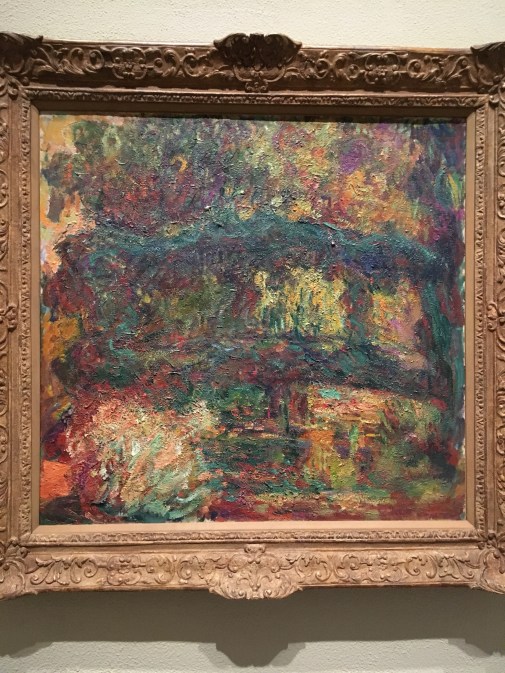
The Japanese Footbridge and the Water Lily Pond, Giverny (Monet, 1899)

So, as you can imagine, I was excited when I saw some Monet works in Philadelphia. I got to enjoy different versions of his Water Lilies series. I love both versions that I saw: the painting that has deeper tones feels more dynamic and calls to mind a scene from a lake during the autumn season. On the other hand, the painting with the lighter colors evokes warmer weather and the freshness of spring and summer.

img_4081

Water Lilies, Japanese Footbridge (Monet, 1918-2916)

What I love most about Monet is the thing he is known for: impressionism is one of my favorite art movements. The gentle intermingling of colors (the result of applying wet paint to wet paint), the way that light is captured, and the softness of nature all speak to me in indescribable ways. Monet’s depictions of his environment make me want to experience Giverny (the commune where Monet spent more than 40 years) in person.

Ah, how I enjoyed these! I’m excited to check out more of Monet’s work at the National Gallery of Art this summer. The museum currently has 16 of his works on view, and I plan to check out each of them!

art

Howardena Pindell – A Lifetime of Creation

A few weeks ago, I attended a lecture on contemporary abstract artist Howardena Pindell. Pindell’s video, Free, White and 21, was my introduction to her work. I saw the video as part of my online art course through Coursera. I found the video fascinating and have always been curious about the woman behind it.

Pindell’s work will be making a stop at Virginia Museum of Fine Art (VMFA) in August 2018. The work is part of her “What Remains to Be Seen” tour, an exhibit reflecting upon Pindell’s 50+ year career. Artists like Pindell, Betye Saar, Lorraine O’Grady and Senga Nengudi inspire me for their daring and provocative work and their insistence upon carving a space for Black, avant garde conceptual artists. Pindell’s work is thought provoking and highly detailed: it features a great deal of precision, texture and movement, all of which enhance the viewer experience. I’m looking forward to experiencing her art when it comes to VMFA!

ct-1524669850-ak5osp1lqz-snap-image

(photo courtesy of Nathan Keay, Museum of Contemporary Art, Chicago)


You can watch Pindell’s stirring reflections in Free, White and 21 here (or you can just click the play button below):

https://www.youtube.com/watch?v=13qYvGYishY


culture · international

An Unforgettable Army

A few days ago, I got to return to the Virginia Museum of Fine Arts to spend some time with the exhibits. When I found out that the museum was featuring statues from the world famous terracotta army (the 8,000 Chinese sculptures created to accompany China’s first emperor in the afterlife), I knew I couldn’t miss it.  The exhibit, Terracotta Army: Legacy of the First Emperor of China, appealed to my love of Asian art and history. Since I didn’t see any of the terracotta soldiers during my trip to China in 2016, this exhibit was the perfect chance to glimpse into the first Chinese empire.

You all may recall a few months ago I visited VMFA to see the Yves St. Laurent exhibit. I felt awful about only going once: I wish I had visited several times before the exhibit left.

I learned my lesson well. I gave myself enough time to see this exhibit more than once.

Just as a heads up: this is truly a once-in-a-lifetime exhibit. VMFA states, “More than 40 objects in the exhibition have never before been on view in the United States.  Terracotta Army is the first exhibition the Virginia Museum of Fine Arts has presented in its 80-year history that is devoted to the art and archaeology of ancient China.”

If you can’t make it to see the artifacts in person, never fear! I took LOTS of pictures. I can’t promise that you’ll feel like you were there, but at least you can imagine . . . First, the small artifacts and information posted throughout the exhibit:

And now, the soliders (I’ll share 5 of them in this post):


I was awestruck by the artifacts and am so happy that I get to share them with you all. The true treasure, however, is the HISTORY behind each artifact. The Qin Dynasty was revolutionary and set all of the groundwork for Chinese unification. It’s amazing how much Qin Shihuang accomplished during his less than 50 years on earth.

Terracotta Army: Legacy of the First Emperor of China will be at VMFA until March 11, 2018. I implore you to go if at all possible: you won’t be disappointed!