art · luxury

Art Collectors Conundrum: Culture Clash

As explained in previous posts, Art Collectors Conundrum explores the current issues surrounding art collecting. There are a lot of different issues that impact new collectors as they journey into the art world, and one of those big issues is the dissonance that exists between aesthetic indulgences and minimalist ideals.
Screenshot 2018-03-03 at 9.22.19 PM - Edited

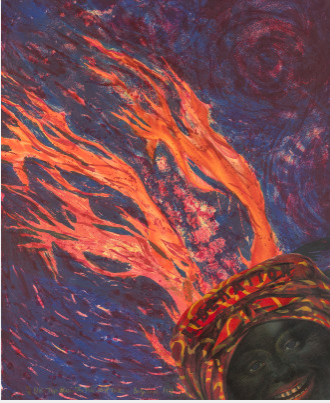
Betye Saar, Blow Top Blues, The Fire Next Time (1998)

The thing is, the culture of today’s wealthy – especially wealthy millenials – leans more toward minimalism and less toward acquisition of material goods. Any time spent on social media will confirm the “shift” from a culture of excess to one of spartan decorating practices. Many millenials favor the bare walls and monochrome decor that makes for clear, appealing Instagram photos. And, if they select art, the art often lacks the color, texture and excitement that used to be favored by collectors.

4049-132_WSS

Betye Saar, Indigo Mercy (1975)

In short, this cultural clash results in fewer “new” big spenders. Bloomberg wrote about the “new elite” and their artistic tastes. The article points out that location has much to do with the cultural difference, too: East Coast “new money” tends to buy art in the more traditional fashion, while West Coast “new money” isn’t as interested in purchasing pricey art “for arts’ sake”.
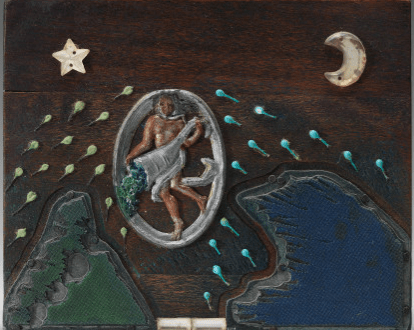
Screenshot 2018-03-03 at 9.22.12 PM - Edited

Betye Saar, Twilight Awakening (1978)

The key to luring in these potential art investors isn’t as simple as one would think. The most important thing to remember about the new wealthy is that they are earning their fortunes much earlier than the wealthy of previous generations. They just aren’t as likely to be focused on art collecting if they are buying their first homes and starting families.

An interesting way to get the new wealthy interested in collecting could be an art loan program, which allows them to enjoy works for a fixed period of time and then they can purchase the work if they want, or turn it back over to the gallery to “try out” something different. It isn’t a perfect solution but it would provide them with some exposure to fine art and would help them hone in on their personal tastes and preferences.

Those are some of my thoughts on overcoming the dissonance between minimalist goals and owning art. What are your thoughts? Feel free to share your comments below!

(all art by Betye Saar and in the National Gallery of Arts collections)

art · international

International Art: Tom Mboya, Kenyan Artist

While vacationing in Kenya, I noticed that my hotel (Ibis Styles in Nairobi’s Westlands neighborhood) had beautiful artwork lining the stairwells. Upon closer inspection, I saw that all of the paintings – about 30 in total, displayed in sets of 3 amongst 10 different floors – were done by Tom Mboya.

My curiosity kicked into overdrive and I started researching Mboya. As it so happens, Tom Mboya is a local Kenyan artist (no surprise there) that started out working in the hospitality industry before pursuing his art fulltime. The paintings are stunning and lively; from dynamic depictions of life in Kenya to breathtaking portraits of his countrywomen, these paintings draw you in and hold you captive.

Here are a few of my favorites from the hotel:


If you’d like to learn more about Mboya, check out his artist profile here.


art · life curation

Review: Alison “Great Artists and Their Works” Course

I’ve spent the past several weeks working through a few art courses, and I recently completed the first self-paced course I’ve taken this year. ALISON.com has a slew of courses that can be taken online for free, at the learner’s leisure. Completed courses are eligible for certificates of completion that learners can add to their educational portfolios.

I mentioned previously that I was completing the “Great Artists and Their Works” course. The course is approximately 5 – 6 hours long, and features 8 modules, with multiple lessons within each module. Each module discusses a different artist, and the artists are associated with different art movements throughout history (Renaissance, Baroque, Neoclassical, Cubism, etc.,).

alison_courseware_intro_375

(picture from Alison.com)

I found this to be a very helpful free course, and a suitable, though compressed, art history introduction. I was enthralled by the artists I’d never heard of before – namely, Caravaggio, Gian Lorenzo Bernini and Jacques-Louis David – and I’m glad I spent the time working through this course.

While I enjoyed the class, it isn’t without its flaws. It relies on videos created by Khan Academy, so you could just as easily study directly from the Khan Academy website. Also, the course has a single, cumulative examination at the end instead of quizzes sprinkled throughout the modules. In my experience, students learn better when they are periodically quizzed instead of assessing their knowledge after many concepts have been discussed and analyzed. Finally, there were a few questions that tested learners on concepts that weren’t taught in the course (I had to use Google for the answers).

Overall, I enjoyed the class and would recommend to anyone that wants to get familiar with some of the great names in art. If you decide to take it, let me know what you think about it!

art · hollywood glamour

A Glamorous Touch For Your Snail Mail . . .

Recently, the United States Postal Service announced that Hollywood icon and civil rights activist Lena Horne will be honored on a commemorative stamp.

The stamp, depicting Lena with her signature wide and warm smile, is a fitting tribute for a woman that lived a full and fascinating life. I am especially fond of the fact that the stamp depicts a mature Lena (the photo used for the stamp was taken in the 1980s, when Lena was in mid to late 60s).

See the lovely stamp for yourself:

pr17_079c

I’ll be ordering my stamps before they sell out! I advise anyone that’s interested to grab a few sheets and keep at least one of them for your collection. These can be purchased at your local post office or through the USPS website.


art · Uncategorized

Buy Art and Support Public Schools

I recently received an email from Reynolds Gallery in Richmond, VA, explaining a special campaign for the month of February. The gallery is donating 10% of sales proceeds generated in February to support Richmond Public Schools. The gallery announced, “We want to do our part to improve the lives and education of our city’s children.”

Screenshot 2018-02-03 at 11.56.11 AM - Edited

Reynolds Gallery was founded in 1977 and emphasizes a connection with local artists. That, along with the promise of donating 10% of February’s sales to public education, is a convincing reason to check out their offerings and see if there is any work that you’d love to own.

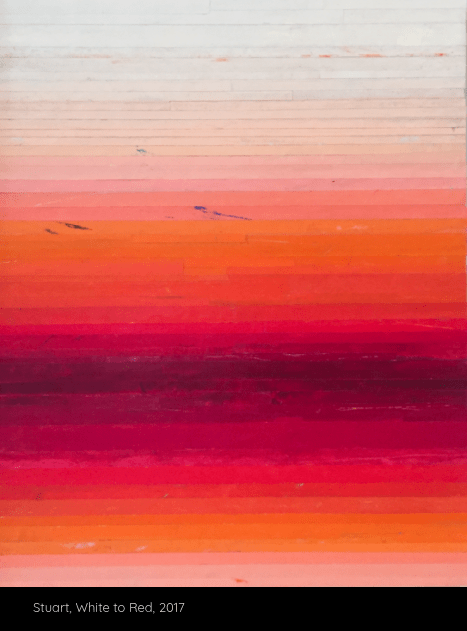
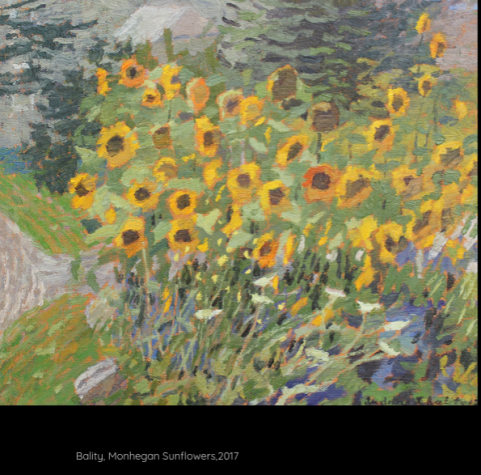
The contemporary pieces featured in the gallery are great for every collector, from the novice to the expert. I like Robert Stuart’s “From White to Red” (2017) and Andras Bality’s “Monhegan Sunflowers” (2017).

Screenshot 2018-02-02 at 10.50.32 PM - Edited


Screenshot 2018-02-02 at 10.50.40 PM - Edited

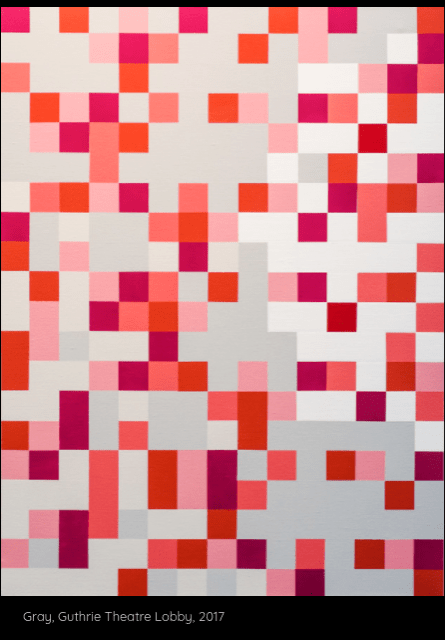
I also found Doug Gray’s “Guthrie Theater Lobby Oct 1977 Minneapolis” (2017) enchanting. It gives Piet Mondrian vibes, no?

Screenshot 2018-02-03 at 5.26.55 PM - Edited

Check out the online shop and see if there’s anything you’d like to get for your own collection! Remember, a portion of the proceeds will go to supporting a better educational environment for Richmond Public School students.

art · luxury

Art Collector Conundrum: Insecurity

In this series about issues surrounding inexperienced art enthusiasts, I want to explore another problematic aspect of art collecting. Namely, many new collectors and aspiring art professionals have a great deal of insecurity when entering into the world of art.

Screenshot 2018-02-03 at 8.17.12 PM - Edited

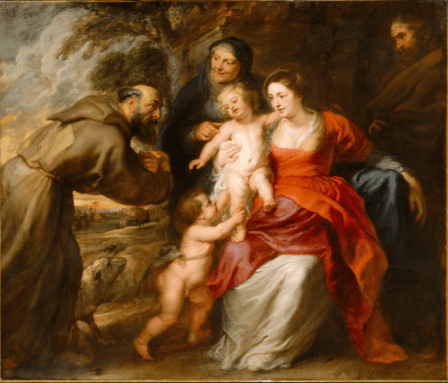
The Holy Family with Saints Francis and Anne and the Infant Saint John the Baptist by Peter Paul Rubens

Like many other prestigious and exclusive arenas, new entrants find themselves overwhelmed and, ultimately, insecure about their knowledge, their ability to find their niche, and their own personal tastes and judgment. How many of us can relate to being the neophyte with a differing opinion that is promptly “put in place” by the resident expert? The more elite the group, the more devastating these interactions can be to the novice.

The point of this discussion isn’t to blast the experts that offer a different perspective to newcomers. Every subject needs experts that are willing to share their knowledge and guide their predecessors. This guidance can help new entrants avoid making costly mistakes on their journeys.

Screenshot 2018-02-03 at 8.25.36 PM - Edited

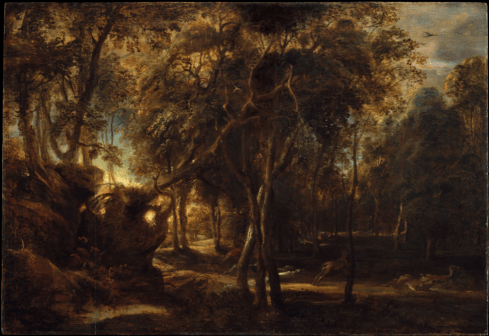
A Forest at Dawn with a Deer Hunt

This also isn’t a criticism of the new entrants that will ultimately need to grow their confidence in their own tastes and knowledge in the art arena. There’s something to be said for discerning when to take the advice of someone else and when to stick with your stance, however unpopular. There are many experts that had to go against the grain at different points in order to establish themselves.

Ultimately, this is a consideration of what can be done to reduce insecurity when entering the art world. Knowledge, on its own, isn’t enough. The art world is the intersection of business and aesthetic tastes. The business portion can be taught and modeled for new entrants. To some degree, even the aesthetic part of art collecting can be “taught”, via exposure to many works in different media, from different periods of time and movements, and from various countries and global regions.

DT2737

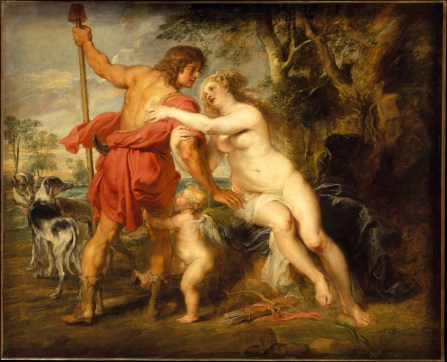
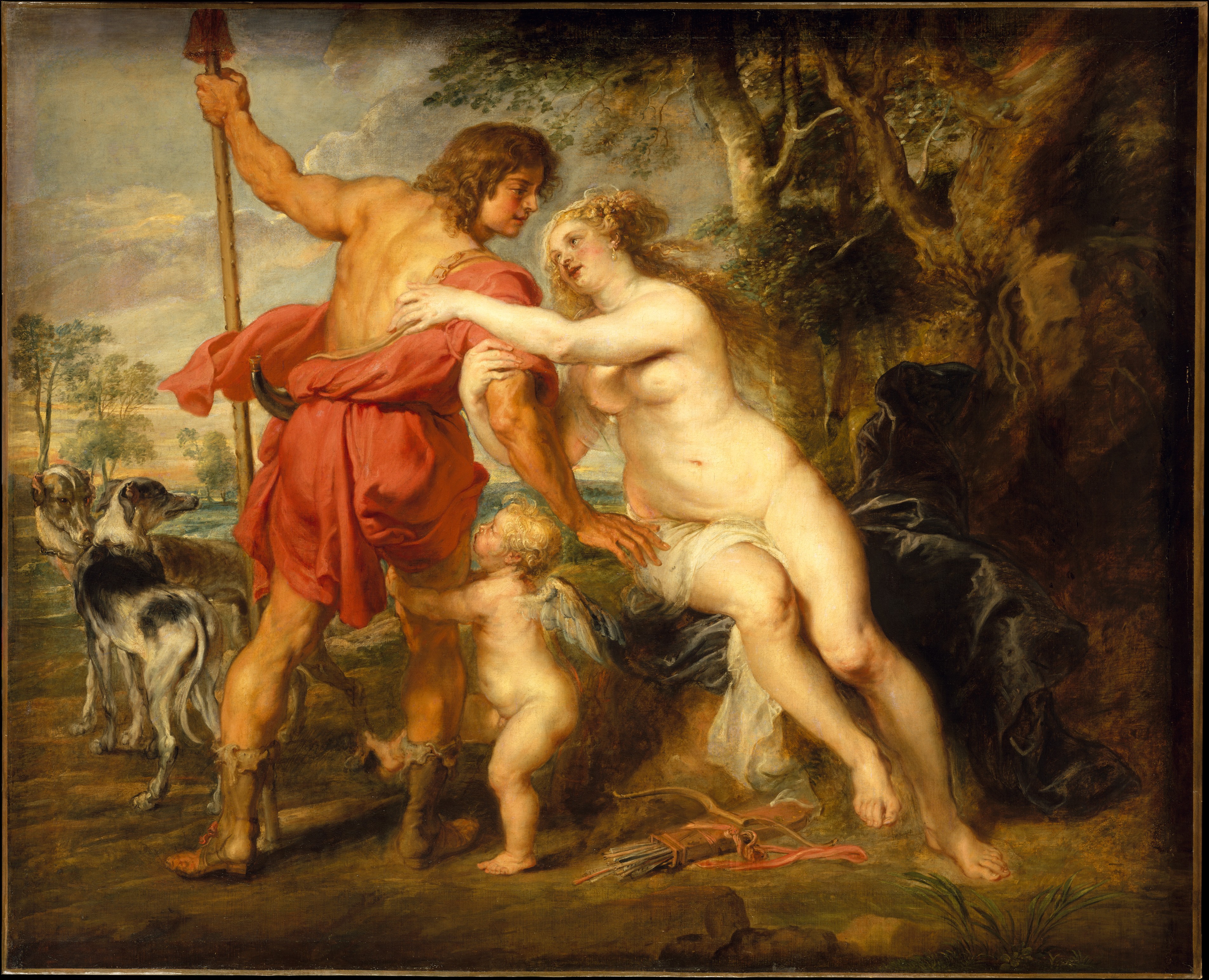
Venus and Adonis

So what does reduce insecurity? In a word, experience. The novices have to embrace the experiences that they must have, and they have to be ready to have MANY experiences outside of their comfort zones. Experience will teach a novice who to listen to and who to disregard; it will also help a novice learn when to listen to “gut nudges” and when those “nudges” are more fear-based (and generally inaccurate) than intuitive knowledge (which is usually spot-on).

To all of the newcomers to the art world: gain all of the experience that you can, remember that you BELONG wherever you’re going, and take comfort in the fact that you don’t have to know everything to be skilled, competent and worthy of your space in the art world.

(all art from the Metropolitan Museum of Art, photos from Archive.org and )

art · culture

My Current Favorite App

As a fan of all things art and culture related, I find it challenging to locate tools and apps that satisfy both of my interests simultaneously. That is, until the Google Art and Culture App came into my life.

Screenshot 2018-01-30 at 6.11.36 PM - Edited

I love being able to instantly access all sorts of interesting art and culture articles. Even better, I love being able to virtual tour museums that I have not yet visited in person. The app allows you to view famous artworks up close, without having to peer through crowds to see it (anything in the Louvre comes to mind).

It’s possible to find art by searching by the title of the work or by an artist’s name. For an example of what you can find on the app, I searched for Edmonia Lewis (I’ve known about her for a long time, but a recent podcast by Art History Babes renewed my interest in her story). Here is some screenshots of what Google Art and Culture had about Edmonia Lewis:

Even cooler, the app has a feature that allows users to take a selfie and find their art “doppelganger”. It’s a fun feature that’s sure to expose users to artwork they’ve never seen before!

Have you downloaded the Google Art and Culture app? How have you been enjoying it? Let me know in the comments below!


art · life curation

Meet the Artist: Carrie Mae Weems

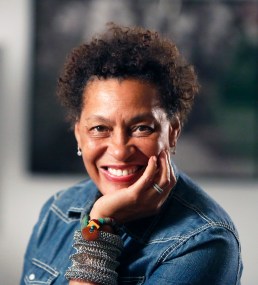
On Tuesday, February 6th, the National Gallery of Art (NGA) is hosting acclaimed artist Carrie Mae Weems. This event is a lecture that will discuss Weems’s Kitchen Table Series, a set of photographs capturing (as NGA describes it), “[…] the story of a woman’s life as seen through the intimate space of the kitchen—the traditional sphere of women and a site of sanctuary, creation, shared experiences, and emotional honesty”.

Carrie Mae Weems

(Photo of Weems, courtesy of the MacArthur Foundation)

Weems has won numerous awards during her career, including the prestigious MacArthur Fellowship. It’s going to be a treat to listen to her discuss her work during her lecture at NGA. You won’t want to miss this event!

art

The Perfect Gift for a Butterfly . . .

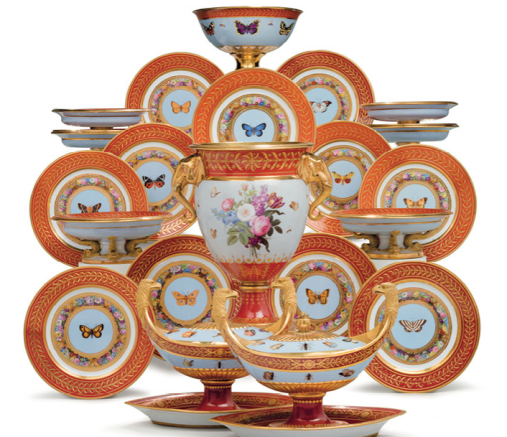
While browsing the lots for Christie’s upcoming Rockefeller auction, I came across a partial set of dishes owned by Napoleon I, the legendary emperor of France. The set was beautiful on its own, but I stopped cold when I saw the detail on these dessert plates:

Screenshot 2018-01-09 at 10.50.36 PM - Edited

This is the ‘Marly Rouge’ Service, a porcelain dessert set made sometime around 1807 – 1809. This set is in outstanding condition, with the colors and gilding just as vibrant as when it was first presented to Emperor Napoleon. The write-up for this offering can be seen under the “Highlights” section of the Christie’s page featuring the Peggy and David Rockefeller Collection.

Aside from the flawless condition, I marveled at the detailing. Are you all seeing the gorgeous butterfly variety on these dishes? Of course the Bronze Butterfly noticed it and swooned. I need these dishes, now!

The sale occurs in May 2018. I doubt that I’ll have a spare $150,000+ to invest in this set (I remain hopeful!) but I plan to look for a set of similar design and high quality. If I find them (and, since I’m good at locating things, I’m sure that I will), I’ll post to this blog and give you all details. Until then, you’re free to drool over the Marly Rouge with me.


art · luxury

Art Collector Conundrum: Affordability

As part of this (informal) series, I want to explore some of the difficulties I see within the art world. These things aren’t obstacles, per se, but they can be challenging for people that are on the outside “looking in”. As I learn more and find myself exploring the business, historical, and aesthetic side of art, I can see the individual factors that make art collecting and the entire business of art frustrating and intimidating to the average person.

One of the biggest obstacles to pursuing either a career in or a collection of art is affordability. Prestigious disciplines and hobbies have always been cost prohibitive, and rightly so: this maintains the integrity, prestige and lucrative nature. But in these increasingly egalitarian times, the question remains: how can affordability be part of the art world while maintaining esteem?

Screenshot 2018-01-27 at 7.45.32 PM - Edited

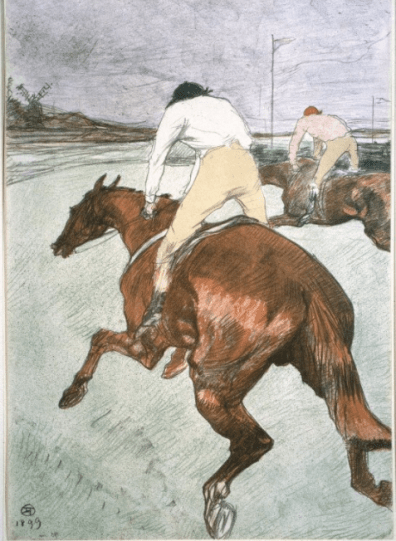
Le Jockey by Henri de Toulouse-Lautrec (uploaded by the Brooklyn Museum)

The best recommendation I can pose is this: start where you are. That applies no matter where you want to fit into within the art world. Instead of aiming to have a personal art collection on the level of the Louvre, new collectors that have less capital to invest should start where they are and purchase what they enjoy and can afford. People aspiring to be curators and consultants should start by educating themselves as affordably as possible: attend free or low-cost art courses (some of which can be done online), volunteer at a museum or gallery, or even purchase used art textbooks and read the material.

The key to avoiding overwhelm is to take it one step at a time.

There are some entities that are striving to make art more affordable. Educators like ALISON, Coursera and Saylor (especially the Saylor Legacy Courses) make art education affordable. Taking classes at local museums, galleries, art organizations, and community colleges is also another another way to obtain art knowledge at a low cost.

Entering the art collecting world need not be expensive. New collectors should seek out local artists that are talented but not yet famous. Being an “early adopter” often means securing wonderful artwork at an affordable price. Also, it’s important to support smaller artists that may one day become one of the big names in the art world.

brooklynmuseum-o4399i000-21.125_SL1

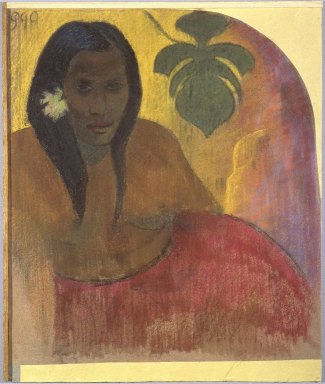
Tahitian Woman by Paul Gauguin (uploaded by the Brooklyn Museum)

There are also companies that will finance the purchase of high dollar art. One of these is ArtMoney, a company that offers financing options for people that want to buy art. ArtMoney is currently affiliated with 500 galleries nationwide to help art appreciators acquire works of art that would normally be out of their budgets. Also, there are innovative artists that offer lease and lease-to-own option for interested parties. This allows collectors to enjoy the art of their choice on the terms that best suit them.

So there are always ways to navigate around issues of affordability. Many times, this means setting aside preconceived limitations and approaching a solution with a fresh perspective. By exploring unorthodox and less popular strategies, it’s possible to make any part of the art world affordable.