art · Uncategorized

Want to Learn About New Artists?

painting

Make sure that you’re following me on Instagram, so you can see the daily artist spotlights that I’m featuring this month. I’m taking the time to share what I’ve seen on social media and (hopefully) bring additional attention to these talented artists. Who couldn’t use more art in their lives?

Here are a few of the artists I’ve featured so far:

art

Review: Philadelphia Museum of Art, Part 2

Happy Friday, friends! There’s not a whole lot to say, especially if you’ve seen Part 1 of this review (you can view Part 1 here). I’ll stick to sharing photos that you all haven’t already seen and providing a little commentary.

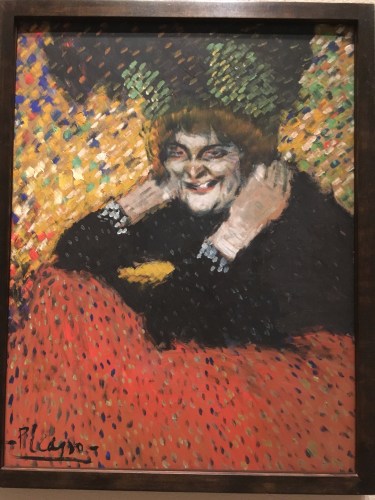
I saw a few Pablo Picasso works that I’d never seen before. I’m so accustomed to seeing his Cubist works that I forget that he didn’t always work with abstract figures. Earlier in his career, he worked with Impressionist techniques, as you can see in the paintings below.

Head of a Woman, Pablo Picassso (1901)

img_4077-3

Old Woman (Woman with Gloves), Pablo Picasso (1901)

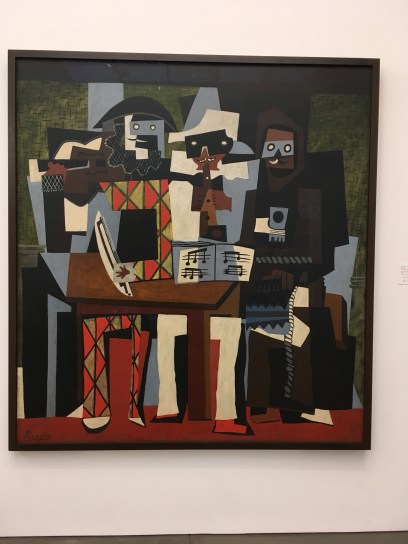
This is the style we know and love from Picasso:

img_4087-3

Three Musicians, Pablo Picasso (1921)

I always have loved Pierre-Auguste Renoir, another Impressionist. His photos are both timeless and beautiful. This is a tender portrait of his beloved wife and favorite model, Aline Charigot Renoir.

Portrait of Madame Renoir, Pierre-Auguste Renoir (1885)

This sweet-faced little girl was the daughter of an art dealer friend of Renoir’s.

img_4070-3

Portrait of Mademoiselle Legrand, Pierre-Auguste Renoir (1875)

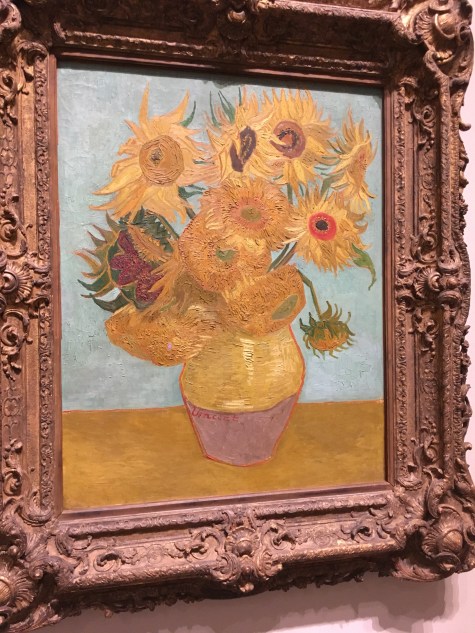
Vincent Van Gogh’s Sunflowers are a great example of post-Impressionist work: it features thick paint, more vivid color selection and slightly distorted forms. The work is paradoxical: it’s a still life but the technique used by Van Gogh gives it a feeling of movement and dynamism. This work inspired Faith Ringgold’s The Sunflower Quilting Bee at Arles, which is also at the Philadelphia Museum of Art (I missed it on this trip, but I’ll be sure to catch it next time!) Ringgold even inserts Van Gogh into her work! You can view Ringgold’s work here.

img_4083-3

Sunflowers, Vincent Van Gogh (1888 or 1889)

Lastly, I was drawn in by the beautifully serene expression on the subject’s face. She looks like she was briefly interrupted while concentrating on her embroidery. She’s still thinking about her design and this is just moments before her attention is completed diverted away from her handicraft. I love how Mary Cassatt has caught this fleeting moment.

img_4075-4

Mary Ellison Embroidering, Mary Cassatt (1877)

I can’t wait to return to the museum to see some more artwork and to take lots of photos for you all! Talk to you all tomorrow.


art

Henrietta Lacks, An Overdue Tribute

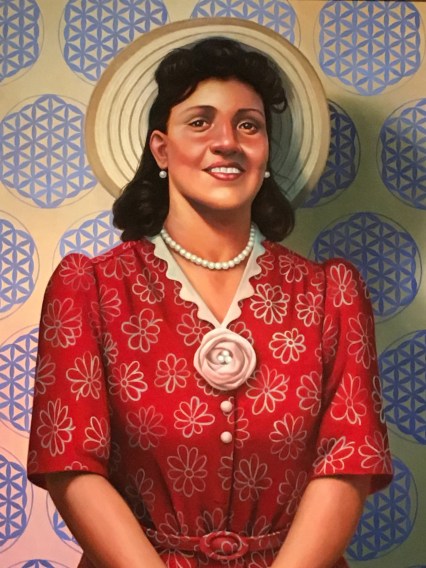
Recently, the National Portrait Gallery and the National Museum of African American History and Culture jointly acquired a painting of Henrietta Lacks, as portrayed by Kadir Nelson. Lacks died from cervical cancer at the age of 31, and her cells were subsequently studied and used over the past 60+ years. Lacks’s cells (named HeLa, for Henrietta Lacks) were instrumental in developing treatments for a variety of illnesses, such as polio, AIDS and Parkinson’s Disease.

I was familiar with Lacks’s story from many years back, as she was a Virginia native and never forgotten here, in her state of birth. Thus, I knew that I had to see the painting, titled “Henrietta Lacks (HeLa): The Mother of Modern Medicine”, for myself.

img_4259

img_4261

Henrietta Lacks (HeLa): The Mother of Modern Medicine, Kadir Nelson, oil on linen, 2017

img_4262

Information card as displayed in the National Portrait Gallery

The painting is large and breathtaking: Lacks smiling sweetly and posed with her bible. Nelson incorporated some very special details that refer to Lacks’s legacy. As stated on the National Portrait Gallery press release:

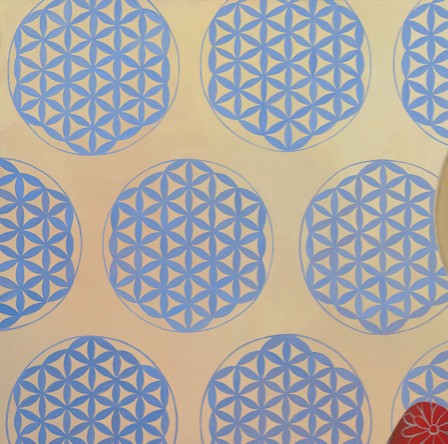
“Commissioned by HBO, Nelson used visual elements to convey Lacks’ legacy. The wallpaper features the “Flower of Life,” a symbol of immortality; the flowers on her dress recall images of cell structures; and two missing buttons allude to the cells taken from her body without permission.”

hel_0 - Edited

Close up of the background, featuring the “Flower of Life”

Henrietta Lacks’s story raises issues surrounding ethics, right to patients’ genetic information, and privacy. The fact that she died but her cells made it possible for other people to live is heartbreaking, but what’s even more tragic is the fight that her family had to undertake to challenge the medical industry that used HeLa cells without Lacks’s, or her family’s, consent.

I’m so happy that Henrietta Lacks is being featured at the Smithsonian Museum and is taking her rightful place in American history. I really enjoyed seeing this beautiful portrait for myself, and I hope that you all get a chance to check it out, too! It will be at the National Portrait Gallery until November 4, 2018, and then it will be at the Smithsonian National Museum of African American History and Culture. You’ll be glad that you made the visit!

art

Feeding My Gerome Addiction

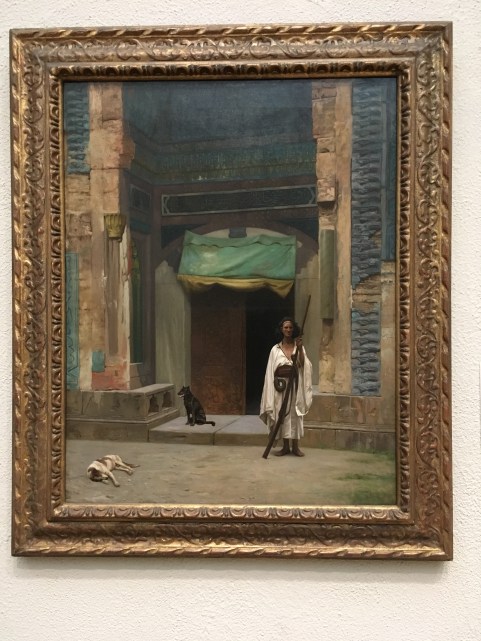
Part of my Philadelphia trip included a visit to the Philadelphia Museum of Art. I love to believe that the muses communicate directly with me when I’m in any museum, so I am inclined to go wherever I’m “led”, so to speak. I stepped over to the European art wing, and I got the feeling that I would quickly find something incredible. My intuition didn’t disappoint: less than a few steps into the first room I entered, I was face to face with a painting by one of my favorite artists, Jean-Leon Gerome.

img_4064-1

Portal of the Green Mosque (Sentinel at the Sultan’s Tomb), Jean-Leon Gerome, 1870

I’ve written about Gerome before, and back then, I struggled with expressing exactly what it is about his paintings that I love. I *think* I have the language to express myself now LOL! I love the realism in Gerome’s work. His paintings featured lots of African, Middle Eastern and Asian subjects and, unlike many European artists, he chose to depict his subjects humanely, touchingly, and accurately. For that, I’ll always be a fan.

This painting, Portal of the Green Mosque (Sentinel at the Sultan’s Tomb), was completed by Gerome in 1870. By this time, Gerome was a very experienced painter (more than 20 years experience, to be exact) and had quite a few commissions, honors, and his own atelier to his credit. He had established a name for himself and was a master at Orientalist paintings. While many may conclude that Gerome’s work objectified his subjects to the point of being lecherous, I’m inclined to take a different perspective.  The combination of “exotic”, non-White subjects and a Neoclassical or Romantic depiction of these subjects results in capturing the subjects’ humanity in ways that had never been done before.

The sentinel depicted is solemn, a little melancholy, but not to be pitied: he seems at peace with his position and dutifully stands in defense of the sultan’s remains. You can sense that this is a hot and hazy day, if the languorous hound in the foreground is any indicator. However, I sense that the dog in the background, that is standing closer to the entrance, is much like the sentinel himself: alert, solemn, ready to defend.

I enjoyed this painting, as I enjoy every other Gerome work that I’ve seen. I know that the National Gallery of Art in Washington, DC has several Gerome paintings on view. I intend to make a special trip to view and photograph some of them. Look out for that post soon! In the meantime, enjoy, and I’ll talk to you all tomorrow!


art

Meta Warrick Fuller and Lois Mailou Jones: Let’s Honor Them Both!

It’s my pleasure to honor two talented Black women artists on this day. On June 9, 1877, Meta Vaux Warrick Fuller, a gifted sculptress of Black descent was born. On June 9, 1998, Lois Maillou Jones, Black painter and teacher extraordinaire, died in Washington, DC. Because this day is full of Black Girl Artist Magic (yes, I’m tweaking the #BlackGirlMagic hashtag for my purposes), I wanted to talk a bit more about these remarkable women.
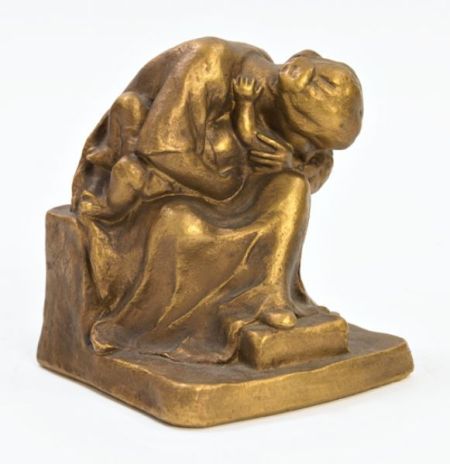
motherandchild

Mother and Child by Meta Warrick Fuller (1962)

Both Meta and Lois spent time in France during the early half of the 20th century. Europe, generally speaking, was a friendlier environment for American Blacks, and it was easier to study in European ateliers than to attempt to integrate White studios in the US. Meta began at Academie Colarossi but eventually studied under Auguste Rodin, while Lois studied as part of a fellowship with Academie Julian.

jones_arreauhautespyrenees

Arreau, Hautes-Pyrénée by Loïs Mailou Jones (1949)

Meta was a sculptress and used her talent to create works that captured her frustration with the treatment of Blacks in America. She explored themes such as despair and melancholy, but also touched on religious devotion and hopefulness. Meta drew upon historical accounts to sculpt some of her heartrending works. She worked primarily in bronze or plaster, and created an impressive body of work during her career. Many of her pieces are exhibited at the Danforth Museum, making it easy for anyone interested in exploring her oeuvre to view a wide variety of her pieces in one location.

pinterest1

Story Time by Meta Warrick Fuller (year unknown)

She received many accolades during her lifetime but fell into obscurity for several years after her death. Toward the end of the 20th century, there was renewed interest in her work, and she is finally becoming a key figure in today’s discussions on American sculptors.
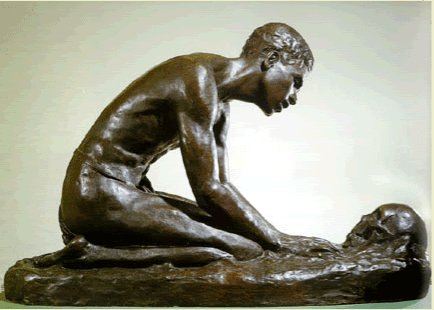
Screenshot 2018-06-06 at 6.54.21 PM - Edited.png

Talking Skull by Meta Warrick Fuller (1937)

Lois, on the other hand, started out as a teacher but never gave up her dream to be an artist in her own right. She taught for over 40 years and eventually retired from the profession, while establishing herself as an artist of note. She drew inspiration from her international travels, including time spent in Haiti.
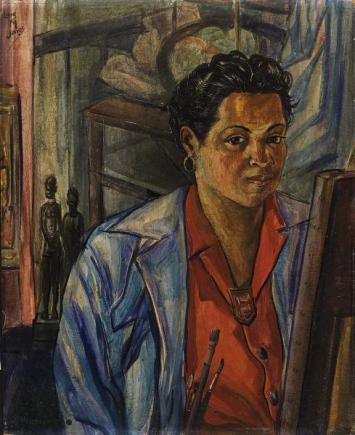
loisjones

Self Portrait by Lois Mailou Jones (1940)

These women led similar lives in several ways. Aside from both spending time studying in Paris, both Meta and Lois benefited from having White supporters during the early phases of their careers. Samuel Bing sponsored an exhibition for Meta, while Celine Marie Tabary often submitted Lois’s work to circumvent racist art competition policies that prevented Black Americans from competing.
2.2.2.x-collection-detail-jones-ode_to_kinshasa_0

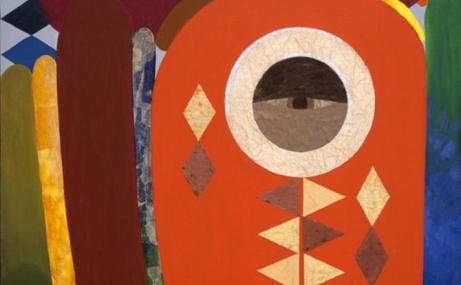
Ode to Kinshasa by Lois Mailou Jones (1972)

Though I’m not an artist, I am tremendously thankful for the fact that both Meta Warrick Fuller and Lois Maillou Jones shared their talents with the world. Their contributions added richly to the fabric and legacy of American art. May their work remind us – in perpetuity – of the importance of Black art!

(Photos courtesy of Pinterest, National Museum of Women in the Arts, Preston Joy blog, and Smithsonian American Art Museum)

art · international

A Single Lot Auction? Sotheby’s Is Making It Happen

Over the past several months of researching art, auctions and collecting, I’ve enjoyed learning about the procedures of the auction houses as well as the habits of collectors. While checking out the upcoming Sotheby’s auctions, I was surprised to see an auction with a single lot. Yes, you heard me right: there’s only one item in this auction.

I’ve never seen an auction with only one lot, so I took my time to read through the item description to see what artifact is so precious that it deserved its own solo show at Sotheby’s. Now, this isn’t the only thing being auctioned by Sotheby’s Paris on this day. There are actually two subsequent auctions occurring at this location on the same day. But this item was so special that it has a dedicated auction, featuring only this item.

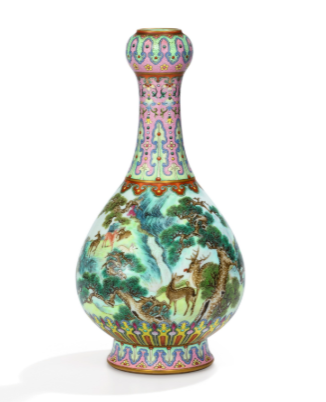
The item to be sold is an incredibly rare yangcai vase. The intricate artifact is over 300 years old and in pristine condition. The vivid images were painted onto the porcelain vase by the top artisans in Jingdezhen, China, unlike similar vases during this era that were made in Jingdezhen but painted in Beijing.

Screenshot 2018-06-03 at 3.50.55 PM - Edited

The yangcai vase

This vase is absolutely exquisite. It’s expected to fetch between $600,000 and $900,000 USD. But given it’s rarity, it may easily soar over the $1 mil USD mark. If you’d like to add this beauty to your collection, you may view it on June 9, 10, and 11, 2018, between 10 AM and 6 PM CEST. If you’d like to bid, you can register online, or you can attend the auction in person. The details to the auction are below:

June 12, 2018, 10:30 AM CEST, Sotheby’s Paris

76, rue du Faubourg Saint-Honoré
CS 10010
75384 PARIS CEDEX 08
France
Tel: +33 1 53 05 53 05
Fax: +33 1 53 05 52 21
paris.info@sothebys.com


I’m excited to see what the final price will be for this gorgeous vase!

art

Spotlight on Monet

Happy Monday, beloveds! Can you believe it’s almost been a whole month since I went to Philadelphia? That trip, which was mainly for the purpose of attending my first Freeman’s auction, was a lot of fun, and a great “break” in the monotony of my day-to-day life.

While at the Philadelphia Museum of Art, I made sure to tour the European art wing, because I’d be experiencing a bit of a deficit. The museum nearest to me, Virginia Museum of Fine Arts, has an incredible European art collection featuring impressionist works by Claude Monet and Edgar Degas. However, the Monet and Degas works are on an international tour and won’t be returning to VMFA until 2020.

img_4085

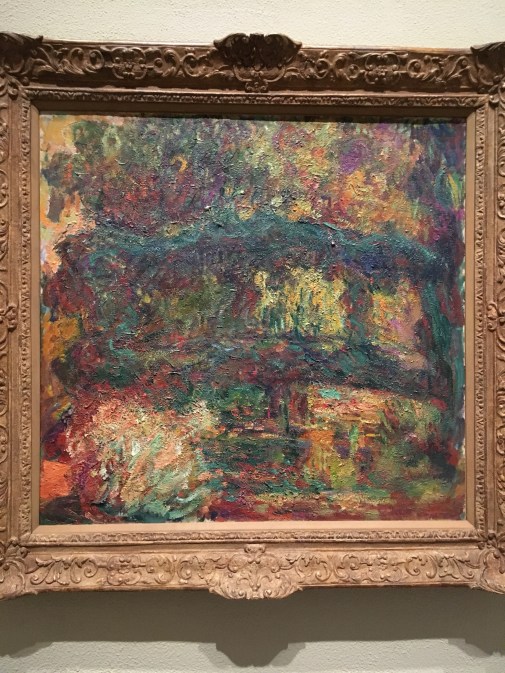
The Japanese Footbridge and the Water Lily Pond, Giverny (Monet, 1899)

So, as you can imagine, I was excited when I saw some Monet works in Philadelphia. I got to enjoy different versions of his Water Lilies series. I love both versions that I saw: the painting that has deeper tones feels more dynamic and calls to mind a scene from a lake during the autumn season. On the other hand, the painting with the lighter colors evokes warmer weather and the freshness of spring and summer.

img_4081

Water Lilies, Japanese Footbridge (Monet, 1918-2916)

What I love most about Monet is the thing he is known for: impressionism is one of my favorite art movements. The gentle intermingling of colors (the result of applying wet paint to wet paint), the way that light is captured, and the softness of nature all speak to me in indescribable ways. Monet’s depictions of his environment make me want to experience Giverny (the commune where Monet spent more than 40 years) in person.

Ah, how I enjoyed these! I’m excited to check out more of Monet’s work at the National Gallery of Art this summer. The museum currently has 16 of his works on view, and I plan to check out each of them!

art

New Exhibitions Coming to Washington DC

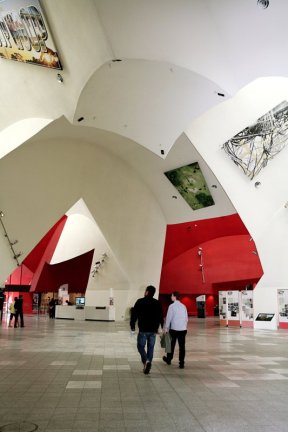
museum

Happy Thursday, friends! Before we welcome the month of June, I thought you all might enjoy a list of some of the exhibitions coming to DC during the month. Have fun planning your museum trips! I know that I will.

portugal

Kreeger Museum, June 5 – July 31, 2018: The art for this exhibit is coming from the Museum of Art, Architecture, and Technology (MAAT) in Lisbon. This museum is fairly new: it opened to the public in October 2016.  This is a special exhibition because it is the first group exhibition of 21st century Portuguese art of the 21st century to be presented in the United States.

vmfa_Faberge_700x700-700x700

Fabergé piece on display at Virginia Museum of Fine Arts

Hillwood Estate, Museum and Garden, June 9, 2018 – January 13, 2019: As a lover of all things bejeweled and antique, Peter Carl Fabergé’s work is an eternal fave. So I won’t miss this exhibition at Hillwood Estate, Museum and Garden in DC.  Fortunately, this exhibit will be here for several months, so if you can’t make it this summer, you have until early 2019 to visit and check it out.

daguerre

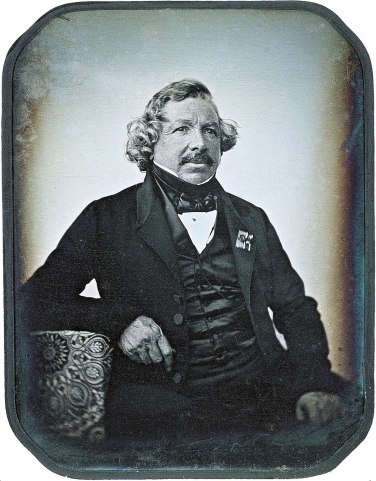
Daguerrotype of Louis Daguerre, one of the fathers of photography

National Portrait Gallery, June 15, 2018 – June 2, 2019: The National Portrait Gallery (NPG) will be exhibiting daguerrotypes collected over 50 years. This early form of photography was the predecessor to photography as we know it today. The collection has some very famous faces, like P. T. Barnum and Matthew C. Perry, within it. The museum is celebrating it’s golden anniversary this year, so you can bet that there will be a lot of great exhibits throughout the year. 

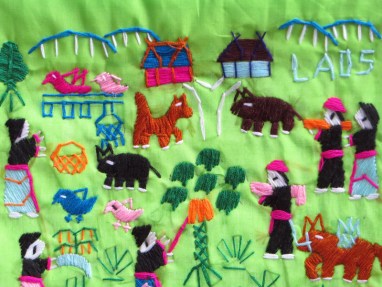
folkart

Smithsonian Folklife Festival

National Mall, June 27 – July 1, 2018; July 4 – 8, 2018

June ends on a strong note with the Smithsonian Folklife Festival. This year’s festival will highlight Armenia, Catalonia and the Sisterfire Concerts. It’s technically not an art exhibition, but if you’re in the area, you can’t miss the festival. This is always a great opportunity to take in international culture over several days.

art · travel

Review: Philadelphia Museum of Art, Part 1

No trip to Philadelphia would be complete without a trip to the Philadelphia Museum of Art. This two story incredible museum has many treasures, but is probably best know for the exterior stairs that were featured in the infamous scene of the movie “Rocky”, where Sylvester Stallone does his boxing training by running up and down the steps.

If you want to run up the steps, help yourself, but once you get to the top of the staircase, be sure to go into the museum and buy a ticket, then take a leisurely stroll through the corridors as you soak up the rich art history around you.

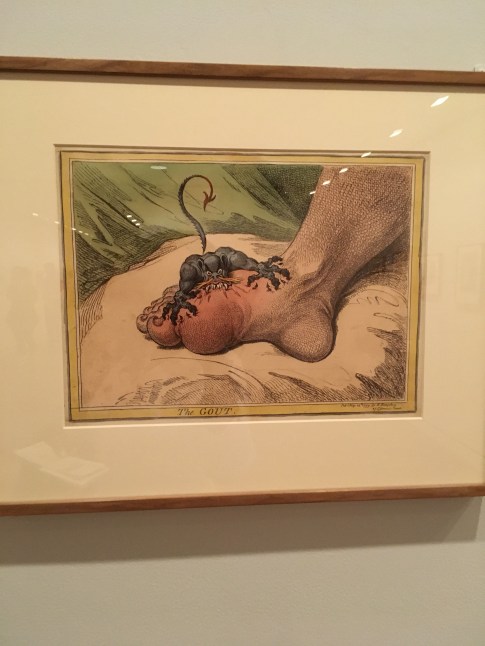
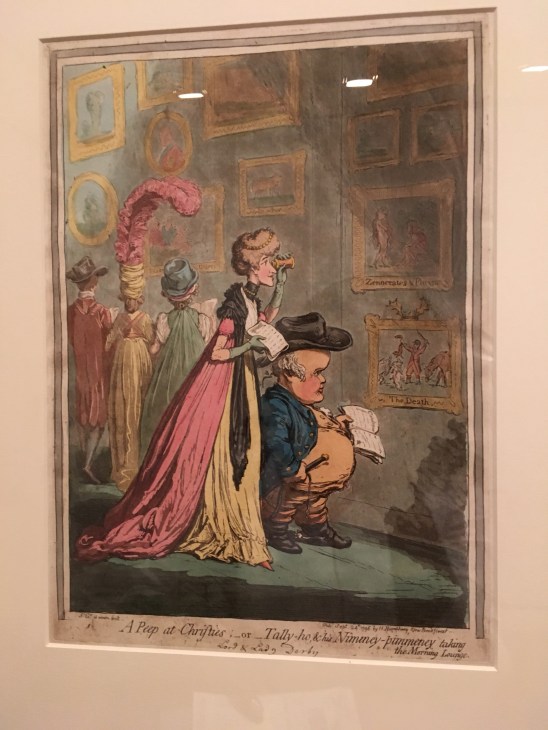
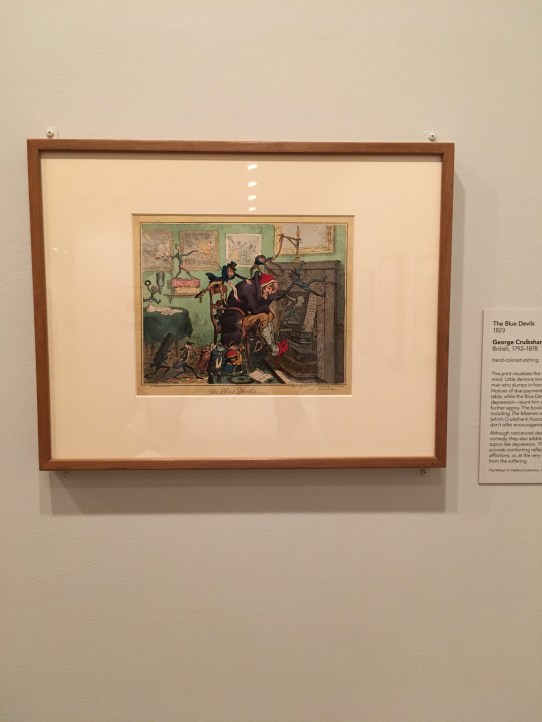
I’m breaking my photos into two or three separate posts, because it takes a bit of time to write up the artist information under each picture. I’m also a little disappointed that I only got to view the bottom level of the museum: on this trip, time was not on my side. But that’s okay, because I plan to return. And when I do, I’ll have more time. In this post, I’ll share the most humorous pieces from the “Biting Wit and Brazen Folly: British Satirical Prints, 1780s–1830s” exhibit“Biting Wit and Brazen Folly: British Satirical Prints, 1780s–1830s” exhibit, on display until August 22.

I’m delighted to also mention that my ticket was complimentary because I am a member of the Virginia Museum of Fine Arts at the Partner Level (you can also get reciprocal privileges at several major metropolitan museums, as well as the North American Reciprocal Membership and Reciprocal Organization of Associated Museums, at the Supporters level).

img_4094

The museum exterior

Statue outside of the Philadelphia Museum of Art

img_4062

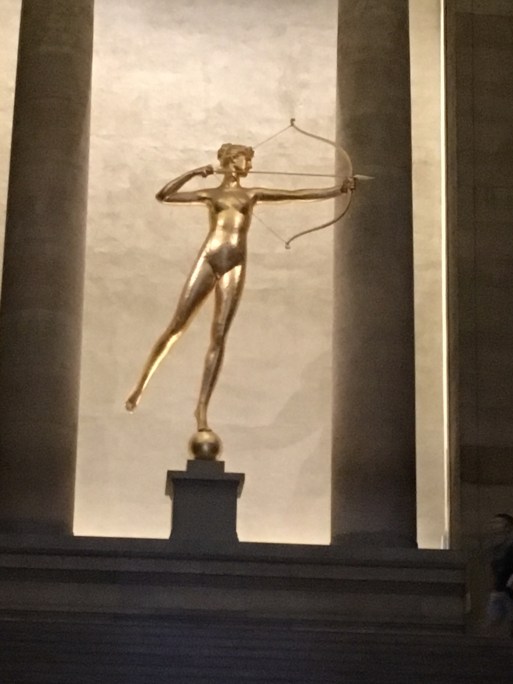
The famous Diana statue inside the museum

img_4057

The Gout by James Gillray

img_4059

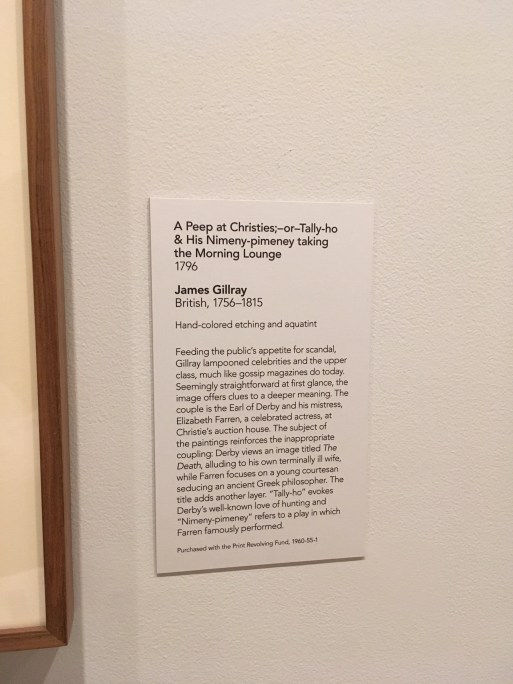
A Peep at Christies or Tally-ho & His Nimeny-pimeney taking the Morning Lounge by James Gillray

img_4060

The description next to A Peep at Christies was almost as interesting as the cartoon itself!

img_4055

The Blue Devils by George Cruikshank

img_4056

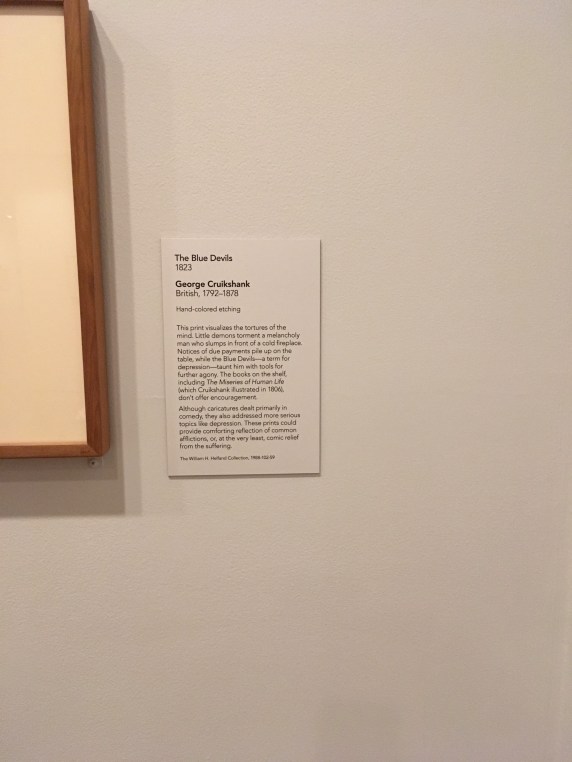
An explanation of what the “blue devils” are

Look out for more photos from my day at Philadelphia Museum of Art in the upcoming days. Enjoy!

art · life curation

A Day at NGA

A couple of weeks ago, I had a free afternoon and I was feeling artsy (to be honest, I can’t think of a time when I’m NOT feeling artsy). So I took a stroll to National Gallery of Art (NGA) to check out the exhibits. It’s been nearly two years since my last visit, so I was overdue.

Tomorrow’s post will be “heavier”, as far as subject matter goes, so today, I’m taking it light and easy. Here are a few photos from my last visit to NGA. This post features a few of the sculptures that I saw at the museum. Enjoy!

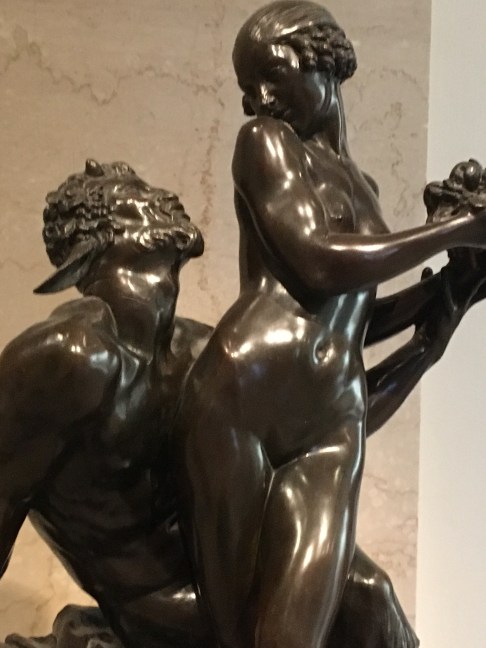
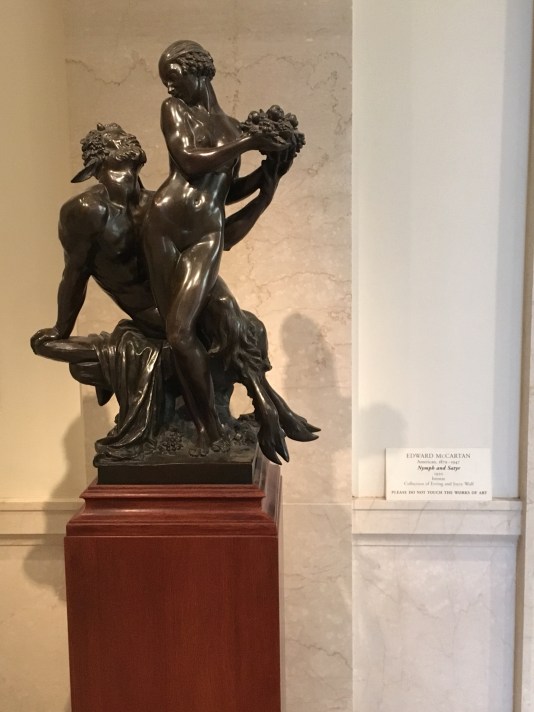
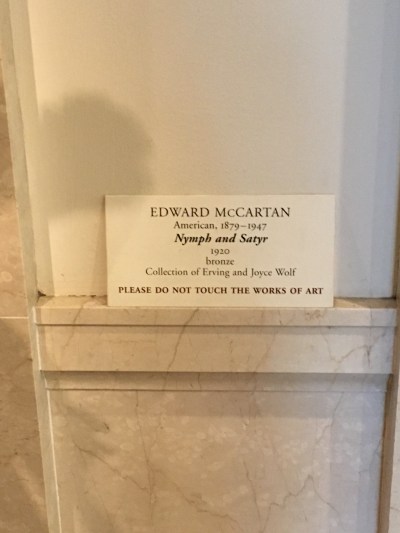
Nymph and Satyr by Edward McCartan (1920)

This satyr is nothing but trouble! Look at how he’s looking at the nymph.

Play coy, little nymph! Maybe that naughty satyr will leave you alone.

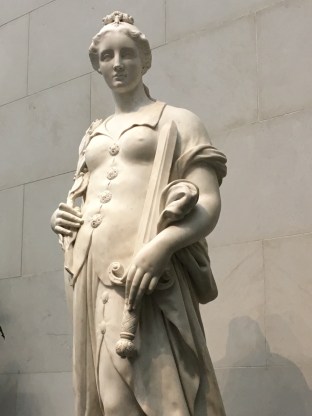
Justice by Barthelemy Prieur (1610)

It’s hard to believe this lovely lady is over 400 years old! It was completed the year before Prieur’s death.

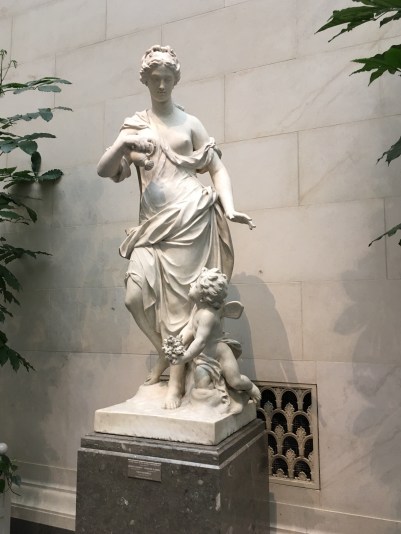
I had to do some research on this one: I’d never heard of “zephyr” before.

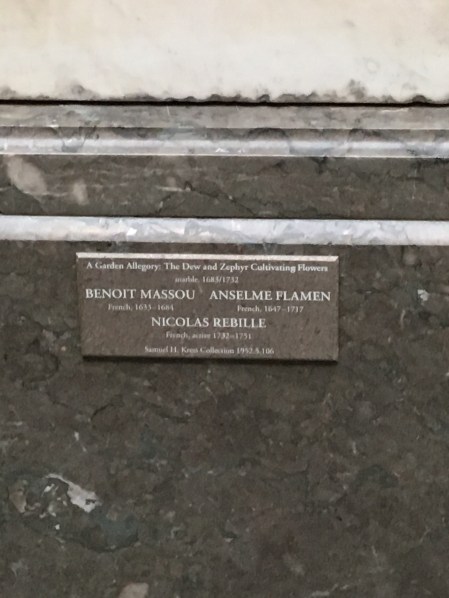
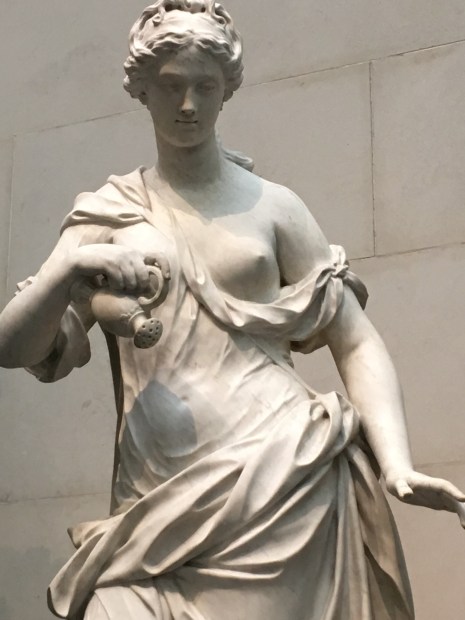
A Garden Allegory: The Dew and Zephyr Cultivating Flowers by Benoit Massou, Anselme Flamen and Nicolas Rebille (1683/1732)

This beautiful woman depict dew, the gentle moisture found on vegetation in the morning hours.

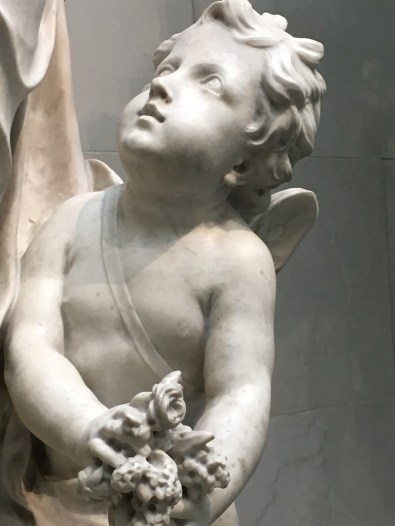
The charming little cherub next to Dew is Zephyr, the soft gentle breeze that can be felt on a pleasant spring day