art · beauty · food · life curation

Springtime at VMFA’s Floris

Several months ago, I enjoyed a lovely afternoon tea at Virginia Museum of Fine Art’s Floris Restaurant. Luckily for me, this darling tea room updates its menu quarterly or whenever a new exhibit arrives at the museum, giving visitors a chance to try new dishes throughout the year. I returned to Floris a few weeks ago, when they debuted their spring menu (they have since changed their offerings: their current menu reflects their latest exhibition, India’s Great Mughals: Art, Power and Opulence (more details about this exquisite collection coming soon!) I was excited to try the spring selection before the museum changed to the latest themed menu.
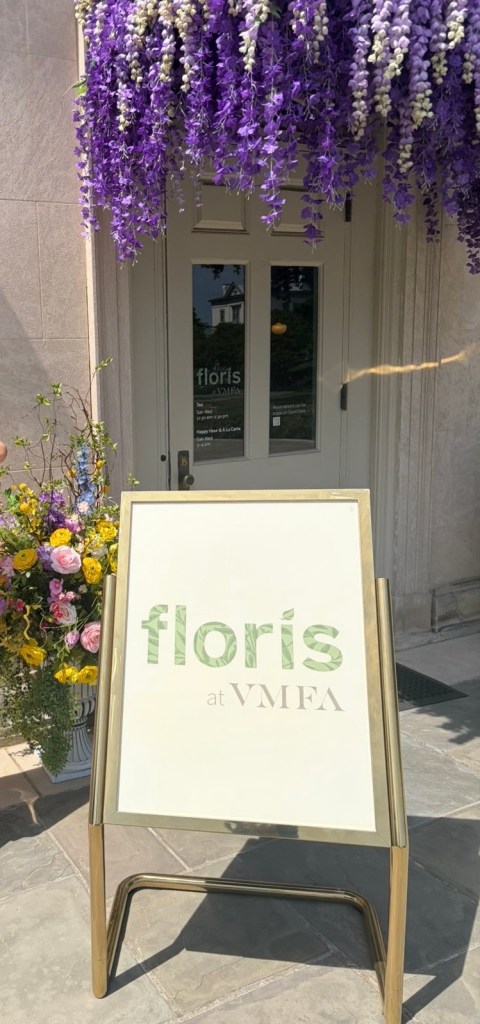
Floris entrance
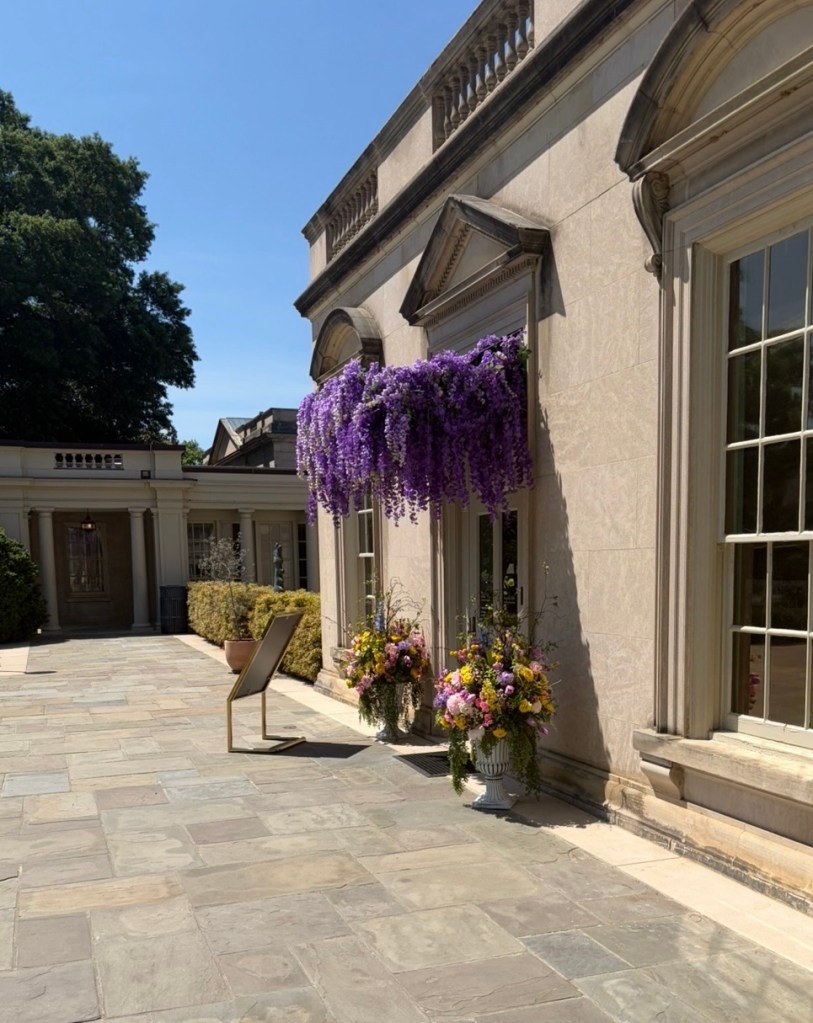
Side view of Floris entrance

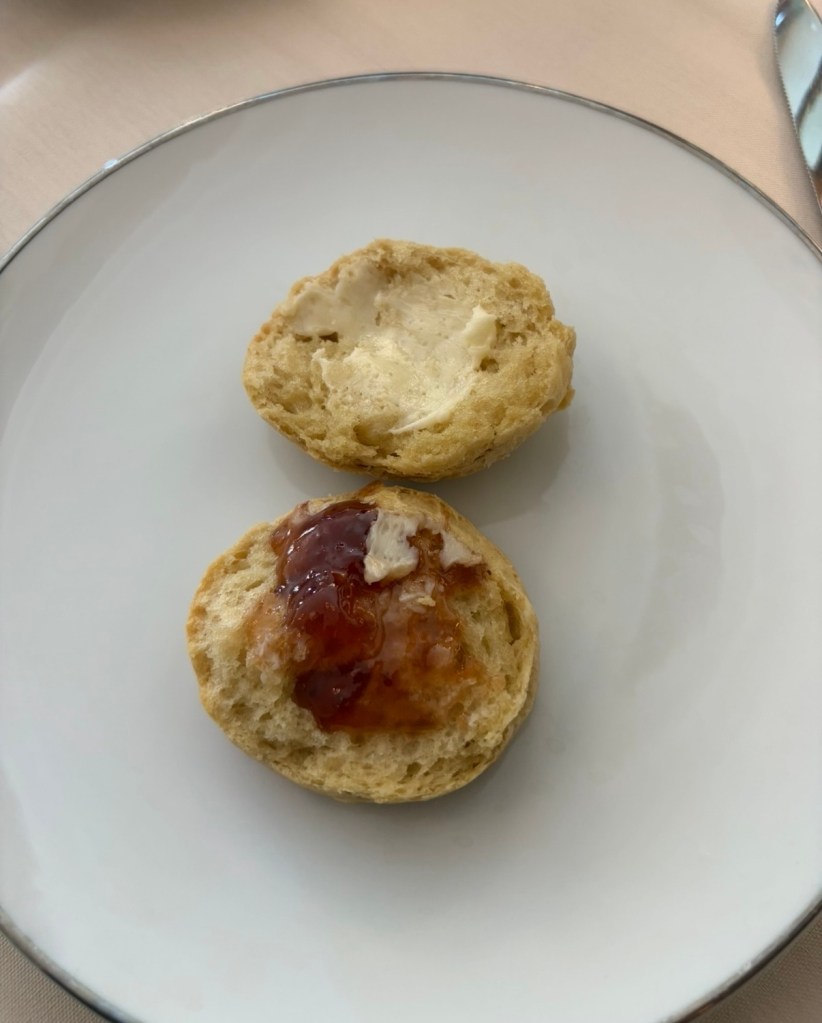
The tea service started with two pots of tea: one for me and one for my daughter. We decided to try the Shenandoah Blue and the White Tapestry tea blends to start. Both teas were bright, flavorful, and refreshing. We were then brought scones and bread, served with jam and a delicious soft butter. A short while later, our tower arrived.
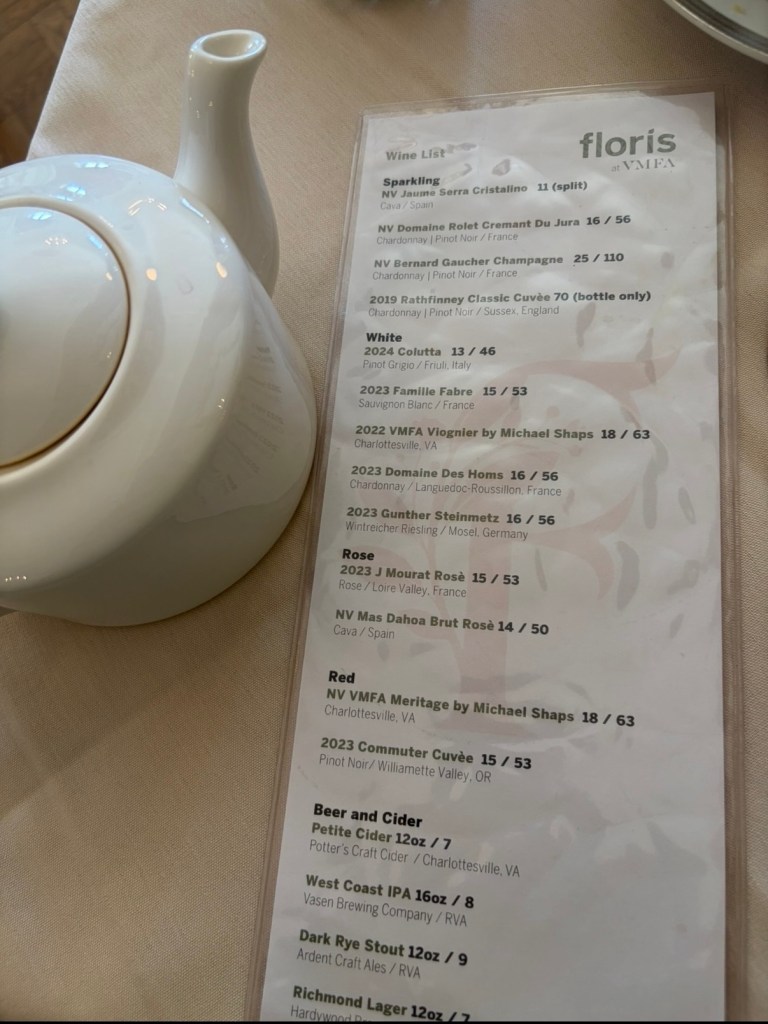
First tea option, and the wine, beer and cider menu
My scone
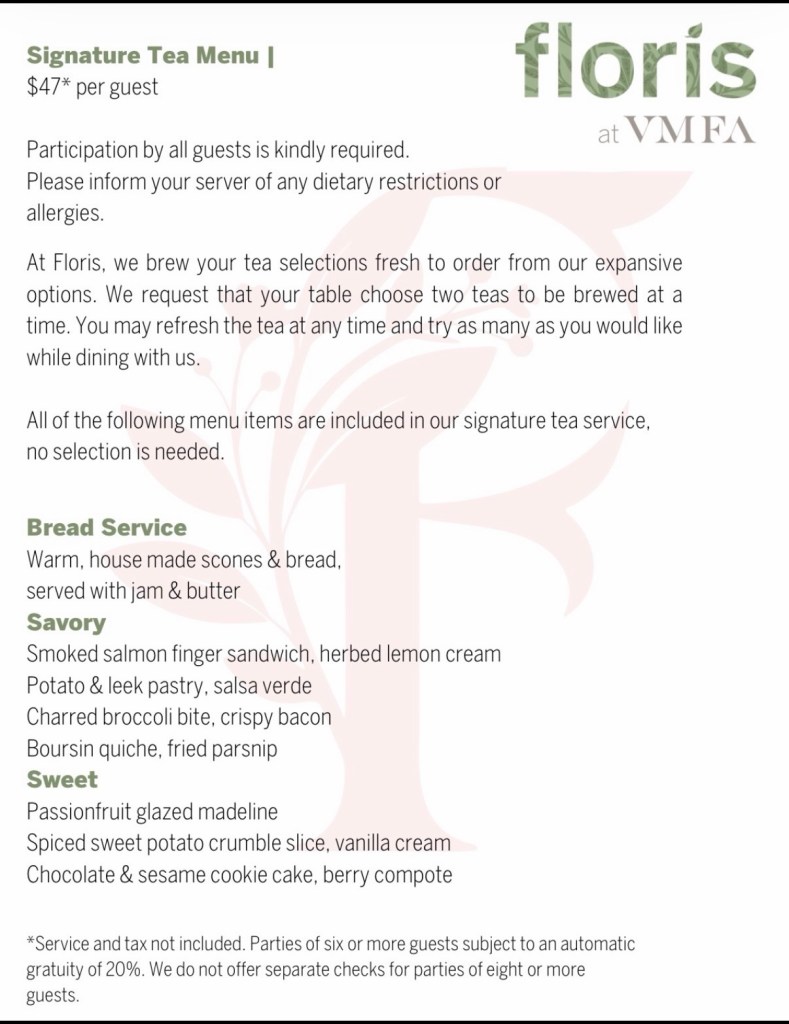
Springtime menu

On the bottom layer were the savory items: smoked salmon finger sandwiches, potato and leek pastries, charred broccoli bites, and boursin quiches. The salmon sandwiches were light, and the herbed lemon cream was a nice touch, but I found the flavor of this dish a little underwhelming, though pleasant. The potato and leek pastries were flaky and flavorful, and the salsa verde on top was just enough to keep the bright flavor profile that captured the energy of springtime. The broccoli bites were chilled, and while I think I would have enjoyed them more as a warm dish, the bacon crumbles on top offered a delightful crunch and enhanced the taste of the broccoli tremendously. My favorite was the boursin quiche: warm, cheesy, rich, buttery, and the little garnish on top was cute and tasty.
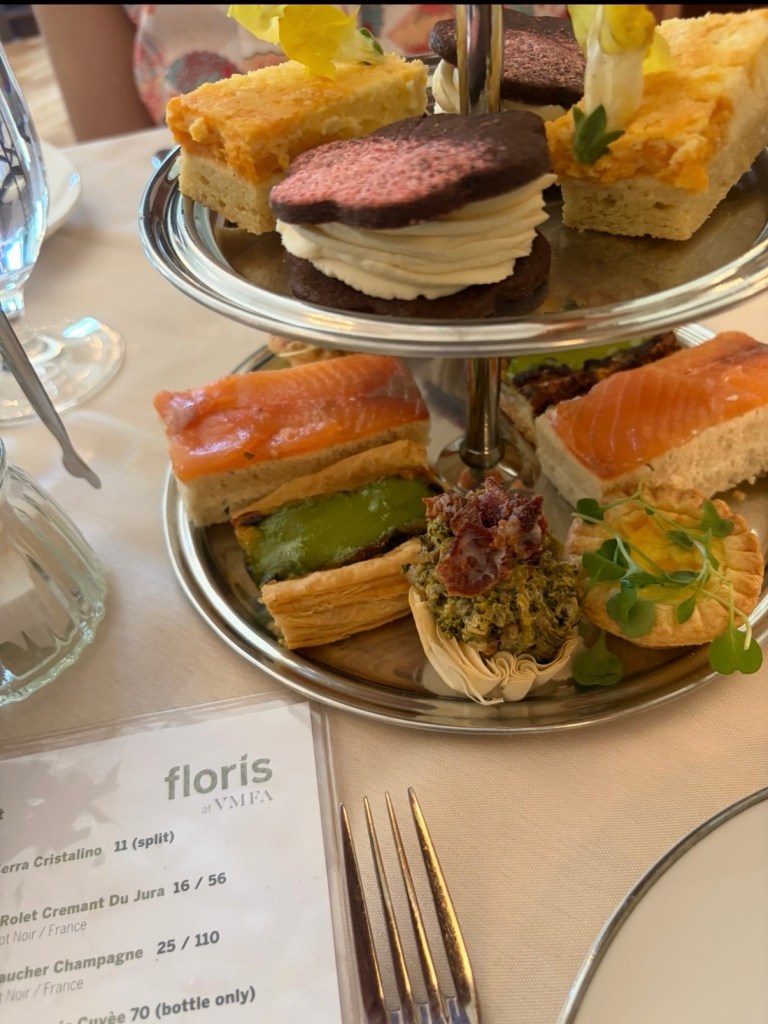
Bottom layer (left to right) smoked salmon finger sandwiches, potato and leek pastries, charred broccoli bites, and boursin quiches

The middle layer of the tower were two of the sweet treats. On this layer, we found the sweet potato crumble slice and the chocolate and sesame cookie cake. The sweet potato crumble slice was such a fresh interpretation of coffee cake configuration: we’re so often served sweet potato as a pie or as a side vegetable, and seeing it in a crumble cake was lovely. The flavor was tasty, and I love that it was combined with ice cream on the top layer. The chocolate and sesame cookie cake was another unexpected treat: this was one of those rare “not too sweet” desserts. The sesame provided an earthier flavor and more texture than is usually expected from chocolate desserts. I liked it, though I can’t say that it’s something that I’d clamor to recreate in my own kitchen.
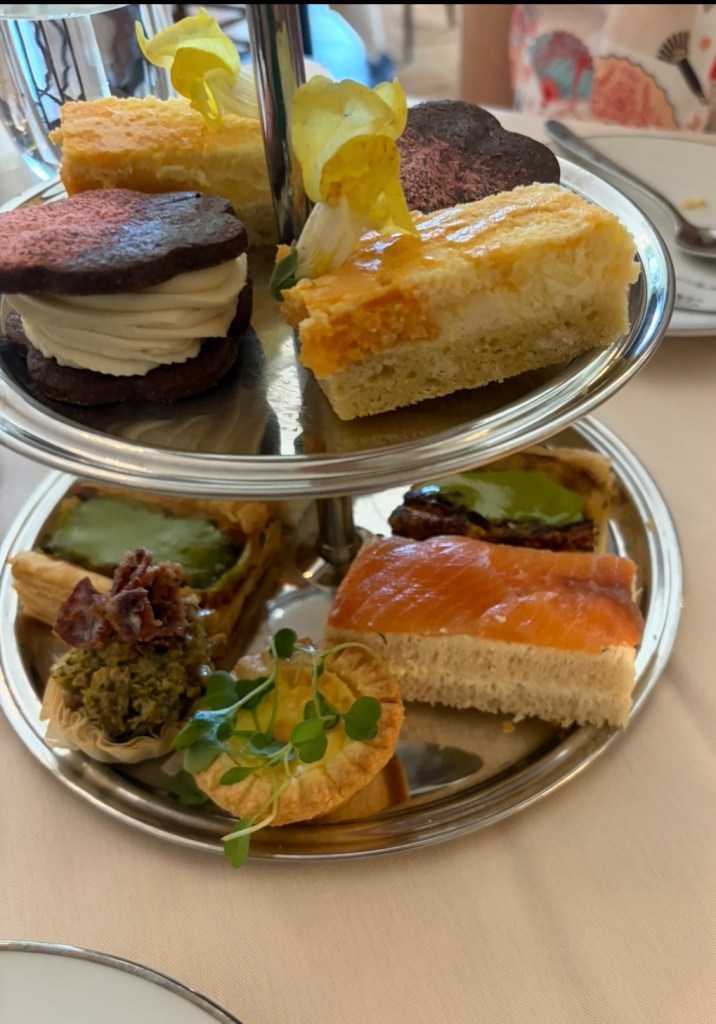
Layer 1 (left to right) sweet potato crumble slice and the chocolate and sesame cookie cake; Layer 2 – savory items (previously discussed)

Finally, the top layer featured the passionfruit glazed madelines and raspberry macarons. The madelines were, hands down, my favorite dessert of the meal. Sweet, soft, fruity, bright, a little tart, and unmistakably tropical, these delicious spongy cakes with the incredible glaze were so divine, I could have eaten ten of them! The saddest moment of this meal was when I took the last bite of the madelines and knew that there were no more left. Finally, I ate one of the macarons, which were perfectly executed and tasty.
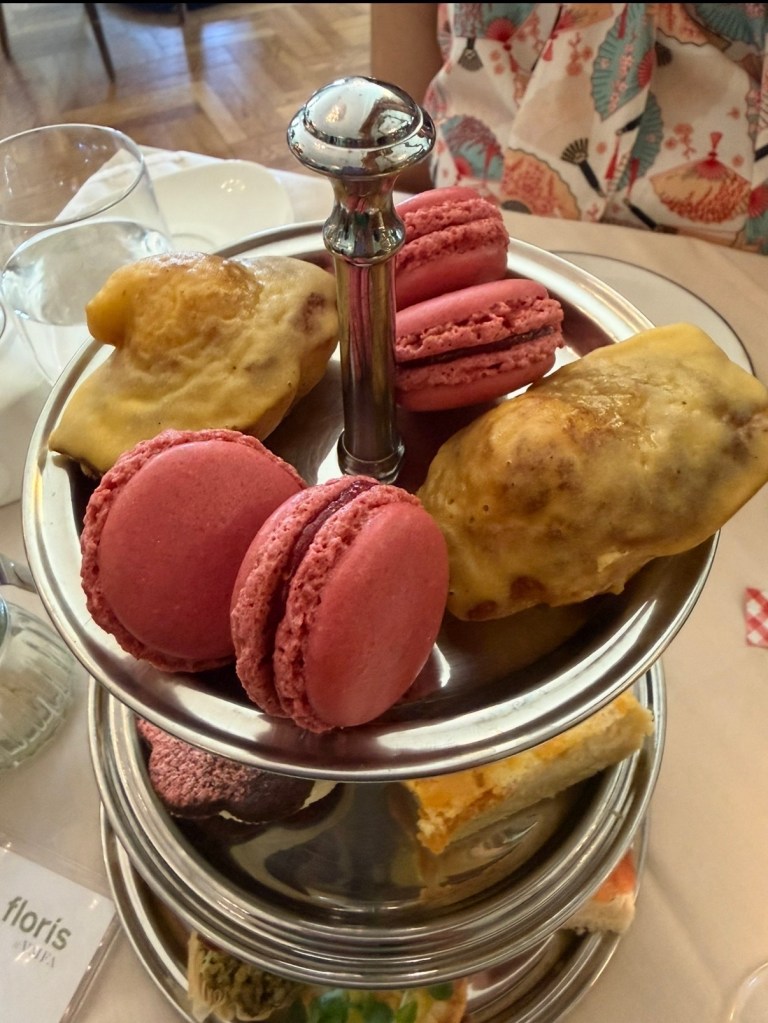
Top layer: macarons and passionfruit glazed madelines

We sipped our tea and enjoyed the time together. The tea room only had a few more guests, so we were able to enjoy a fairly quiet experience at Floris. It was notably busier during my last visit in the late fall, but I appreciate how the restaurant always offers fantastic service regardless of how busy things can get.

This was another fantastic Floris experience! I can’t wait to return and see how the chefs design the menu around the latest exhibition!
books · culture · life curation · reading list · writing

Springtime Reading List

It’s been a while since I shared the books that I’ve read recently. One of my goals in 2025, that I’ve carried over to 2026, is reading daily. I read more books last year than I have since I was in school, and I’m on track for reading even more books this year. Now seems like as good a time as any to share the books I recently read, as well as what I’ll be reading until mid-June.

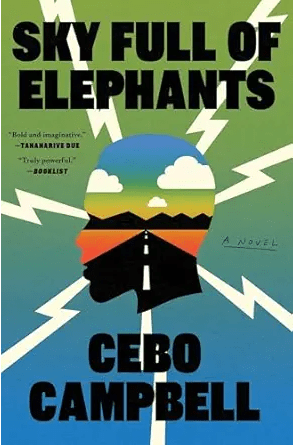
Sky Full of Elephants by Cebo Campbell – a speculative fiction gem that asks the question, “What would the United States be if there were no White Americans left?” It centers on the redemption arc of a man wrongfully accused of rape, and the daughter that never knew he existed until after losing all of her family to the tragic tragic event that left the US without White citizens. I enjoyed the story a lot, and it re-invigorated my love of fiction. The story left me with a lot of questions, primarily, what does redemption look like? How can I create “heaven” now, without requiring the intervention of a cataclysmic event? What does it mean to be truly self-sufficient and secure? And what happens when the status quo changes? Campbell did a great job of balancing the sensitivity of the subject of loss and grief, with the optimism and hope that remains after. I loved this one, and would happily read it again in the future.

Hellenismos by Tony Mierzwicki – I have friends who are exploring traditional forms of worship, including paganism and ancestor veneration. One of them recommended learning about the Greek pantheon, and I was intrigued, so I picked up this book. I LOVED it! Thoroughly researched, practicable, and easy to read, I enjoyed how the author took time to introduce not just the gods and goddesses of ancient Greece, but the lives of the devotees. Mierzwicki eloquently explains how worship of these deities was so intricately woven into the lives of the Greeks, and the line between religion, business, love, family and leisure were consistently blurred. While I’m not interested in following Hellenism, I feel like I’ve grown tremendously just by learning about it through this book. The daily practices that were outlined for the entire calendar year was particularly useful, as it was a great reminder to me that faith is a daily practices.

Your Faith Is Your Fortune by Neville Goddard – This is one of several books I’ve recently read by Goddard. I am a believer in mental discipline and focus, so I spent a considerable amount of time studying thought leaders and their works. I’ve read some of Goddard’s books before, but I recently got the Neville Goddard Complete Reader, and I’ve been methodically making my way through the entire thing (I’m anticipating being done with it before the end of June). Your Faith is Your Fortune is unlike any other book I’ve read: Goddard takes a number of specific Bible verses, and interprets through the lens of (as he describes it) a “psychological drama”. These “dramas” have traditionally been interpreted in a literal way, and Goddard encourages us to see the dramas as creative expressions that correspond to much more personally significant behaviors and choices. For people who have grown up in Christian (Bible-centered) households, this is an enlightening read that pushes the boundaries of how biblical instruction can be interpreted and applied in our lives.

The Power of Awareness by Neville Goddard – This book is a full explanation of the power of the law of assumption: how to use it, how to overcome challenges when using it, as well as case studies (success stories) of those that have used it. The heart of the book is the understanding of the power of “I AM”, and how these words form the world we live in. According to Goddard, “If man’s concept of himself were different, everything in his world would be different. His concept of himself being what it is, everything in his world must be as it is.” Goddard takes the time to explain what consciousness is, how important it is to control the imagination and sustain attention, and how crucial it is to “renounce evil” (concentrate your attention on what you’d prefer to experience). This was a fantastic book that deepened my understanding of the law of assumption and helped me become more effective in my usage of it.

Out of This World by Neville Goddard – This book by Goddard also deals with the law of assumption, and how our assumptions precede the experience. It has one of the most concise explanations of the law of assumption that I’ve seen in all of his works. It states, “Define your ideal and concentrate your attention upon the idea of identifying yourself with your ideal. Assume the feeling of being it, the feeling that would be yours were you already the embodiment of your ideal. Then live and act upon this conviction. This assumption, though denied by the senses, if persisted in, will become fact. You will know when you have succeeded in fixing the desired state in consciousness by simply looking mentally at the people you know.” This paragraph perfectly sums up how Law of Assumption works, and how persistence is the key to realizing the reality we desire. This book is shorter than some of the other Goddard books I’ve read, but I found it very easy to follow and instantly applicable.

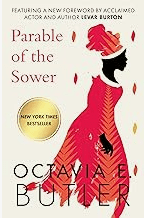
Parable of the Sower by Octavia Butler – I’m currently reading this book, and WHEW. This is a heavy one, for sure. It’s not surprising to anyone that’s familiar with Butler’s work that this is a story that changes you as you read it. Personally, I’m a fan of Octavia Butler, and I’ve read several of her books (Wild Seed is a favorite) but I had not read Parable until a couple of days ago. Butler was nothing if she was not a seer, with a number of her stories ending up as the lived reality in America more than 30 years after she first wrote them down. It’s uncomfortable reading where she thought the US would go, and it’s even more disturbing how accurate she was. I love it, and it’s breaking my heart with every subsequent chapter. I’m roughly halfway through the book, and it’s painful, but I’m determined to complete it. If you want to read a book that will haunt you long after you put it down, this is worth checking out.

These are my springtime reads! What are you currently reading, or have you read any of the books I mentioned? I’d love to hear your thoughts below!