art

Henrietta Lacks, An Overdue Tribute

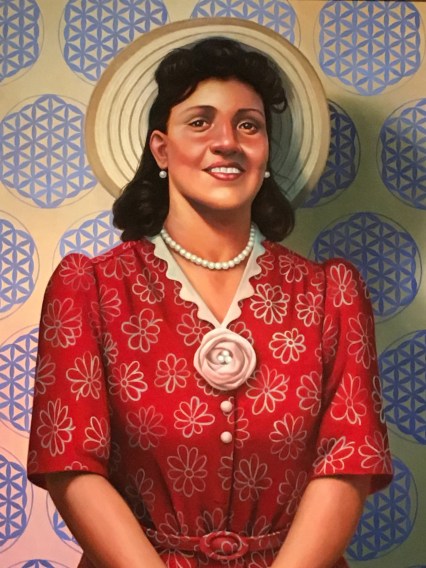
Recently, the National Portrait Gallery and the National Museum of African American History and Culture jointly acquired a painting of Henrietta Lacks, as portrayed by Kadir Nelson. Lacks died from cervical cancer at the age of 31, and her cells were subsequently studied and used over the past 60+ years. Lacks’s cells (named HeLa, for Henrietta Lacks) were instrumental in developing treatments for a variety of illnesses, such as polio, AIDS and Parkinson’s Disease.

I was familiar with Lacks’s story from many years back, as she was a Virginia native and never forgotten here, in her state of birth. Thus, I knew that I had to see the painting, titled “Henrietta Lacks (HeLa): The Mother of Modern Medicine”, for myself.

img_4259

img_4261

Henrietta Lacks (HeLa): The Mother of Modern Medicine, Kadir Nelson, oil on linen, 2017

img_4262

Information card as displayed in the National Portrait Gallery

The painting is large and breathtaking: Lacks smiling sweetly and posed with her bible. Nelson incorporated some very special details that refer to Lacks’s legacy. As stated on the National Portrait Gallery press release:

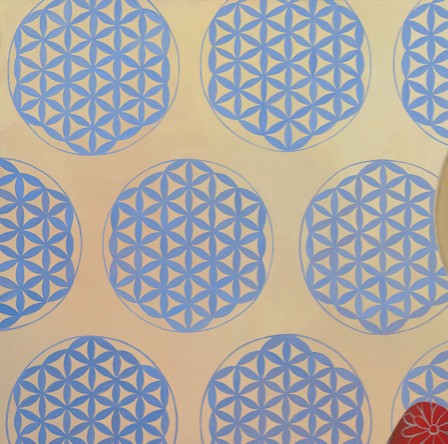
“Commissioned by HBO, Nelson used visual elements to convey Lacks’ legacy. The wallpaper features the “Flower of Life,” a symbol of immortality; the flowers on her dress recall images of cell structures; and two missing buttons allude to the cells taken from her body without permission.”
hel_0 - Edited

Close up of the background, featuring the “Flower of Life”

Henrietta Lacks’s story raises issues surrounding ethics, right to patients’ genetic information, and privacy. The fact that she died but her cells made it possible for other people to live is heartbreaking, but what’s even more tragic is the fight that her family had to undertake to challenge the medical industry that used HeLa cells without Lacks’s, or her family’s, consent.

I’m so happy that Henrietta Lacks is being featured at the Smithsonian Museum and is taking her rightful place in American history. I really enjoyed seeing this beautiful portrait for myself, and I hope that you all get a chance to check it out, too! It will be at the National Portrait Gallery until November 4, 2018, and then it will be at the Smithsonian National Museum of African American History and Culture. You’ll be glad that you made the visit!
art

Feeding My Gerome Addiction

Part of my Philadelphia trip included a visit to the Philadelphia Museum of Art. I love to believe that the muses communicate directly with me when I’m in any museum, so I am inclined to go wherever I’m “led”, so to speak. I stepped over to the European art wing, and I got the feeling that I would quickly find something incredible. My intuition didn’t disappoint: less than a few steps into the first room I entered, I was face to face with a painting by one of my favorite artists, Jean-Leon Gerome.

img_4064-1

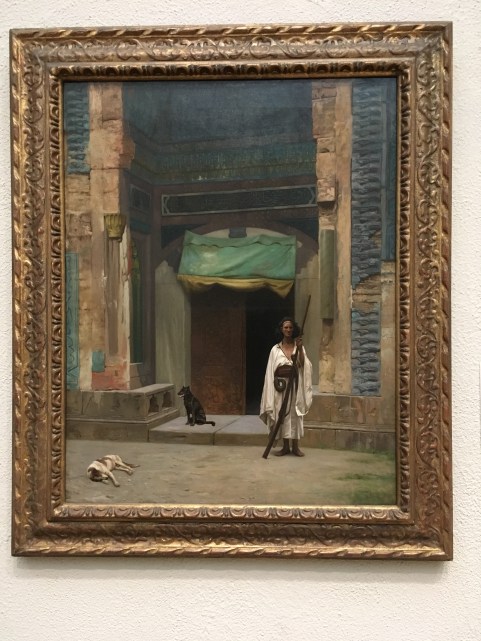
Portal of the Green Mosque (Sentinel at the Sultan’s Tomb), Jean-Leon Gerome, 1870

I’ve written about Gerome before, and back then, I struggled with expressing exactly what it is about his paintings that I love. I *think* I have the language to express myself now LOL! I love the realism in Gerome’s work. His paintings featured lots of African, Middle Eastern and Asian subjects and, unlike many European artists, he chose to depict his subjects humanely, touchingly, and accurately. For that, I’ll always be a fan.

This painting, Portal of the Green Mosque (Sentinel at the Sultan’s Tomb), was completed by Gerome in 1870. By this time, Gerome was a very experienced painter (more than 20 years experience, to be exact) and had quite a few commissions, honors, and his own atelier to his credit. He had established a name for himself and was a master at Orientalist paintings. While many may conclude that Gerome’s work objectified his subjects to the point of being lecherous, I’m inclined to take a different perspective.  The combination of “exotic”, non-White subjects and a Neoclassical or Romantic depiction of these subjects results in capturing the subjects’ humanity in ways that had never been done before.

The sentinel depicted is solemn, a little melancholy, but not to be pitied: he seems at peace with his position and dutifully stands in defense of the sultan’s remains. You can sense that this is a hot and hazy day, if the languorous hound in the foreground is any indicator. However, I sense that the dog in the background, that is standing closer to the entrance, is much like the sentinel himself: alert, solemn, ready to defend.

I enjoyed this painting, as I enjoy every other Gerome work that I’ve seen. I know that the National Gallery of Art in Washington, DC has several Gerome paintings on view. I intend to make a special trip to view and photograph some of them. Look out for that post soon! In the meantime, enjoy, and I’ll talk to you all tomorrow!


art

Meta Warrick Fuller and Lois Mailou Jones: Let’s Honor Them Both!

It’s my pleasure to honor two talented Black women artists on this day. On June 9, 1877, Meta Vaux Warrick Fuller, a gifted sculptress of Black descent was born. On June 9, 1998, Lois Maillou Jones, Black painter and teacher extraordinaire, died in Washington, DC. Because this day is full of Black Girl Artist Magic (yes, I’m tweaking the #BlackGirlMagic hashtag for my purposes), I wanted to talk a bit more about these remarkable women.

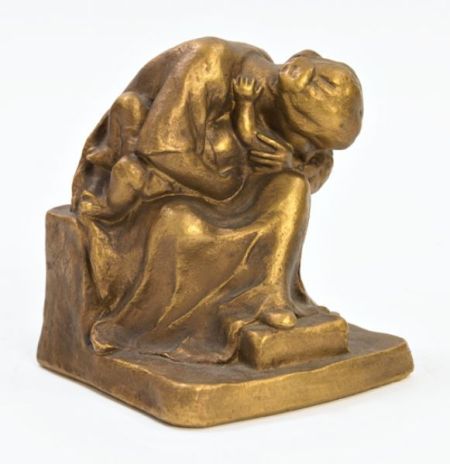
motherandchild

Mother and Child by Meta Warrick Fuller (1962)

Both Meta and Lois spent time in France during the early half of the 20th century. Europe, generally speaking, was a friendlier environment for American Blacks, and it was easier to study in European ateliers than to attempt to integrate White studios in the US. Meta began at Academie Colarossi but eventually studied under Auguste Rodin, while Lois studied as part of a fellowship with Academie Julian.

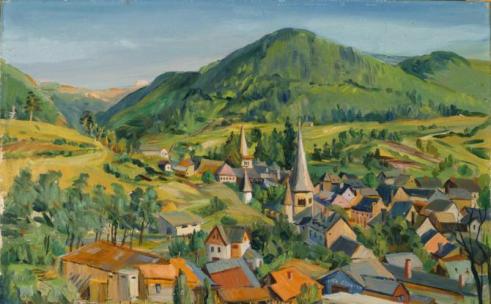
jones_arreauhautespyrenees

Arreau, Hautes-Pyrénée by Loïs Mailou Jones (1949)

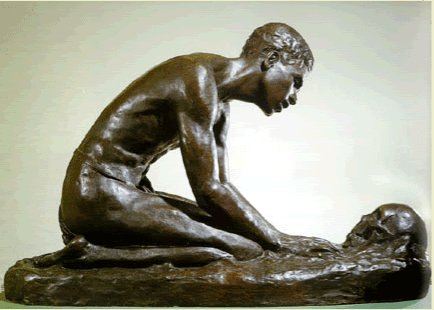
Meta was a sculptress and used her talent to create works that captured her frustration with the treatment of Blacks in America. She explored themes such as despair and melancholy, but also touched on religious devotion and hopefulness. Meta drew upon historical accounts to sculpt some of her heartrending works. She worked primarily in bronze or plaster, and created an impressive body of work during her career. Many of her pieces are exhibited at the Danforth Museum, making it easy for anyone interested in exploring her oeuvre to view a wide variety of her pieces in one location.

pinterest1

Story Time by Meta Warrick Fuller (year unknown)

She received many accolades during her lifetime but fell into obscurity for several years after her death. Toward the end of the 20th century, there was renewed interest in her work, and she is finally becoming a key figure in today’s discussions on American sculptors.

Screenshot 2018-06-06 at 6.54.21 PM - Edited.png

Talking Skull by Meta Warrick Fuller (1937)

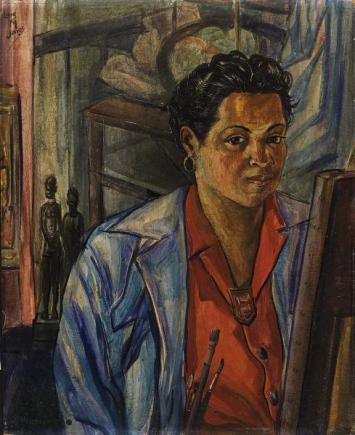
Lois, on the other hand, started out as a teacher but never gave up her dream to be an artist in her own right. She taught for over 40 years and eventually retired from the profession, while establishing herself as an artist of note. She drew inspiration from her international travels, including time spent in Haiti.

loisjones

Self Portrait by Lois Mailou Jones (1940)

These women led similar lives in several ways. Aside from both spending time studying in Paris, both Meta and Lois benefited from having White supporters during the early phases of their careers. Samuel Bing sponsored an exhibition for Meta, while Celine Marie Tabary often submitted Lois’s work to circumvent racist art competition policies that prevented Black Americans from competing.

2.2.2.x-collection-detail-jones-ode_to_kinshasa_0

Ode to Kinshasa by Lois Mailou Jones (1972)

Though I’m not an artist, I am tremendously thankful for the fact that both Meta Warrick Fuller and Lois Maillou Jones shared their talents with the world. Their contributions added richly to the fabric and legacy of American art. May their work remind us – in perpetuity – of the importance of Black art!

(Photos courtesy of Pinterest, National Museum of Women in the Arts, Preston Joy blog, and Smithsonian American Art Museum)

art

My Earliest Art Memories

Happy Humpday! It’s the middle of the week, and I figure we could all use some light and breezy conversation. So I’m sharing my story – as best I can remember it – of my earliest art memories.

So, once upon a time, information wasn’t abundant and instantly at our fingertips. Way back before the Internet, there was the Encyclopedia. These massive tomes covered a ton of topics and every household that could afford them had a set. We had three sets, because as the information became outdated (these were print materials, after all), we had to occasionally replace them. One set that we had – the largest version – had spectacular photos. In this collection, I first became introduced to the fine arts.

books

Ah, memories

Now, I was surrounded by art all of the time. My mom had a creative streak and my brother and I both sketched. But it wasn’t until I saw a painting in the encyclopedia that I knew that there was something very special about art. It impressed me so much that I remembered the name of the artist and the painting, more than 20 years after I first laid eyes on it.

800px-Jean-Auguste-Dominique_Ingres_-_Comtesse_d'Haussonville_-_Google_Art_Project

Portrait of Comtesse d’Haussonville by Jean-Auguste Dominique Ingres took up nearly a whole page of the encyclopedia volume that I was perusing as a child. The countess appears to be looking directly at you, sizing you up but not in a disapproving way. She seems to be peering at you to figure out if she can share a confidence or two with you, or if she should refrain from chatting too much. She seemed so real, though I knew she was a painting of someone that died long before anyone that I knew had even been born.

Her strikingly elegant and self-possessed expression stuck with me all of these years. I guess you could say that this was the first time that art impacted me in a conscious way (though it was my encounter with a Gerome painting that first stirred any sort of strong emotion in me). It’s funny: after all this time, I’m still wondering if the Comtesse approves of me. Art has a peculiar way of making you think for years after the first encounter. Great art is memorable in the way that most of us strive to be in our daily lives.

That’s it for now. I hope you all enjoyed this post, and I hope that this Wednesday is fun and energizing for you all. Take care!


art · international

International Art: Tom Mboya, Kenyan Artist

While vacationing in Kenya, I noticed that my hotel (Ibis Styles in Nairobi’s Westlands neighborhood) had beautiful artwork lining the stairwells. Upon closer inspection, I saw that all of the paintings – about 30 in total, displayed in sets of 3 amongst 10 different floors – were done by Tom Mboya.

My curiosity kicked into overdrive and I started researching Mboya. As it so happens, Tom Mboya is a local Kenyan artist (no surprise there) that started out working in the hospitality industry before pursuing his art fulltime. The paintings are stunning and lively; from dynamic depictions of life in Kenya to breathtaking portraits of his countrywomen, these paintings draw you in and hold you captive.

Here are a few of my favorites from the hotel:


If you’d like to learn more about Mboya, check out his artist profile here.


art

Perfect Art for a Butterfly

Happy Tuesday, loves! Over here on the Bronze Butterfly blog, it goes without saying that I identify with the butterfly, both the insect itself as well as the metamorphosis it undergoes in order to become a beautiful winged creature.

While looking at the Christie’s Paris Instagram account, I think I found a perfect piece to adorn my walls. It’s collectible, it’s antique, and it has butterflies!

The translation of the caption is, “The Dutch Golden Age (1587 – 1702)  was a period of economic prosperity and artistic “outpouring” [I think this means artistic expression] in the Netherlands. Pieter Withoos (1655-1692) was an illustrator that represented [drew/sketched/captured] nature, particularly for albums. Here, the painted uses charcoal, ink and watercolor to realize [recreate] these butterflies and insects that will be on sale on January 30, 2018 in New York.”

If you want to see more about this drawing/painting, you can view the lot here. This sale is accepting online bids, so if you want to gift this to your favorite Bronze Butterfly (hint, hint), you have until January 30th to make it happen LOL! While you’re viewing this lot, go ahead and check out a few of the other items being offered through this huge sale. For those interested in learning more about the Dutch Golden Age, I found a free online course on Open. edu. The course, titled “Dutch Painting of the Golden Age“, even offers a statement of participation when you complete it, as proof of your knowledge. It’s a great opportunity to learn something new!


art · life curation

A Love Affair with Jean-Leon Gerome, Part 2

In my previous post about Jean-Leon Gerome, I talked about how I first became acquainted with his work, and the impression that painting left on me. To date, I don’t think there is any other painting that moved me to the point of researching the painter so that I could know more about the genius that created it.

As I go forward in pursuing my art interests, I’m fascinated by the prospect of one day owning a Gerome painting for my own collection. Or, perhaps I’ll help popularize an artist that has a similar gift, deftly portraying people of color while effectively communicating the subjects’ humanity.

I am excited to announce that a painting attributed to Jean-Leon Gerome will be auctioned by Sotheby’s on February 1, 2018. While I won’t be bidding on it, I’m excited to see what comes of it. Will the buyer put it into his or her private collection, or will it become part of a museum exhibit in the style of the Salvator Mundi that sent the art world into a tizzy?

Only time will tell, but in the meantime, here’s the painting offered by Sotheby’s. The Portrait Study of Giacomo Orlandi di Subiaco (c 1843) has many Gerome-esque attributes.

Screenshot 2018-01-06 at 4.52.32 PM - Edited

For starters, this portrait features the dark background and “candlelit” lighting that Gerome favored. The subject himself, with his tanned skin, dark, curly hair, and expressive eyes, is captured in similar fashion as other Gerome subjects. The painting didn’t attempt to “perfect” the subject by putting him in fine regalia or making his nose more aquiline: Gerome’s affinity for realism is present in this photo. The painting looks like someone that you may run into on the streets of Rome, in the midst of running his daily errands.

I am eager to see what happens with this painting. I only have to wait a few more days until the auction: I can’t wait!