books · culture · life curation · reading list · writing

Springtime Reading List

It’s been a while since I shared the books that I’ve read recently. One of my goals in 2025, that I’ve carried over to 2026, is reading daily. I read more books last year than I have since I was in school, and I’m on track for reading even more books this year. Now seems like as good a time as any to share the books I recently read, as well as what I’ll be reading until mid-June.
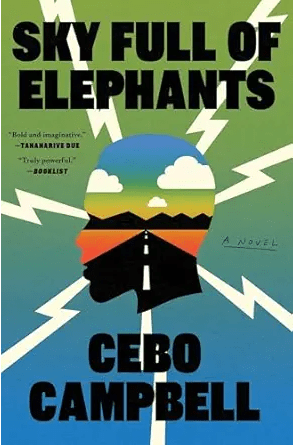
Sky Full of Elephants by Cebo Campbell – a speculative fiction gem that asks the question, “What would the United States be if there were no White Americans left?” It centers on the redemption arc of a man wrongfully accused of rape, and the daughter that never knew he existed until after losing all of her family to the tragic tragic event that left the US without White citizens. I enjoyed the story a lot, and it re-invigorated my love of fiction. The story left me with a lot of questions, primarily, what does redemption look like? How can I create “heaven” now, without requiring the intervention of a cataclysmic event? What does it mean to be truly self-sufficient and secure? And what happens when the status quo changes? Campbell did a great job of balancing the sensitivity of the subject of loss and grief, with the optimism and hope that remains after. I loved this one, and would happily read it again in the future.
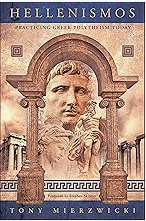
Hellenismos by Tony Mierzwicki – I have friends who are exploring traditional forms of worship, including paganism and ancestor veneration. One of them recommended learning about the Greek pantheon, and I was intrigued, so I picked up this book. I LOVED it! Thoroughly researched, practicable, and easy to read, I enjoyed how the author took time to introduce not just the gods and goddesses of ancient Greece, but the lives of the devotees. Mierzwicki eloquently explains how worship of these deities was so intricately woven into the lives of the Greeks, and the line between religion, business, love, family and leisure were consistently blurred. While I’m not interested in following Hellenism, I feel like I’ve grown tremendously just by learning about it through this book. The daily practices that were outlined for the entire calendar year was particularly useful, as it was a great reminder to me that faith is a daily practices.
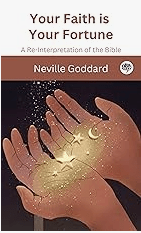
Your Faith Is Your Fortune by Neville Goddard – This is one of several books I’ve recently read by Goddard. I am a believer in mental discipline and focus, so I spent a considerable amount of time studying thought leaders and their works. I’ve read some of Goddard’s books before, but I recently got the Neville Goddard Complete Reader, and I’ve been methodically making my way through the entire thing (I’m anticipating being done with it before the end of June). Your Faith is Your Fortune is unlike any other book I’ve read: Goddard takes a number of specific Bible verses, and interprets through the lens of (as he describes it) a “psychological drama”. These “dramas” have traditionally been interpreted in a literal way, and Goddard encourages us to see the dramas as creative expressions that correspond to much more personally significant behaviors and choices. For people who have grown up in Christian (Bible-centered) households, this is an enlightening read that pushes the boundaries of how biblical instruction can be interpreted and applied in our lives.
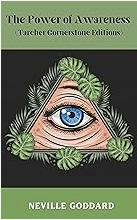
The Power of Awareness by Neville Goddard – This book is a full explanation of the power of the law of assumption: how to use it, how to overcome challenges when using it, as well as case studies (success stories) of those that have used it. The heart of the book is the understanding of the power of “I AM”, and how these words form the world we live in. According to Goddard, “If man’s concept of himself were different, everything in his world would be different. His concept of himself being what it is, everything in his world must be as it is.” Goddard takes the time to explain what consciousness is, how important it is to control the imagination and sustain attention, and how crucial it is to “renounce evil” (concentrate your attention on what you’d prefer to experience). This was a fantastic book that deepened my understanding of the law of assumption and helped me become more effective in my usage of it.
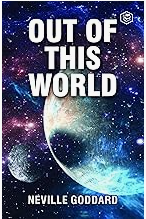
Out of This World by Neville Goddard – This book by Goddard also deals with the law of assumption, and how our assumptions precede the experience. It has one of the most concise explanations of the law of assumption that I’ve seen in all of his works. It states, “Define your ideal and concentrate your attention upon the idea of identifying yourself with your ideal. Assume the feeling of being it, the feeling that would be yours were you already the embodiment of your ideal. Then live and act upon this conviction. This assumption, though denied by the senses, if persisted in, will become fact. You will know when you have succeeded in fixing the desired state in consciousness by simply looking mentally at the people you know.” This paragraph perfectly sums up how Law of Assumption works, and how persistence is the key to realizing the reality we desire. This book is shorter than some of the other Goddard books I’ve read, but I found it very easy to follow and instantly applicable.
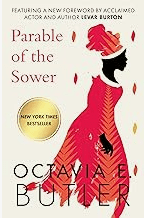
Parable of the Sower by Octavia Butler – I’m currently reading this book, and WHEW. This is a heavy one, for sure. It’s not surprising to anyone that’s familiar with Butler’s work that this is a story that changes you as you read it. Personally, I’m a fan of Octavia Butler, and I’ve read several of her books (Wild Seed is a favorite) but I had not read Parable until a couple of days ago. Butler was nothing if she was not a seer, with a number of her stories ending up as the lived reality in America more than 30 years after she first wrote them down. It’s uncomfortable reading where she thought the US would go, and it’s even more disturbing how accurate she was. I love it, and it’s breaking my heart with every subsequent chapter. I’m roughly halfway through the book, and it’s painful, but I’m determined to complete it. If you want to read a book that will haunt you long after you put it down, this is worth checking out.

These are my springtime reads! What are you currently reading, or have you read any of the books I mentioned? I’d love to hear your thoughts below!
books · culture · reading list · relaxation · words of wisdom · writing

Writers Wednesdays: What I’m Reading This Month

Happy Black History Month! I know I’m a bit late with this post, but I’ve been trying to get back on track with my writing and filming schedule (no easy feat, but I’m getting there!)

I posted a video on my YouTube channel last week, discussing the Black authors that I will be reading this month (I originally had five hardback and paperback books, but also added some digital books to the mix, just in case I finished before the end of the month). I’m focusing on reading up on a few different topics (not just self help!) and branching beyond American-centered stories, which is new for me.

Here is my book list for the month: I’m looking forward to diving into these.

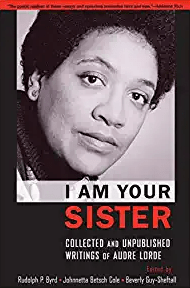
I Am Your Sister by Audre Lorde is the book I’m reading first. You all already know about my love for Audre (I posted some of my favorite Audre quotes a few years back). This book is DENSE, so I already know it’s going to take me a bit more time, and a subsequent read (or two, or three . . . ) to get a good grasp of what she believed and taught. After I finish that, I’ll dive into Things Fall Apart by Chinua Achebe. I’ve heard the title before but I’m completely unfamiliar with the plot of the book so I’m really looking forward to this one.

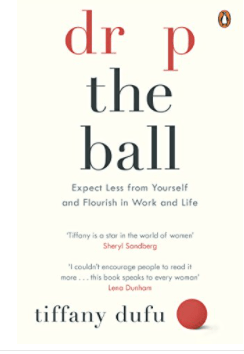
It wouldn’t be my book list is I didn’t include at least one self-help/advice book. Drop the Ball by Tiffany Dufu promises to show me how to achieve more while doing less. Less effort, more results? Sign me up!

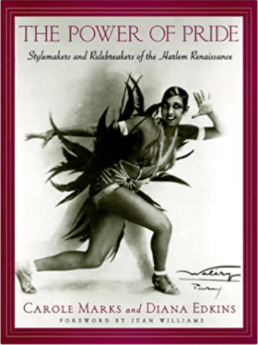
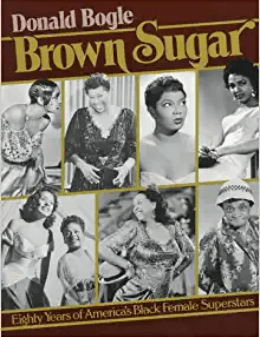
The next two books are about the history of Black entertainment in the US. The Power of Pride by Carole Marks and Diana Edkins spotlights the superstars of the Harlem Renaissance, including some lesser-known luminaries of note. Then, I’ll be enjoying Brown Sugar by Donald Bogle which focuses on Black actresses, singers and other entertainers from the 1920s to 1970s. I’m really excited for both of these books, since I’m in love with all things vintage.

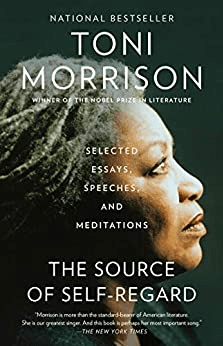
*If* I can get through the main book list, then I have a few others that I can read, that should cover me until the end of the month. The first is The Source of Self Regard by Toni Morrison, a book that I purchased last year in anticipation of a book club meeting that I planned – and failed – to attend. In any case, I’ve always loved Toni Morrison (I’ve posted about her here and I also wrote about her here, after her passing) and enjoyed her works immensely, so this should be a great one.

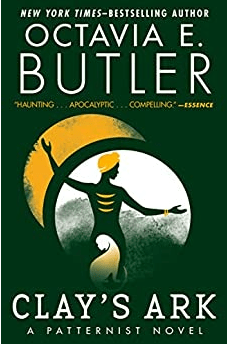
Finally, I have one more book that made it onto my back-up list: Clay’s Ark by Octavia Butler (I previously read Wild Seed and Mind of My Mind, in this set: “Seed to Harvest: The Patternist Series“). As a huge Octavia Butler fan (I posted about her ages ago), I’ve been eager to get back into reading her books, and Clay’s Ark was next on my list. And, since March is Women’s History month, I can always continue my reading streak and carry this book and the Toni Morrison one into the next month, if I run out of time in February.

That’s my reading list for the month: I’m looking forward to each of these! Do you have any books you’re reading this month? I’d love to hear all about them in the comments below. Also, here’s my YouTube video, discussing these books a bit more:

(This post contains affiliate links)

words of wisdom · writing

Summoning Muses – How to Find Inspiration

After discussing the problems that I’ve had during the editing process, I decided to reflect on some of the other “problems” that authors usually experience. Lucky us: two writing posts in one week!

One that I’ve heard other authors encounter frequently is lack of inspiration. I’ve written about this before, but I want to revisit the topic. I’ve written about how I like to let inspiration lead, and I stand by that. I don’t normally have this issue, mainly because I have multiple works-in-progress at my disposal at any time. If I feel “stuck” on one manuscript, I just pick up another one. It may not be as linear as I’d prefer, but it certainly keeps me from getting bored.

That, of course, is not the optimal plan for most authors. So I took some time to consider what I used to do when I needed inspiration. I went back to when I wrote my first book (which still hasn’t been fully edited!) and what I did to bust through those blocks that came up while writing. At that time, that was the only manuscript I was working on, so all of my energy and focus was directed onto it.

I recall going outside, taking a walk near my office, visiting museums, or sitting in parks, to help summon a muse or two. During a pandemic, some of these are not consistently available (museums may not be the most accessible places currently). Also, in the Northern Hemisphere, winter makes outdoor walks or times in public parks quite uncomfortable. So none of my usual options are optimal.


That being considered, what should a writer do when trying to summon the muses during the winter season during a pandemic?

Actually, I recommend everything that I have used to distract myself when I should be editing. Clean up your house, watch YouTube videos that have nothing to do with what you’re writing (I have a YouTube channel if you want to check it out), phone your friends, scroll through social media: basically, do anything you can to give your brain a break. Give yourself a firm time frame for indulging in non-writing activities, then relax a bit.

If self control is difficult for you, then go ahead outside and take a quick walk, even if that means trudging through the snow. It’s better to be temporarily chilled than perpetually distracted.

In all seriousness, the muses/inspiration you need is probably just waiting for you to take a break from feeling the pressure to be “inspired”. You ever notice how inspiration always strikes at the most random times? Yeah, it’s a thing. And it only happens when you aren’t “searching” for it.

If nothing else works, take a shower. Something about the water always makes me feel a little more brilliant (Dr. Henriette Anne Klauser discusses this in her book [and one of my favorites!] Write It Down, Make It Happen). The Archimedes Principle, a physical law that has proven consistent over time, legendarily happened when Archimedes was taking a public bath. Now, if he can get strokes of genius while being naked in front of his countrymen, imagine what you could do in the privacy of your own shower!

And if you need a serious kick in the pants, read The War of Art by Steven Pressfield (I wrote about the book here). This book always makes me realize how much of Octavia Butler’s thoughts were true, as regards inspiration. She famously said, “First forget inspiration. Habit is more dependable. Habit will sustain you whether you’re inspired or not. Habit will help you finish and polish your stories. Inspiration won’t. Habit is persistence in practice.” Pressfield concurs with Butler, and while I always feel a little ashamed after thinking what I could have done differently as regards my writing, I always feel a little comforted when reading Pressfield’s work, as it reveals that, as far as authors go, I’m not the only slacker.

Do you all have any recommendations for getting inspired? I’d love to hear all about it!

This post contains affiliate links.

words of wisdom

Words of Wisdom: Octavia Butler

Tell stories filled with facts. Make people touch and taste and know. Make people FEEL! FEEL! FEEL!

I’m really surprised that I hadn’t written about this incredible author before, especially since she is one of my main inspirations when it comes to my writing. I haven’t tried my hand at science fiction/fantasy, but reading Octavia Butler’s work always makes me want to give it a whirl.

jenebaspeaks2

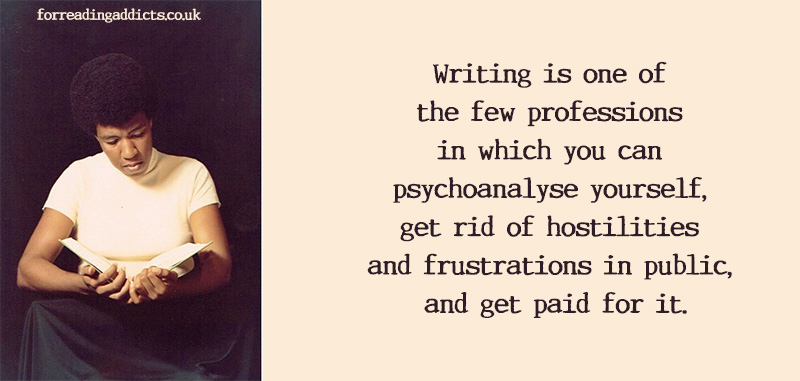
Butler willed her success into existence. Some of her papers show the affirmations that she wrote, encouraging herself along the way. While working an assortment of temporary jobs, she would wake up early to write. Her writing effortlessly weaves fantasy with contemporary issues like politics and power struggles around age-old dividers such as race, gender and sexual relationships. Her characters – multidimensional and transcendent – stay with you long after you finish her books.

ovtavia-butler-quote2

I’ve read several of her stories, starting with Mind of My Mind though, knowing what I know now, I would have started with Wild Seed, my favorite book by Butler. Wild Seed is an origin story, which describes the long history between Doro and Anyanwu. This story sets the scene for the subsequent novels. These two powerful beings struggle with one another through centuries, until they have a final showdown that end their tug-of-war.

jenebaspeaks

I love how Wild Seed takes readers through Anyanwu’s growth into an empowered woman. I love reading about Doro’s calculated nature and how everything he does is part of his master plan. And most of all, I love how well-developed the characters are and how they navigate their dysfunctional symbiotic relationship. I found myself questioning my own journey to empowerment and self actualization while reading Wild Seed.

pinterest

On today, which would have been Butler’s 71st birthday, I’m sharing a few of my favorite quotes. I hope you enjoy!


(Photos courtesy of BlackMattersUs, JenebaSpeaks, Pinterest and ForReadingAddicts.co.uk)