art · luxury

Art Collectors Conundrum: Culture Clash

As explained in previous posts, Art Collectors Conundrum explores the current issues surrounding art collecting. There are a lot of different issues that impact new collectors as they journey into the art world, and one of those big issues is the dissonance that exists between aesthetic indulgences and minimalist ideals.
Screenshot 2018-03-03 at 9.22.19 PM - Edited

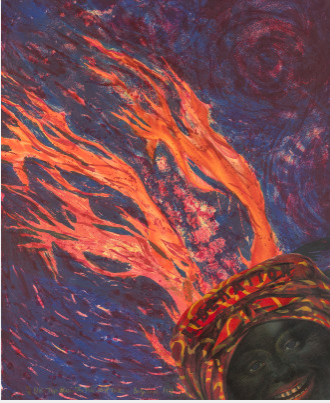
Betye Saar, Blow Top Blues, The Fire Next Time (1998)

The thing is, the culture of today’s wealthy – especially wealthy millenials – leans more toward minimalism and less toward acquisition of material goods. Any time spent on social media will confirm the “shift” from a culture of excess to one of spartan decorating practices. Many millenials favor the bare walls and monochrome decor that makes for clear, appealing Instagram photos. And, if they select art, the art often lacks the color, texture and excitement that used to be favored by collectors.

4049-132_WSS

Betye Saar, Indigo Mercy (1975)

In short, this cultural clash results in fewer “new” big spenders. Bloomberg wrote about the “new elite” and their artistic tastes. The article points out that location has much to do with the cultural difference, too: East Coast “new money” tends to buy art in the more traditional fashion, while West Coast “new money” isn’t as interested in purchasing pricey art “for arts’ sake”.
Screenshot 2018-03-03 at 9.22.12 PM - Edited

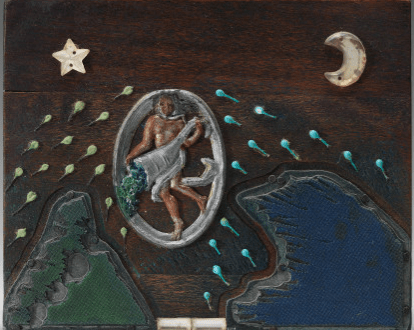
Betye Saar, Twilight Awakening (1978)

The key to luring in these potential art investors isn’t as simple as one would think. The most important thing to remember about the new wealthy is that they are earning their fortunes much earlier than the wealthy of previous generations. They just aren’t as likely to be focused on art collecting if they are buying their first homes and starting families.

An interesting way to get the new wealthy interested in collecting could be an art loan program, which allows them to enjoy works for a fixed period of time and then they can purchase the work if they want, or turn it back over to the gallery to “try out” something different. It isn’t a perfect solution but it would provide them with some exposure to fine art and would help them hone in on their personal tastes and preferences.

Those are some of my thoughts on overcoming the dissonance between minimalist goals and owning art. What are your thoughts? Feel free to share your comments below!

(all art by Betye Saar and in the National Gallery of Arts collections)
life curation · reading list

The Best Year of Your Life: The “Dream It” Section

Happy Monday, beloveds! What better way to start a week than to discuss some of the things I’ve done during the past (almost) two months in preparation for my best year ever?

strangecharmed

(photo courtesy of StrangeCharmed.com, one of my new favorite websites)

As you all recall, Debbie Ford’s The Best Year of Your Life was my December reading list selection, and I reviewed the book in January. I didn’t want to make the review too exhaustive, because I intended to reference it throughout the year. This post is the first of those references, and I’ll share my takeaways from the first section of the book, the Dream It section.

Chapter 1: Creating a Powerful Intent – I’ve been doing affirmations for quite some time now, but I recently changed my daily affirmation to the one provided in the book. Daily, I affirm, “This is the best year of my life”. I’ve noticed that I have had a much “smoother” day-to-day experience, My life isn’t “perfect” but it’s good and I am more aware of the little ways that show my life as being good and satisfying. I can improve on this step by using some of the tips in the book, such as writing my affirmation on signs and notes and posting them in my office and home. I could also use it as a background on my phone and computer.

Chapter 2: Exposing the Fantasy – I need to redo this step. I did it in December but I didn’t put as much time and energy into it as I would like. I need to specify the feeling I associate with my “fantasy” life and then clarify exactly how I will activate that feeling daily. This is a key principle of law of attraction, so I’ve done it before but I’ve never been consistent about it. The consistency will really make the difference.

Chapter 3: Stepping Into Greatness – I could stand to redo this step, as well. My vision for this year isn’t as laser-focused as I would like. It’s a bit fuzzy, so getting really clear and then identifying the personality traits that would make it possible would do wonders for realizing this best year of my life. Off of the top of my head, traits such as discipline and boldness (extroversion) would bring me closer to my dream. But, I want to make sure that I’m invoking the best qualities to bring about my ideal life, so I’ll spend some more time on that.

So I’ll post again, in a couple of weeks, just confirming the progress I’ve made on redoing the activities from Chapters 2 and 3. I’m looking forward to sharing that with you all!

luxury · reading list

A Bibliophile’s Dream . . .

I don’t often discuss auction houses outside of Christie’s or Sotheby’s auctions. These two entities usually feature more of the items that interest me personally. However, I regularly peruse some of the other big names in the auction world because, well, you never know when you’ll come across a gem of a sale.

I was delighted to see that Bonhams is having an Extraordinary Books and Manuscripts auction in just a few days (March 9). This sale will have all sorts of rare books, manuscripts, and other miscellaneous written material. One item that I found particularly interesting is a letter autographed by Alexander Hamilton. Given the resurgence of interest in Hamilton (we can thank the stageplay Hamilton for that), I expect that this memorabilia will go for much more than the estimated $10-15,000 USD.

hamilton

Hamilton’s letter

Two more items of interest to me are a violin owned by, and a letter written and signed by, Albert Einstein. I find Einstein fascinating and I would love to own some memorabilia. These items are expected to fetch between $100,000 and $150,000 each, and I can see them easily going for more than that. I’m sure the lucky winner will treasure these items tremendously.

Einstein’s violin and autographed letter

The auction will happen at Bonhams’ Madison Avenue location in  New York City, USA. If you are a collector of rare books, you won’t want to miss this event!

art · Uncategorized

Buy Art and Support Public Schools

I recently received an email from Reynolds Gallery in Richmond, VA, explaining a special campaign for the month of February. The gallery is donating 10% of sales proceeds generated in February to support Richmond Public Schools. The gallery announced, “We want to do our part to improve the lives and education of our city’s children.”

Screenshot 2018-02-03 at 11.56.11 AM - Edited

Reynolds Gallery was founded in 1977 and emphasizes a connection with local artists. That, along with the promise of donating 10% of February’s sales to public education, is a convincing reason to check out their offerings and see if there is any work that you’d love to own.

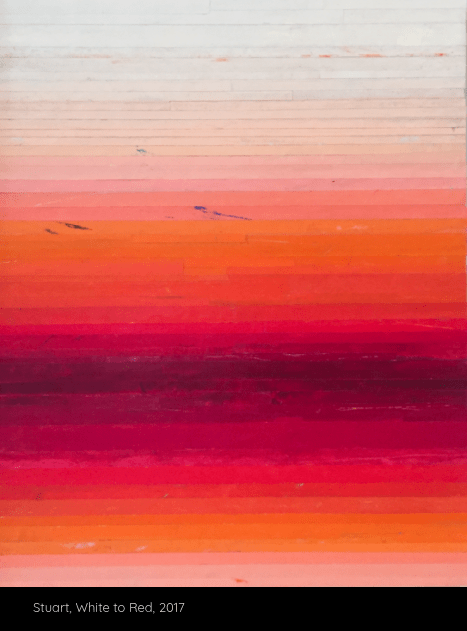
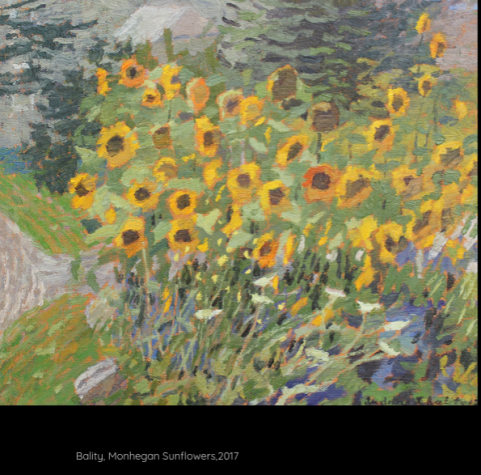
The contemporary pieces featured in the gallery are great for every collector, from the novice to the expert. I like Robert Stuart’s “From White to Red” (2017) and Andras Bality’s “Monhegan Sunflowers” (2017).

Screenshot 2018-02-02 at 10.50.32 PM - Edited


Screenshot 2018-02-02 at 10.50.40 PM - Edited

I also found Doug Gray’s “Guthrie Theater Lobby Oct 1977 Minneapolis” (2017) enchanting. It gives Piet Mondrian vibes, no?

Screenshot 2018-02-03 at 5.26.55 PM - Edited

Check out the online shop and see if there’s anything you’d like to get for your own collection! Remember, a portion of the proceeds will go to supporting a better educational environment for Richmond Public School students.

hollywood glamour · style

How to Dress Like Audrey Hepburn

A few months ago, Christie’s had an enormous Audrey Hepburn memorabilia auction. In fact, I wrote about it during the early days of this blog. The auction featured over 300 items personally owned by Audrey. Given Audrey’s immense popularity, it should be no surprise that the auction generated nearly $6.5 million in sales (4.6 million GBP).

Screenshot 2018-01-19 at 5.34.15 PM - Edited

Photo as shown on Christie’s

If you, like me, weren’t one of the lucky auction winners, take heart. Audrey was a woman of classic taste and many of clothing items sold can be easily duplicated. Here, I’ll share some of the items featured in the auction, as well as my recommendations for recreating the look.

By the way, you may notice that the items aren’t the signature pieces from her films but, rather, her own personal, off-screen wardrobe (with lots of pieces from her later years). I actually like the fact that the pieces are “everyday” chic, because they don’t come across as “costume-y”. But remember, these are Audrey’s clothes: even her “everyday” items are much more stylish than what most people wear.

Without further ado, here are some of my favorite items from the auction as well as items to recreate the look. I found pieces on Boohoo and Amazon, which aren’t expensive but allows you to try a look at a low price. Enjoy!

A Black Silk Crepe Tuxedo and Associated Ivory Wool Crepe Trousers

Screenshot 2018-01-19 at 5.52.48 PM - Edited

Get the look:

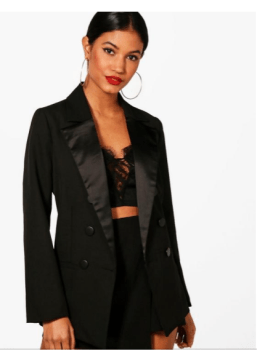
Rhea Boutique Double Breasted Tailored Tux Blazer

Screenshot 2018-01-19 at 7.40.41 PM - Edited

This double breasted tux has the same satin lapels but it’s a fraction of the cost of the original jacket. The hem is a little below the hip bone, so it feels more relaxed than formal.

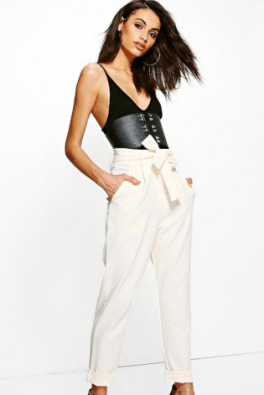
Adana Tie Waist Tailored Slim Fit Trouser

Screenshot 2018-01-19 at 7.41.58 PM - Edited

While the trousers owned by Audrey probably had a less ornate waist, I prefer the less-expensive option. The tie waist adds visual interest when the tuxedo jacket is open or removed. The design of the legs of both trousers are very similar.


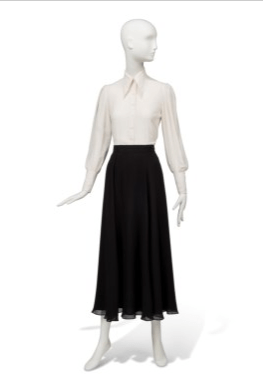
An Ivory Silk Shirt and Black Silk Skirt

Screenshot 2018-01-19 at 5.52.43 PM - Edited

Get the look:

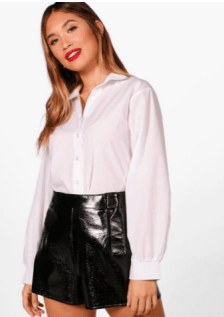
Molly Tailored Shirt

Screenshot 2018-01-19 at 8.06.20 PM - Edited

This fitted blouse looks great with skirts and pants, and easily goes from the workplace to after hours events. To maximize the Audrey look, wear this with as few accessories as possible.

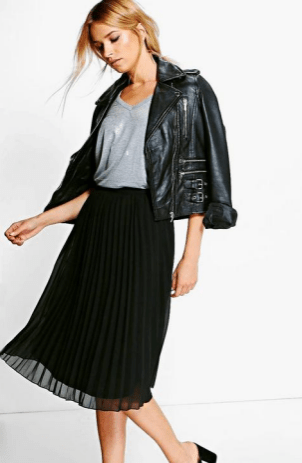
Savannah Chiffon Pleated Midi Skirt

Screenshot 2018-01-19 at 8.06.53 PM - Edited

Unless you’re extremely thin and a little bit tall (like Audrey), a midi length is more flattering. The flowing design of this pleated dress echoes the movement of the original skirt. However, the texture created by the pleats keeps this skirt from feeling too visually “heavy”.


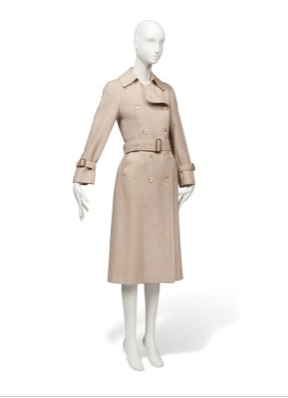
An Oatmeal Wool Trench Coat

Screenshot 2018-01-19 at 5.52.34 PM - Edited

Get the look (click on the image to link to the coat):

This coat has a beautifully detailed shoulder and a charming collar. This could easily mimic the original by replacing the fasteners with oatmeal-colored buttons.


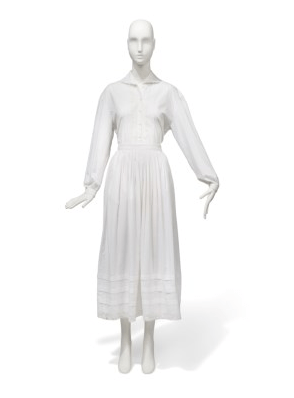
A White Cotton Blouse and Matching Skirt

Screenshot 2018-01-19 at 5.52.28 PM - Edited

Get the look:

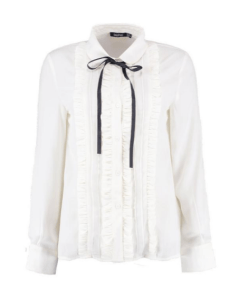
Elizabeth Boutique Ruffle Tuxedo Shirt

Screenshot 2018-01-19 at 6.10.30 PM - Edited

The detailing along the button placket makes this a good choice for replicating Audrey’s white top. The additional ruffles on the top echo the subtle ruffles on the skirt of the original ensemble. Just remove the black tie and you’re set!

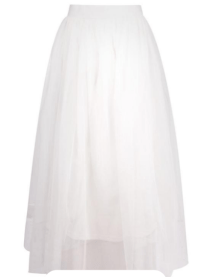
Tall Emily Boutique Tulle Mesh Midi Skirt

Screenshot 2018-01-19 at 6.12.12 PM - Edited

This midi skirt is made for tall girls, which makes it long enough to be an almost-maxi on women of average height. Audrey’s skirt isn’t tulle but it is flowy and a touch longer than midi-length. The simplicity of the skirt works well with the textured top.

art · luxury

Art Collector Conundrum: Accessibility

As I learn more about the art world, I see, not only the beauty and complexity of it, but the problems surrounding it.

Here’s the thing: every industry is plagued with its own problems. As a result, the professionals within each industry are tasked with serving current needs as well as creatively attempting to solve existing and potential problems. This presents a bit of a conundrum for both the problem solvers (who are trying their best but may be limited in what they can do) and those awaiting a solution (that feel excluded and frustrated).

There are several big issues within the art industry, which I’ll attempt to explore over several posts. I’m no art expert, but I love the thought of toying around with solutions to existing issues, because, at the heart of it, I’m a problem solver.View of Children placing poppies on the grave stone of the Unknown soldier

(Courtesy of the War Museum in Ottawa)

One of the biggest issues I see within the art world is the issue of accessibility. Like many subjects and areas associated with the elite/wealthy/exclusive groups, there is no definitive path for entry. Those that want to make sense of this world are overwhelmed by the options but really don’t have any clear directions on how they can make art and the art world a part of their lives.

That’s both great and confusing.

The upside to lacking a defined path of “entry” is that the barriers aren’t clearly defined, either. If those desiring entry want to find a way “in”, they can probably ease in through many different paths and still eventually “arrive” at their desired destination. Let’s be clear: there are ALWAYS barriers in every realm. But these can often be navigated in unconventional ways so long as the person desiring entry is willing to explore the options available and be creative.

The confusing part is figuring out where to start. Unlike college or the corporate world, there is no simple, straightforward way to enter the world of art collecting/patronage.

This undefined path presents an amazing opportunity for art galleries, auction houses and museums. For the huge names in the art world, there may not be an urgent need to reach out to novice or aspiring collectors: after all, these entities aren’t hurting for sales! But for the entities that are interested in undertaking the challenge of opening the art world to a new kind of patron and clientele, there are several ways to accomplish this. The Guggenheim Museum is leading the way with their Young Collectors Council, a subgroup of museum membership that allows millenials and other inexperienced collectors under the age of 40 to have a more active role in museum acquisitions.

moma

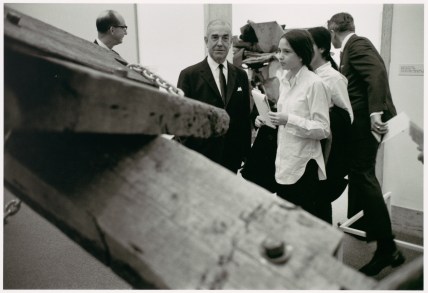
Young visitor touring Metropolitan Museum of Art in 1969

Other museums, art galleries and auction houses can modify the structure pioneered by the Guggenheim and create their own Collectors Councils to help nurture and develop interest in the art world among those that are inexperienced. Setting aside two or three annual events to be organized by councils and offering mentoring opportunities from senior individuals involved in the organization would be great for collectors that are trying to find their way on the art scene.

Do you all think there are some other ways to increase accessibility in the art world? Let me know in the comments below!