art · life curation

My Art Highlights for 2018

After a fantastic year of enjoying art, I thought it would be good for me to post some of my highlights from the last 12 months.

There really are too many highlights to cram into one post but I’m going to do my best!

I started this year off with viewing the terracotta army statues from China. As you all know, I visited China a few years ago and fell in love, so seeing the statues was like getting a taste of authentic China. I loved it and had a great time viewing the exhibition.

Next, nothing could top seeing Kenyan art while in Kenya! I wrote a post about Tom Mboya as well as some other Kenyan artists that I enjoyed. Getting to see art overseas is always a treat, since there is no guarantee that I will see these artists’ works stateside.

Paintings by Tom Mboya

I viewed Portuguese contemporary art at the Virginia Museum of Fine Art and was reminded of my goal to visit Portugal within the next 2 years. Just so you all know, I’ll be resuming my Portuguese language lessons in the upcoming year. I mean it: I’m going to speak Portuguese so that I can enjoy my trip and get around a little better than the average tourist.

At the Smithsonian American Art Museum and Archives of American Art, I viewed the exquisite and timeless work of Edmonia Lewis. I’m still impressed by her masterful handling of marble and her amazing ability when it comes to depicting her subjects with dignity and full of emotion. I was so impressed with her work that I recently did a comparison of her work with a similarly themed piece, because I simply can’t get tired of discussing Lewis’s work!

IMG_3570

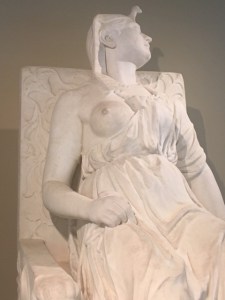
The Death of Cleopatra by Edmonia Lewis

I thoroughly enjoyed seeing Amy Sherald’s work at the National Portrait Gallery. Her portrait of Michelle Obama is a beautiful and unique interpretation of the former First Lady’s beauty, quiet resilience and charm. Seeing the painting in person impressed me far more than I expected, especially since Sherald’s signature technique forgoes capturing the rich tones of the subjects’ natural complexion and paints skin tone in greyscale, forcing art appreciators to focus on the expressions, posing, and attire depicted. I’m going to view some more of her work and maybe I’ll do an analysis of her style.

I also took a trip to Philadelphia and enjoyed the Philadelphia Museum of Art. There was so much art that I had to make a Part 1 and Part 2 to capture all of what I saw with my visit. I was delighted to see a Jean Leon Gerome painting that I’d never seen before.
img_5715

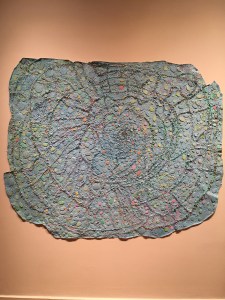
Night Flight by Howardena Pindell

I ended my year with the Howardena Pindell exhibition, that I loved so much that I had to visit it multiple times. Pindell is a living treasure, and I am thrilled that I got to see such a comprehensive retrospective of her work.

Those are my art highlights for 2018. I’m looking forward to bringing you all more art and more adventures in 2019!


art

A Tale of Two Cleopatras: Comparing and Contrasting Art

Happy Thursday, friends! After a recent trip to Virginia Museum of Fine Arts, I found myself with a few art photos that I wanted to share with you all, but I wanted to do something a little different. Instead of sharing the photos and simply telling you what I think about it, I decided that it would be more fun to compare the art with a similarly themed piece that I’ve also viewed in person. That way, I can describe the similarities, differences, and which piece I favor most.

(from left to right) Edmonia Lewis, The Death of Cleopatra; William Wetmore Story, Cleopatra

As you can see from the title, I’m comparing two marble Cleopatras today. The first work was part of my review of Edmonia Lewis’s work at the Archives of American Art (housed in the Smithsonian American Art Museum). Lewis’s The Death of Cleopatra was easily one of my favorite marble works of art at the museum.

IMG_3574

Photos of Lewis’s version of Cleopatra

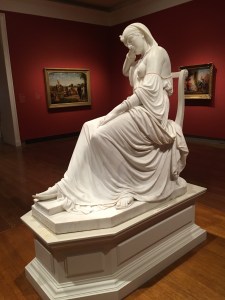
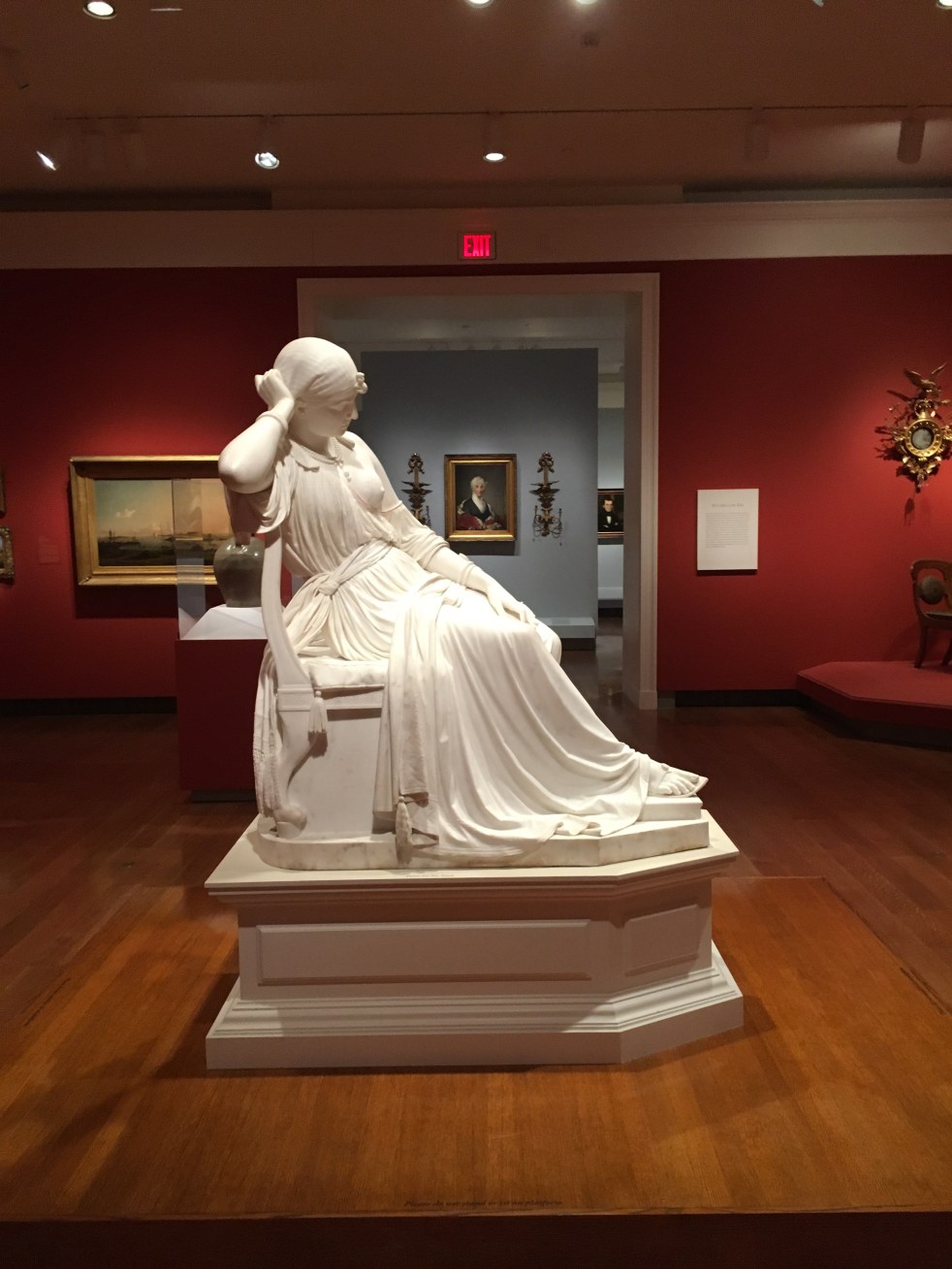
The second Cleopatra is by William Wetmore Story, and is located at VMFA. This Cleopatra – his earliest version of the tragic Egyptian queen – is located in the American galleries at the museum. The massive work sits imposingly in the gallery and, in true queenly fashion, all other art in the room are dwarfed by the stunning Cleopatra.

img_5822

To keep this focused strictly on the works themselves, I avoided reading up on Wetmore Story. So there won’t be a comparison of the artists’ lives or legacies, but we will get into these pieces and discuss what they have in common and how they differ.

For starters, the subject is the same with both pieces. Both depict Queen Cleopatra, and (interestingly) both of the pieces portray her as having traditionally Greco-Roman facial features (kudos to the artists for remaining historically accurate when it came to her face). Both statues are massive: Lewis’s is a bit taller, but the posture is different, so they are actually very close in size. Amusingly, both also depict Cleopatra with one breast exposed. Perhaps they knew something about traditional Egyptian dress that I don’t?

While both of these Cleopatras are regal and elegant, the theme of the works couldn’t be more different. Wetmore Story’s Cleopatra is pensive and in deep contemplation: she is troubled by something and has probably just asked her servants to give her some privacy. Is she thinking about lost loves, or the impending downfall of her rule? Her mind may be racing over any number of things.

img_5821

Lewis’s Cleopatra has just committed suicide and is dying on her throne as her last royal act. She has just closed her eyes and her left arm has fallen limply to her side. Even in death, her face is struggling to relax comfortably: this queen is pained to the grave.

IMG_3571

As far as fine detailing on the pieces, I’m a fan of Wetmore Story’s version. To be fair, Lewis’s work had been exposed to considerable environmental elements and poor handling, so the sculpture isn’t as impeccably detailed as it (likely) once was.

My favorite Cleopatra is probably Lewis’s version, for this reason: she captured death and pain without making it grotesque or unnaturally pretty. This Cleopatra is finding it difficult to “rest in peace” but, ever the royal, she makes us feel pride, and not pity, for her. Wetmore Story’s Cleopatra is enchanting, for sure: I loved how well he captured her troubled mental state behind her stoic, regal expression. His Cleopatra is alive with emotion; however, Lewis’s Cleopatra moves us even in death.

That’s my not-so-quick comparison of two Cleopatras. I hope you all enjoyed and will make it a goal to see both of these beautiful works at some point in time. Enjoy your day, and I’ll chat with you all tomorrow!