art · culture

My Current Favorite App

As a fan of all things art and culture related, I find it challenging to locate tools and apps that satisfy both of my interests simultaneously. That is, until the Google Art and Culture App came into my life.

Screenshot 2018-01-30 at 6.11.36 PM - Edited

I love being able to instantly access all sorts of interesting art and culture articles. Even better, I love being able to virtual tour museums that I have not yet visited in person. The app allows you to view famous artworks up close, without having to peer through crowds to see it (anything in the Louvre comes to mind).

It’s possible to find art by searching by the title of the work or by an artist’s name. For an example of what you can find on the app, I searched for Edmonia Lewis (I’ve known about her for a long time, but a recent podcast by Art History Babes renewed my interest in her story). Here is some screenshots of what Google Art and Culture had about Edmonia Lewis:

Even cooler, the app has a feature that allows users to take a selfie and find their art “doppelganger”. It’s a fun feature that’s sure to expose users to artwork they’ve never seen before!

Have you downloaded the Google Art and Culture app? How have you been enjoying it? Let me know in the comments below!


art · luxury

Art Collector Conundrum: Affordability

As part of this (informal) series, I want to explore some of the difficulties I see within the art world. These things aren’t obstacles, per se, but they can be challenging for people that are on the outside “looking in”. As I learn more and find myself exploring the business, historical, and aesthetic side of art, I can see the individual factors that make art collecting and the entire business of art frustrating and intimidating to the average person.

One of the biggest obstacles to pursuing either a career in or a collection of art is affordability. Prestigious disciplines and hobbies have always been cost prohibitive, and rightly so: this maintains the integrity, prestige and lucrative nature. But in these increasingly egalitarian times, the question remains: how can affordability be part of the art world while maintaining esteem?
Screenshot 2018-01-27 at 7.45.32 PM - Edited

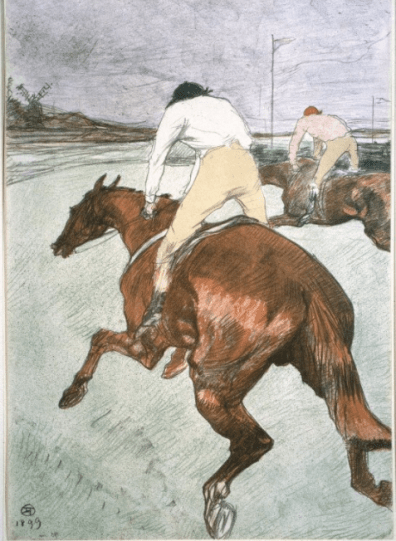
Le Jockey by Henri de Toulouse-Lautrec (uploaded by the Brooklyn Museum)

The best recommendation I can pose is this: start where you are. That applies no matter where you want to fit into within the art world. Instead of aiming to have a personal art collection on the level of the Louvre, new collectors that have less capital to invest should start where they are and purchase what they enjoy and can afford. People aspiring to be curators and consultants should start by educating themselves as affordably as possible: attend free or low-cost art courses (some of which can be done online), volunteer at a museum or gallery, or even purchase used art textbooks and read the material.

The key to avoiding overwhelm is to take it one step at a time.

There are some entities that are striving to make art more affordable. Educators like ALISON, Coursera and Saylor (especially the Saylor Legacy Courses) make art education affordable. Taking classes at local museums, galleries, art organizations, and community colleges is also another another way to obtain art knowledge at a low cost.

Entering the art collecting world need not be expensive. New collectors should seek out local artists that are talented but not yet famous. Being an “early adopter” often means securing wonderful artwork at an affordable price. Also, it’s important to support smaller artists that may one day become one of the big names in the art world.
brooklynmuseum-o4399i000-21.125_SL1

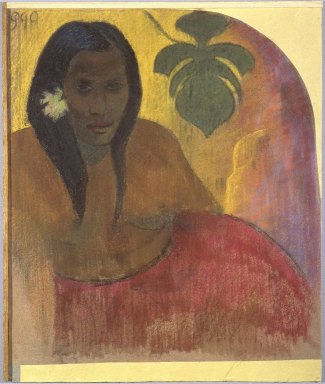
Tahitian Woman by Paul Gauguin (uploaded by the Brooklyn Museum)

There are also companies that will finance the purchase of high dollar art. One of these is ArtMoney, a company that offers financing options for people that want to buy art. ArtMoney is currently affiliated with 500 galleries nationwide to help art appreciators acquire works of art that would normally be out of their budgets. Also, there are innovative artists that offer lease and lease-to-own option for interested parties. This allows collectors to enjoy the art of their choice on the terms that best suit them.

So there are always ways to navigate around issues of affordability. Many times, this means setting aside preconceived limitations and approaching a solution with a fresh perspective. By exploring unorthodox and less popular strategies, it’s possible to make any part of the art world affordable.
art · life curation

The Next Art Class(es) On My List . . .

Happy Friday, beloveds! The weekend is here and, I must admit, I’ve been feeling pretty fired up for the past few weeks. I was determined to have a strong start to my year, and so far, I’ve kept my word. I’ve been focusing on everything that I want and need to get done so that I can accomplish the goals I’ve set for the year.

If you all recall, in my New Years goals post, I mentioned that I wanted to eventually transition into a career in the art world (hence this blog’s gentle but steady turning toward more art-related content). I intend to take some in-person courses through Christie’s but I am also supplementing those courses with some online education.

womensartclass

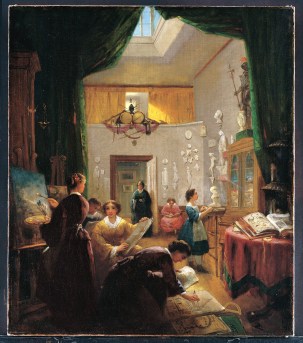
Women’s Art Class by Louis Lang (1814 – 1893), at The Metropolitan Museum of Art

I’m an autodidact, so I’m very comfortable with teaching myself. You all will probably recall the art course on Alison that I’m currently taking (I’m doing this one very leisurely, though I’m already about 50% done with the material). However, I occasionally enjoy having a structure to lean on while I’m learning. That’s why I was excited to see that Coursera is offering several arts courses this year, that can either be completed without a certificate (the no-cost option) or with a certificate of completion offered (has a small fee). Since I’m doing these courses for personal development and I don’t intend to provide certification to anyone in the future, I’m doing the no-cost option.

The two classes I’m taking are Modern Art & Ideas and Fashion as Design. Both classes are taught by Museum of Modern Art curators, researchers and directors. If you find that you benefit from interaction with other students and a more structured format, then Coursera’s offerings may be a good fit for you.

I’m looking forward to learning more about modern art and fashion. I can’t wait to share what I learned with you all!