beauty · culture · hollywood glamour · luxury · style

A Review of Emeraude (As Worn By Billie Holiday)

Recently, over on my YouTube, I’ve been experimenting with a lot of fragrances. I love the transformative power that can be experienced by changing the scent you wear: the right perfume can make you feel invincible!

I decided to research some of the fragrances worn by old Hollywood stars, and I was really excited to discover the fragrances worn by some of my favorites. I researched these scents and I found that some of them were extremely affordable. So I figured, “Why not?” and bought some bottles.

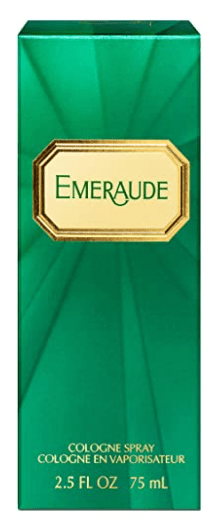
The first scent I purchased was Emeraude by Coty. This was the fragrance preferred by none other than Lady Day, Billie Holiday. The notes of the fragrance are as follows:

  • Top notes: Bergamot, Lemon and Orange
  • Middle notes: Brazilian Rosewood, Ylang-Ylang, Jasmine and Rose
  • Base notes: Opoponax, Benzoin, Vanilla, Amber, Sandalwood and Patchouli
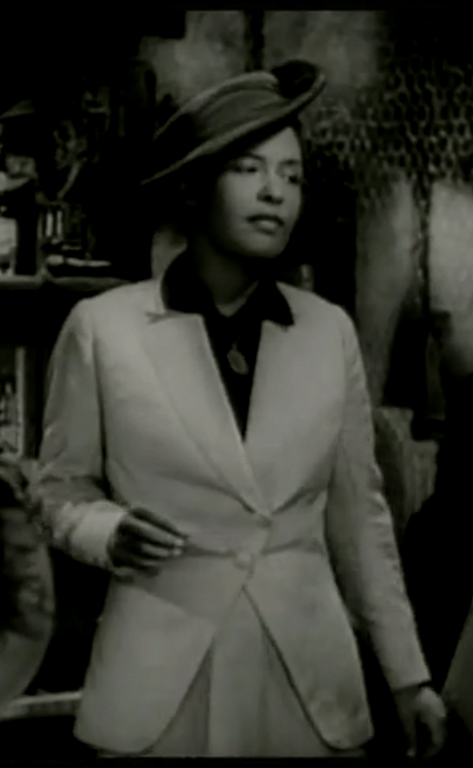
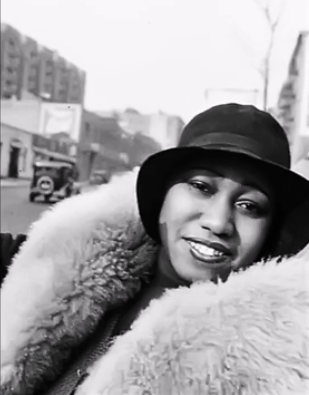
Lady Day herself, Billie Holiday (as seen in the movie New Orleans)
Emeraude by Coty, Billie’s fragrance of choice

This fragrance is peculiar to me: not in a bad way, but in a good way. The perfume is citrusy before and immediately after spraying, then it quickly diffuses into a soft but earthy bouquet, and dries down to a warm and slightly sweet essence. The peculiar part is, throughout all of this, the perfume retains powdery notes, which I didn’t expect. When I first read the list of notes, I figured this would be bright, spicy, and then mellow. So to have the essence of baby powder lingering while wearing it was completely unexpected, but nice.

I have more information about the scent in the YouTube video, which I’ll insert below. But, you can always pick up a bottle to try it for yourself: it was less than $12 USD (I’ve seen it sold for as little as $9) so it is extremely accessible and, if you don’t like it, you can probably easily resell it or give it away. Full disclosure: while this is powdery and rather soft, I find it does smell a bit . . . dated (the formulation is over 100 years old!). This is definitely for someone that wants a unique scent that isn’t syrupy sweet or overwhelmingly floral. Also, this is a cologne spray, so it won’t have the same longevity as, say, an eau de parfum. So if you love it, prepare to refresh your fragrance at least once during the day. But at $9-12 per bottle, using the product more frequently probably won’t be a huge issue.

That’s it for today! I hope you all are having a great week, and I’ll talk to you all tomorrow. Take care!

  • This post contains affiliate links.
art · culture · music

Giving Gladys Her Flowers

During one of my many jaunts down the Google rabbit hole, I found myself in 1930s-40s-50s Black American music history. I always love looking at the style of clothing, listening to the recordings of the artists, and finding out some of the fascinating backstory that led to their rises to fame and, many times, their untimely and tragic demises.

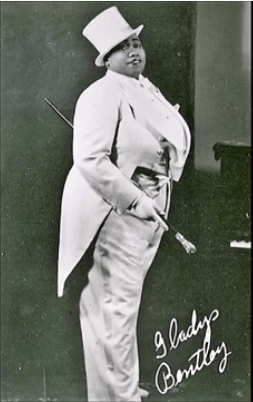
Every now and then, I find myself in an interesting corner of Black American history. One such corner is the part of history that contains the legacies of LGBTQIA+. In this corner is where I found Gladys Bentley, lesbian icon, trailblazer, and unapologetic star.

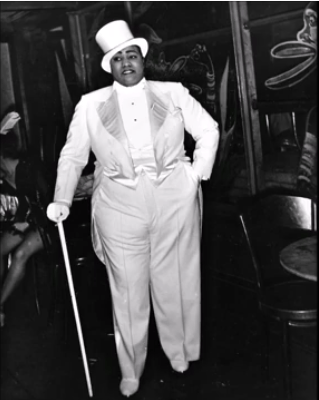
Prior to this year, I was completely unfamiliar with Ms. Bentley’s story. However, when I read about her, I made sure to jot her name down so I could write about her when I had the chance. I’m fortunate to be able to discuss her life and legacy now. When I saw a photo of her, I was immediately struck by her impeccably tailored white suit (at least, I think it was a white suit: the photo was in Black and white, after all), her matching cane, and a white top hat worn at a jaunty angle. Everything about her screamed stylish and confident star.

But it was her story that made me want to both cheer and weep. Ms. Bentley was a cross-dressing star during the Harlem Renaissance, a period of time that embrace the avant garde and brilliant creative endeavors of Black performers. During this time, she thrived due to the novelty of her act, but her talent is what kept people hooked on Gladys. She could sing well, play piano, and work a crowd like no other. Her song selections were risque and fit the vibe of the smoky speakeasies where she performed. She didn’t try to pass as a man: she made no attempt to hide her full bust or wide hips. She achieved major success for several years, and she lived luxuriously during this time.

Sadly, her story had a heartbreaking beginning and a tragic end. Ms. Bentley was initially rejected at birth by her mother, who wanted a son. While her mother eventually started to care for her a few months after her birth, the trauma (and, no doubt, toxic messaging that was doled out over time) lingered and was what she believed was the root cause of her sexual orientation. Years later, as her career declined, she tried to live as a heterosexual woman, marrying and divorcing twice. She eventually died at the age of 52 from pneumonia. She claimed to have been “cured” of her homosexuality, with her cure curiously coinciding with the McCarthy Era. This is just my humble opinion, but I suspect that the claim of a “cure” was probably Ms. Bentley’s way of protecting herself from additional harassment and potential abuse. But that’s just a speculation.

I had a chance to check out some of her discography, and I enjoyed listening to Ms. Bentley’s full, resonant voice. Anyone that has listened to recordings from the first half of the 1900s knows how difficult it is to enjoy some of the songs. The recording quality, as well as the style of singing preferred by the public, is quite different from the music preferences of the past 30 years or so. That being said, I found that her voice was closer to being “timeless” than some other artists of that period. If any of her original records could be digitally enhanced, I’m sure that many of her songs would have experience a revival of sorts, becoming popular with a new generation, nearly 100 years after she first sang them.

I wish Gladys Bentley was more well-known today, and I sincerely hope that this post, though simple, honors her memory. Instead of focusing on the tragedy that she experienced, I will share the gift of her music with you all. Here is a YouTube video of one of her songs. Enjoy.

words of wisdom

Words of Wisdom: Judy Garland

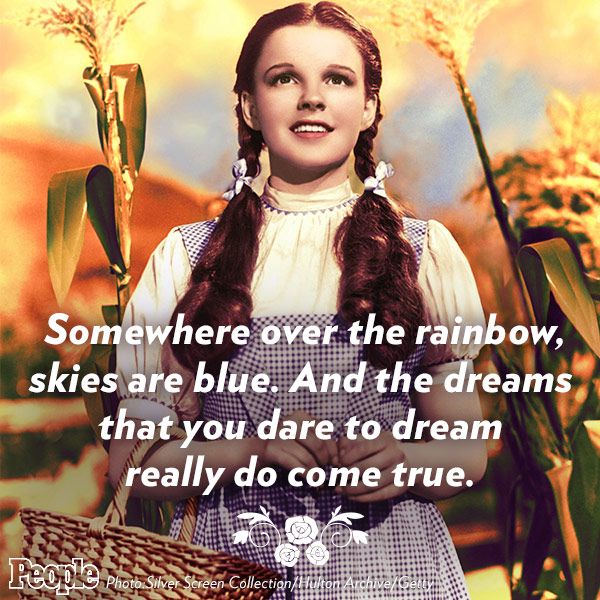
quoteprism

One of my favorite singers of all time was Judy Garland. Like most people, I got my first introduction to Garland when I saw “The Wizard of Oz” but as an adult, I got acquainted with her other songs, as well as her life story.

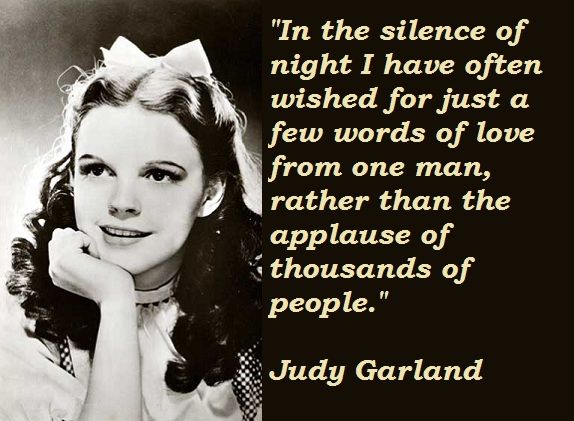
pinterest

This petite powerhouse felt with feeling ugly, awkward, and unloved. She was undoubtedly talented but never happy and secure in who she was. That unhappiness bled through her lyrics, making many of her songs heartbreakingly sad. But there is beauty in everything, including sadness. Even in her most painful songs, there is still so much elegance, warmth, and passion: she took heartbreak and turned it into art.

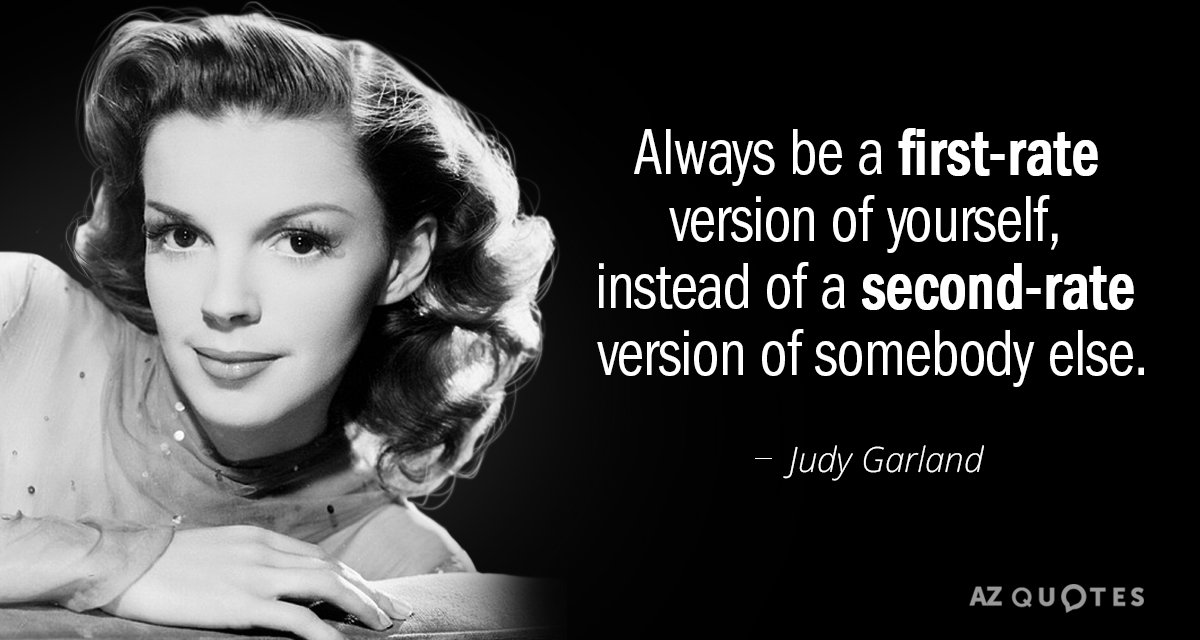
azquotes1

Garland had such naturalness when she sang: it was never forced or overwrought. I’m sure it was quite a sight to see her perform live, with such an enormous voice coming out of such a tiny woman (only 4’11”!). Recordings of her voice give me shivers now: can you imagine what it was like to hear her live?

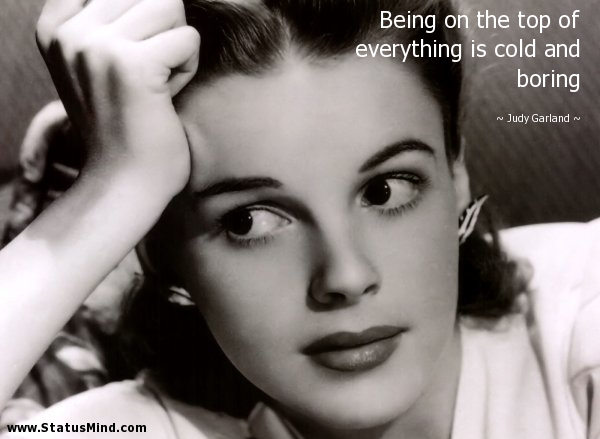
statusmind

It’s difficult to listen to her recordings and to not be moved by them. I only wish she could have known how beautiful, special and loved she was. I hear her singing and I wish I could have hugged her and reassured her of her immeasurable value. She deserved better, and her tragic death at the age of 47 is a reminder to continue to love and affirm those around us.

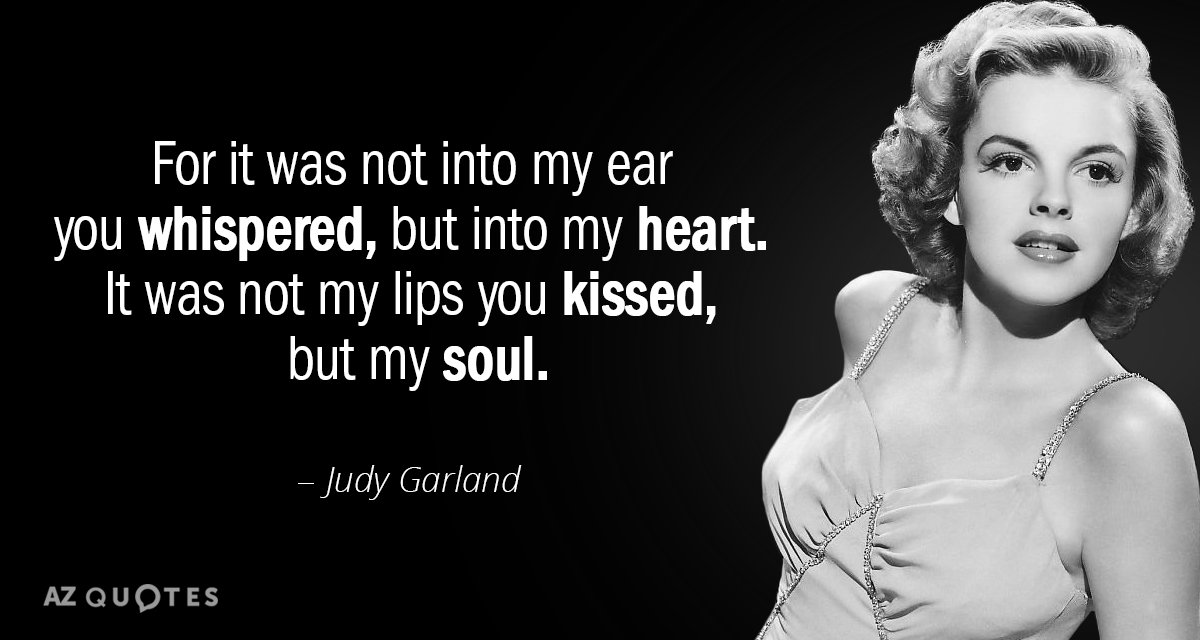
azquotes2

Judy Garland had some poignant musings, and I’m honored to share a few of them with you all today. I hope that Judy’s words move and inspire you. Take care, and talk to you all tomorrow.

(photos courtesy Pinterest, StatusMind, AZQuotes and QuotePrism)