books · culture · reading list · relaxation · words of wisdom · writing

Writers Wednesdays: What I’m Reading This Month

Happy Black History Month! I know I’m a bit late with this post, but I’ve been trying to get back on track with my writing and filming schedule (no easy feat, but I’m getting there!)

I posted a video on my YouTube channel last week, discussing the Black authors that I will be reading this month (I originally had five hardback and paperback books, but also added some digital books to the mix, just in case I finished before the end of the month). I’m focusing on reading up on a few different topics (not just self help!) and branching beyond American-centered stories, which is new for me.

Here is my book list for the month: I’m looking forward to diving into these.
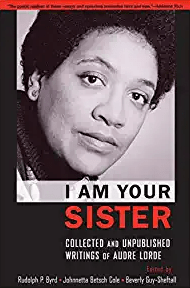
I Am Your Sister by Audre Lorde is the book I’m reading first. You all already know about my love for Audre (I posted some of my favorite Audre quotes a few years back). This book is DENSE, so I already know it’s going to take me a bit more time, and a subsequent read (or two, or three . . . ) to get a good grasp of what she believed and taught. After I finish that, I’ll dive into Things Fall Apart by Chinua Achebe. I’ve heard the title before but I’m completely unfamiliar with the plot of the book so I’m really looking forward to this one.

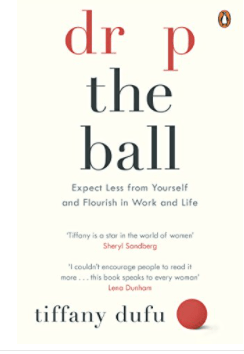
It wouldn’t be my book list is I didn’t include at least one self-help/advice book. Drop the Ball by Tiffany Dufu promises to show me how to achieve more while doing less. Less effort, more results? Sign me up!
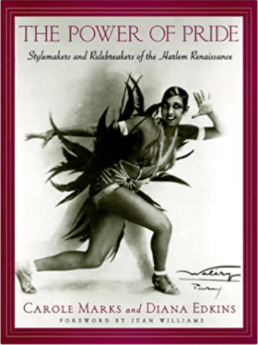
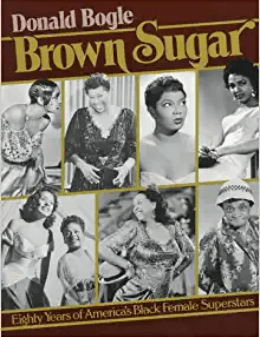
The next two books are about the history of Black entertainment in the US. The Power of Pride by Carole Marks and Diana Edkins spotlights the superstars of the Harlem Renaissance, including some lesser-known luminaries of note. Then, I’ll be enjoying Brown Sugar by Donald Bogle which focuses on Black actresses, singers and other entertainers from the 1920s to 1970s. I’m really excited for both of these books, since I’m in love with all things vintage.
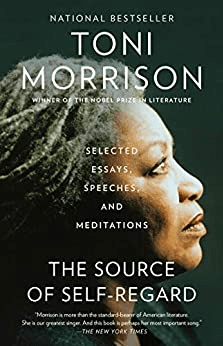
*If* I can get through the main book list, then I have a few others that I can read, that should cover me until the end of the month. The first is The Source of Self Regard by Toni Morrison, a book that I purchased last year in anticipation of a book club meeting that I planned – and failed – to attend. In any case, I’ve always loved Toni Morrison (I’ve posted about her here and I also wrote about her here, after her passing) and enjoyed her works immensely, so this should be a great one.
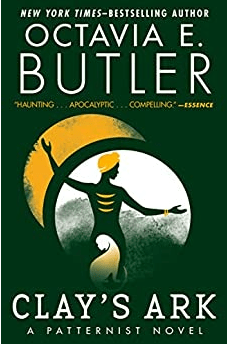
Finally, I have one more book that made it onto my back-up list: Clay’s Ark by Octavia Butler (I previously read Wild Seed and Mind of My Mind, in this set: “Seed to Harvest: The Patternist Series“). As a huge Octavia Butler fan (I posted about her ages ago), I’ve been eager to get back into reading her books, and Clay’s Ark was next on my list. And, since March is Women’s History month, I can always continue my reading streak and carry this book and the Toni Morrison one into the next month, if I run out of time in February.
That’s my reading list for the month: I’m looking forward to each of these! Do you have any books you’re reading this month? I’d love to hear all about them in the comments below. Also, here’s my YouTube video, discussing these books a bit more:

(This post contains affiliate links)
art · culture · music

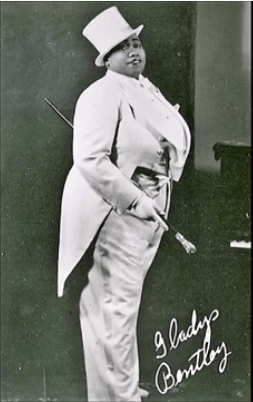
Giving Gladys Her Flowers

During one of my many jaunts down the Google rabbit hole, I found myself in 1930s-40s-50s Black American music history. I always love looking at the style of clothing, listening to the recordings of the artists, and finding out some of the fascinating backstory that led to their rises to fame and, many times, their untimely and tragic demises.

Every now and then, I find myself in an interesting corner of Black American history. One such corner is the part of history that contains the legacies of LGBTQIA+. In this corner is where I found Gladys Bentley, lesbian icon, trailblazer, and unapologetic star.

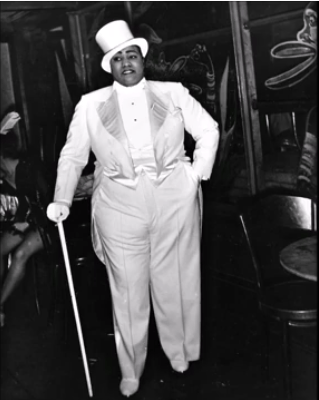
Prior to this year, I was completely unfamiliar with Ms. Bentley’s story. However, when I read about her, I made sure to jot her name down so I could write about her when I had the chance. I’m fortunate to be able to discuss her life and legacy now. When I saw a photo of her, I was immediately struck by her impeccably tailored white suit (at least, I think it was a white suit: the photo was in Black and white, after all), her matching cane, and a white top hat worn at a jaunty angle. Everything about her screamed stylish and confident star.

But it was her story that made me want to both cheer and weep. Ms. Bentley was a cross-dressing star during the Harlem Renaissance, a period of time that embrace the avant garde and brilliant creative endeavors of Black performers. During this time, she thrived due to the novelty of her act, but her talent is what kept people hooked on Gladys. She could sing well, play piano, and work a crowd like no other. Her song selections were risque and fit the vibe of the smoky speakeasies where she performed. She didn’t try to pass as a man: she made no attempt to hide her full bust or wide hips. She achieved major success for several years, and she lived luxuriously during this time.

Sadly, her story had a heartbreaking beginning and a tragic end. Ms. Bentley was initially rejected at birth by her mother, who wanted a son. While her mother eventually started to care for her a few months after her birth, the trauma (and, no doubt, toxic messaging that was doled out over time) lingered and was what she believed was the root cause of her sexual orientation. Years later, as her career declined, she tried to live as a heterosexual woman, marrying and divorcing twice. She eventually died at the age of 52 from pneumonia. She claimed to have been “cured” of her homosexuality, with her cure curiously coinciding with the McCarthy Era. This is just my humble opinion, but I suspect that the claim of a “cure” was probably Ms. Bentley’s way of protecting herself from additional harassment and potential abuse. But that’s just a speculation.

I had a chance to check out some of her discography, and I enjoyed listening to Ms. Bentley’s full, resonant voice. Anyone that has listened to recordings from the first half of the 1900s knows how difficult it is to enjoy some of the songs. The recording quality, as well as the style of singing preferred by the public, is quite different from the music preferences of the past 30 years or so. That being said, I found that her voice was closer to being “timeless” than some other artists of that period. If any of her original records could be digitally enhanced, I’m sure that many of her songs would have experience a revival of sorts, becoming popular with a new generation, nearly 100 years after she first sang them.

I wish Gladys Bentley was more well-known today, and I sincerely hope that this post, though simple, honors her memory. Instead of focusing on the tragedy that she experienced, I will share the gift of her music with you all. Here is a YouTube video of one of her songs. Enjoy.